Nikortsminda Cathedral
Nikortsminda Cathedral
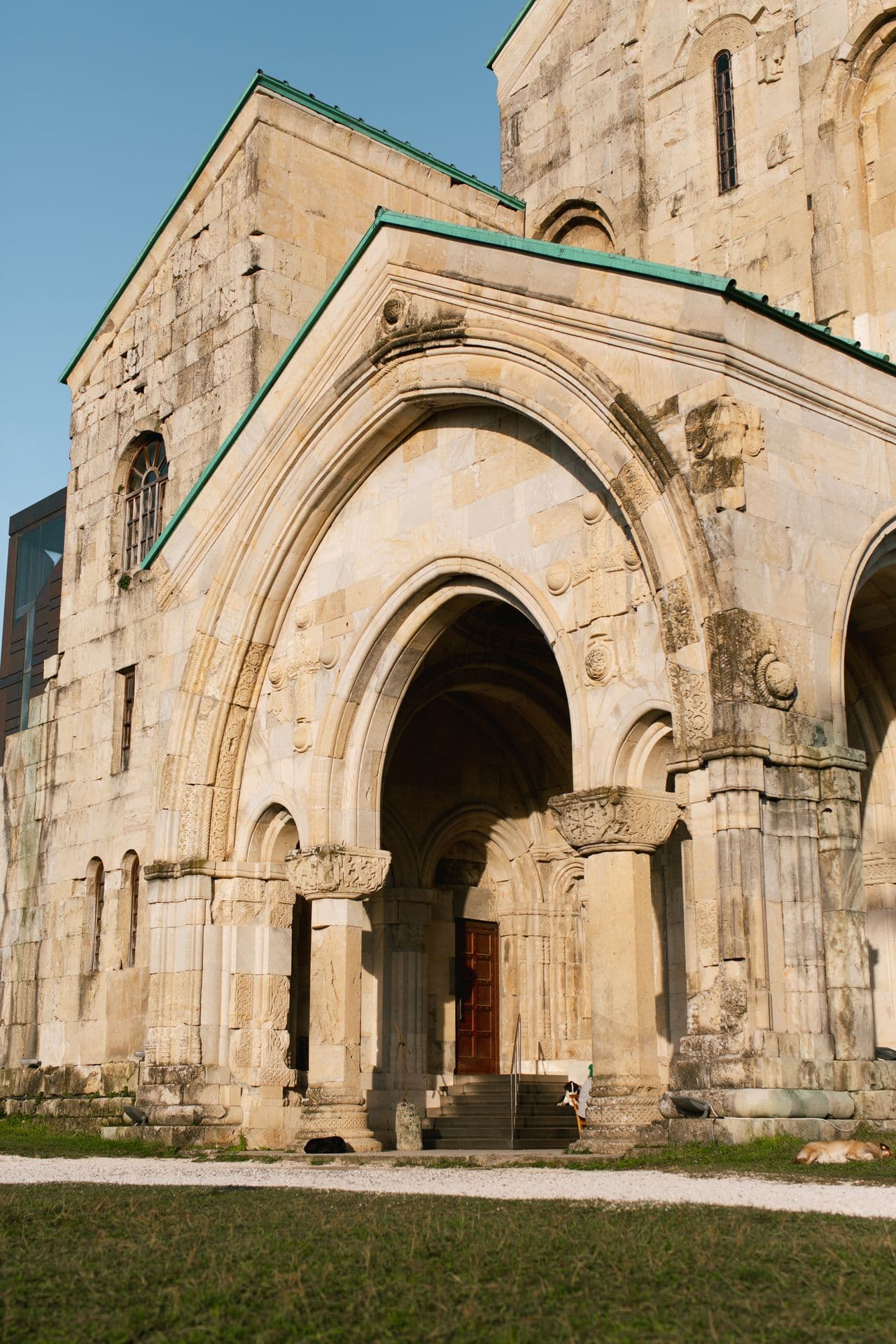
Founded in the early 11th century in the Racha region, Nikortsminda Cathedral stands out for its facades entirely covered in sculptured bas-reliefs, among the finest examples of medieval Georgian architecture.
Nikortsminda Cathedral rises at the heart of the Racha region, in western Georgia. Dedicated to Saint Nicholas, it dates from the early 11th century and represents one of the most refined examples of medieval Georgian ecclesiastical architecture. Its exterior facade, covered in sculptured reliefs of remarkable density, makes it a distinctive monument in the religious landscape of the Caucasus.
Quick reference
- Access: Nikortsminda village, approximately 15 km northeast of Ambrolauri, the capital of Racha.
- Transport: a car is recommended; the road from Ambrolauri is asphalt but winding.
- Dress code: shoulders and knees must be covered; women should bring a headscarf for inside the church.
- Suggested duration: 45 minutes to 1 hour 30 minutes to explore the sculpted exterior and interior.
- Entrance: free (donations welcome).
What to see
The exterior is the highlight of the visit. All six facades are covered in bas-reliefs: biblical scenes, interwoven botanical motifs, figures of apostles and angels. The quality of the stone carving in local sandstone remains remarkable after a thousand years of exposure to the elements.
Inside, the medieval frescoes have been partially restored. The drum of the central dome lets in diffused light that highlights the wall paintings. The space is austere, centred on the rotunda.
History and context
The cathedral was founded in 1010–1014 during the reign of Bagrat III, Georgia's first unified king. It belongs to what is known as Georgia's Golden Age, contemporary with the construction of many major churches throughout the country. Nikortsminda remained an active religious centre for the Racha region, isolated by its mountains, which helped preserve the site.
Highlights of the visit
The reliefs of the western facade
The western facade concentrates the most elaborate compositions: a Deesis (Christ in Majesty flanked by the Virgin and John the Baptist) crowns the portal. Typical Georgian interlace frames each panel. Take time to walk around the entire building.
The dome and drum
Viewed from inside, the dome rests on a drum with sixteen windows. This arrangement, characteristic of Georgian 11th-century architectural tradition, creates a surprising sense of lightness for such a massive stone structure.
Racha's natural setting
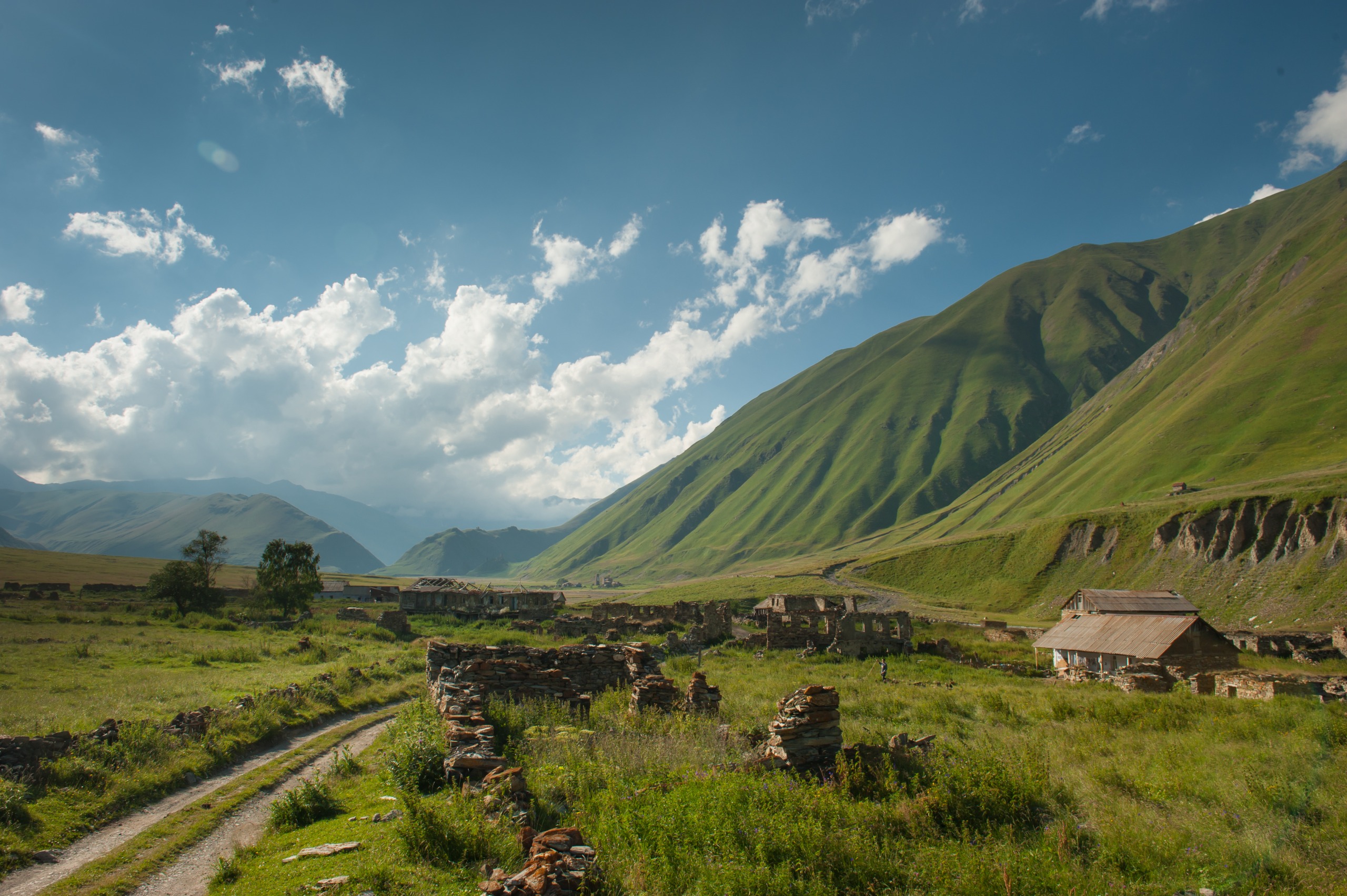
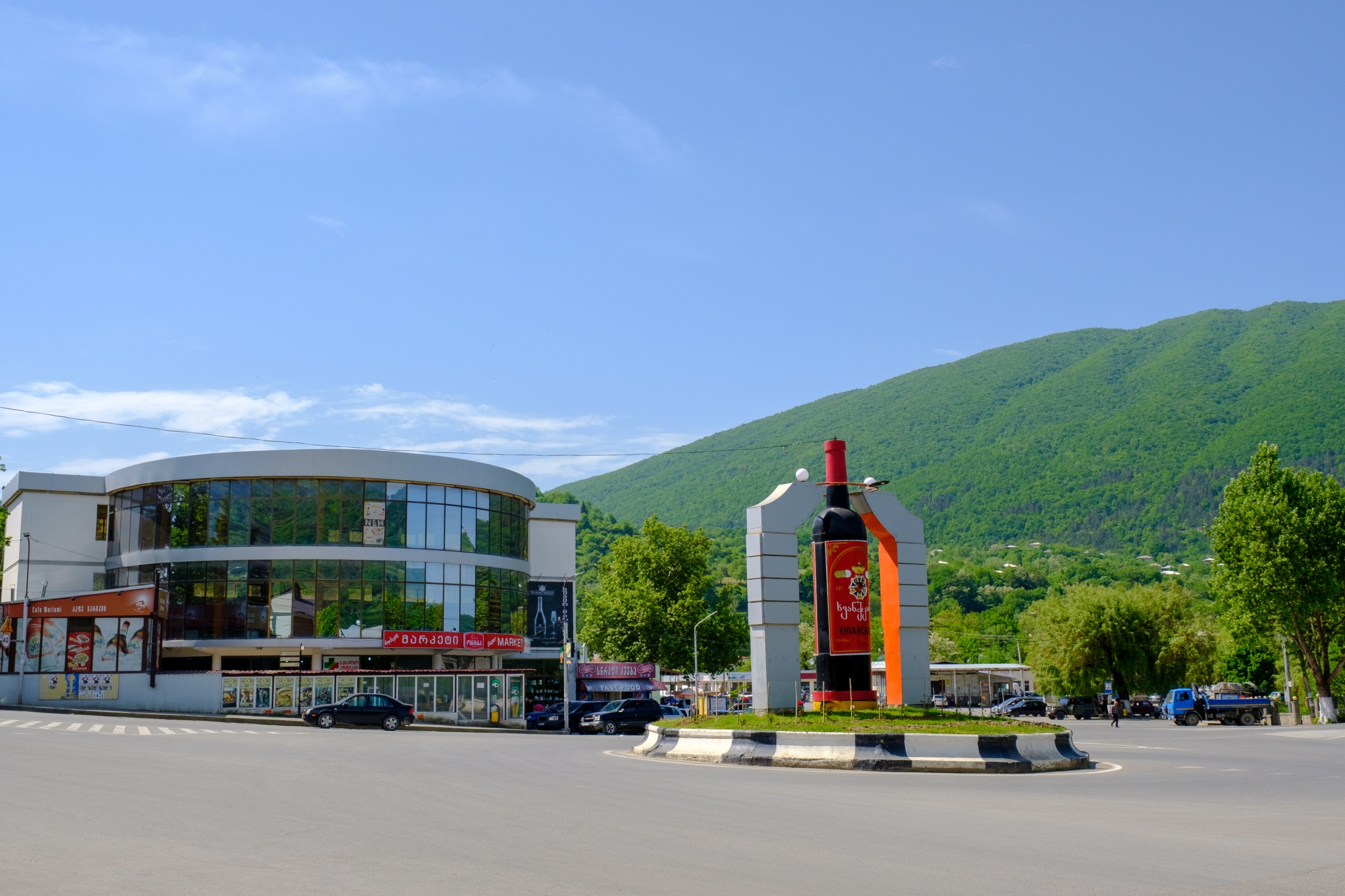
The cathedral is surrounded by wooded hills and vineyards. The Racha region produces renowned wines, notably Khvanchkara. The site itself, quiet and rarely crowded, contrasts with Georgia's major tourist monasteries in the east.
Etiquette and visiting rules
- Cover your shoulders and knees before entering; shawls are sometimes available at the entrance.
- Women must wear a headscarf inside the church.
- Speak quietly; services may be in progress.
- Do not touch the frescoes or interior sculptures.
- Ask permission before photographing worshippers or clergy.
Photography tips
Morning light (before 10 am) illuminates the western facade head-on, ideal for photographing reliefs without harsh shadows. In late afternoon, the southern facade is well lit. A macro lens or short telephoto allows you to capture detail in the carved interlace. Inside, natural light is dim: a tripod or high ISO sensitivity is useful. Photography is generally permitted without flash.
Location and access
Nikortsminda is located in the Racha region, approximately 15 km northeast of Ambrolauri. From Tbilisi, allow about 4 to 5 hours of driving via Kutaisi or Zestaponi. The Racha road follows the Rioni River and winds through wooded gorges. There is no regular public transport to the village; renting a car or taking a taxi from Ambrolauri is the most practical solution.
The site is mostly in the open air; access to the grounds is easy on foot. The church interior may have steps.
Nearby
- Ambrolauri — capital of Racha, a logistical hub and local market.
- Lake Shaori — a mountain lake a few kilometres away, appreciated for fishing and walking.
- Kutaisi — a major city in western Georgia, home to Bagrati Cathedral and Gelati Monastery, about 2 hours' drive away.
- Gelati Monastery — a 12th-century UNESCO site and one of Georgia's most important religious complexes.
Frequently asked questions
Spring (May–June) and autumn (September–October) offer the best conditions: mild temperatures and colourful vegetation around the site. In winter, the road from Ambrolauri can be snowy and difficult to access.
Yes. Shoulders and knees must be covered for everyone. Women must wear a headscarf inside. Pack these items if you plan to visit several religious sites in Georgia.
From Ambrolauri, it is possible to visit Nikortsminda in the morning and reach Lake Shaori in the afternoon. A day trip from Kutaisi is feasible but long (about 4 hours' driving in total).
Photography without flash is generally tolerated inside. Avoid photographing services or worshippers without their consent. Outside, there are no reported restrictions.
There is no regular bus service to the village. The simplest solution is to hire a taxi from Ambrolauri for the day, or rent a car from Kutaisi or Tbilisi.
Interested in this visit?
We can include it in your personalised itinerary.