Dadiani Palace and History Museum
Dadiani Palace and History Museum
Former residence of the Dadiani princes in Zugdidi, this museum houses 50,000 artifacts, a rare Napoleon I section and a 26-hectare botanical garden.
In Zugdidi, capital of the Samegrelo-Zemo Svaneti region once known as Odishi, the Dadiani Palace and History Museum occupies the heart of the city. Once the residence of a dynasty that ruled Mingrelia from the 12th to the 19th century, the complex now houses more than 50,000 artifacts spanning from the Bronze Age to the 19th century, as well as a collection linked to Napoleon I stemming from a family alliance with the Murats.
Why visit the Dadiani Palace
- A unique heritage in western Georgia, connected to the Dadiani dynasty and the Kingdom of Mingrelia.
- A rare Napoleon I section, resulting from the marriage between Princess Salomé Dadiani and Prince Achille Murat, nephew of the Emperor.
- Collections spanning multiple millennia: Colchian artifacts, medieval manuscripts, icons, European and Georgian paintings.
- A 26-hectare botanical garden designed by David Dadiani and Queen Ekaterine.
The Dadiani Dynasty and the Palace's History
The earliest mentions of the Dadiani dynasty date back to 1046, with Ioané Dadiani as the first known representative. From the 12th to the 15th century, the family ruled the Duchy of Odishi and that of Svanétia, then consolidated its power over Mingrelia under the reign of Levan II Dadiani in the 17th century. Ekaterine Chavchavadze, daughter-in-law of Levan, was the last queen of the region.
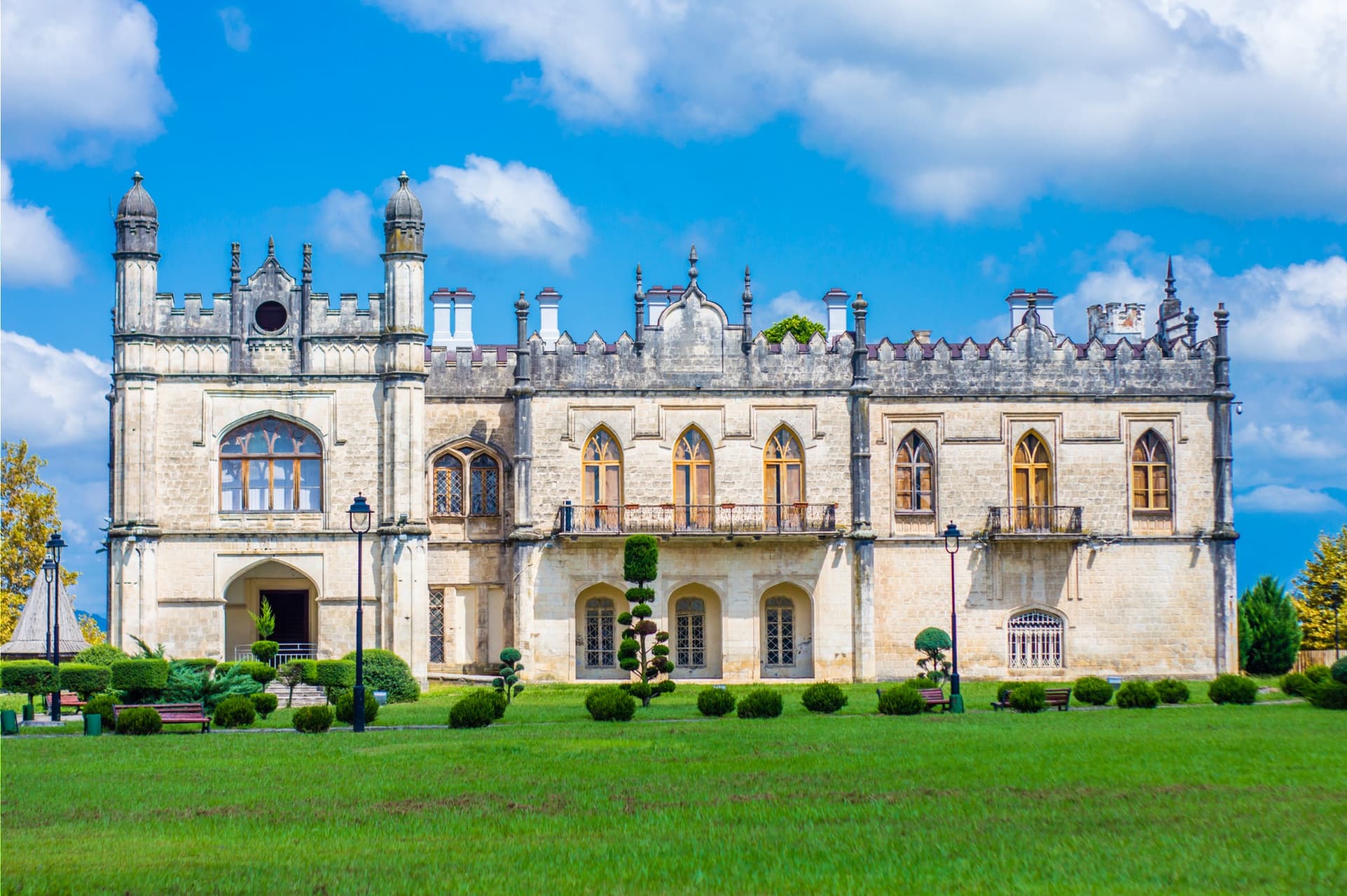
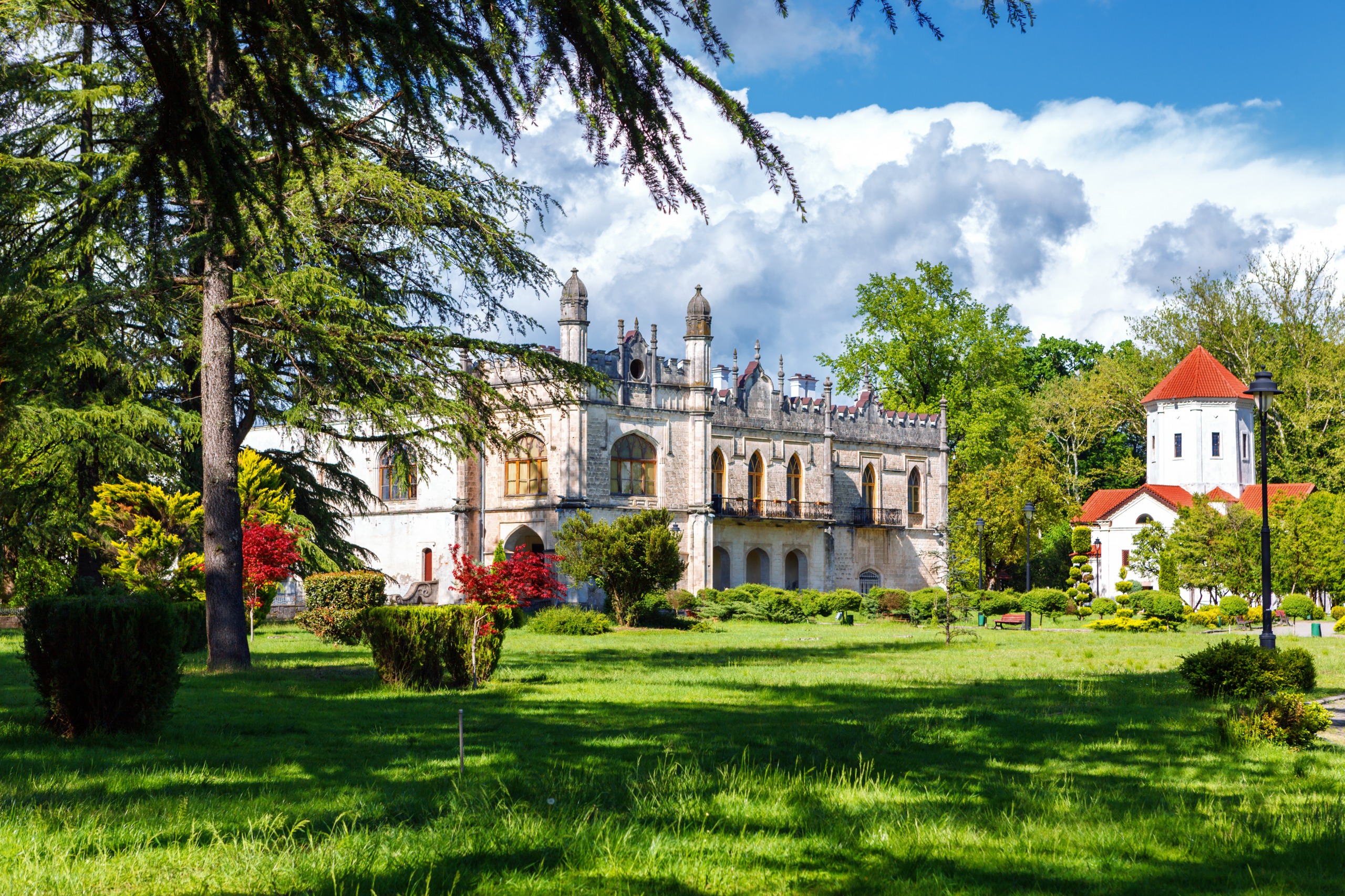
The palace's story took a turning point in the 19th century. Princess Salomé Dadiani married Prince Achille Murat (1847-1895), nephew of Napoleon I, in Paris. In 1876, the couple settled in Zugdidi and occupied one of the palaces built by Queen Ekaterine, Salomé's mother, whose origins trace back to the 17th century. Built primarily of wood and comprising 24 rooms, the building blends neo-Gothic and Venetian references with elements of 19th-century Georgian imperial architecture.
In 1855, Ottoman troops occupied Zugdidi and set the palace ablaze. Its reconstruction in the 19th century was entrusted to German architect Rice. On May 1, 1921, at the initiative of Georgian geologist and ethnographer Akaki Chanturia, the building became a museum. It actually extended a much older initiative: as early as 1839, Prince David Dadiani had founded a family museum, presented as the oldest in the Caucasus.
What to See in the Museum
The collections are spread across three palaces that once belonged to the Dadiani and bring together more than 50,000 artifacts.
Archaeology and Colchis
The museum preserves objects from the archaeological site of Nokalakevi, identified as the ancient Archaeopolis and occupied until the Byzantine period. Among the highlights of Colchian antiquities are a gold stag head from the 1st century BCE, ancient coins and embroideries dated from the 11th to the 13th century.
Napoleon I Section
Drawn from the Murat heritage, this section displays period furniture, portraits, weapons, silverware, faience and Chinese objects. A scientific library presents French encyclopedias and Napoleon I's original correspondence in 32 volumes. The most remarkable piece is one of three death masks of the Emperor, in bronze, cast from the mold made in 1821 by Dr. François Carlo Antommarchi and cast in Paris in 1833. The mask was brought to Zugdidi by Murat, son-in-law of Prince Niko Dadiani.
Religious Heritage
A section is devoted to Christian sacred objects. Notably on display is a relic of the Virgin, preserved according to tradition in the Treasury Chamber of Constantinople in the 15th century, then kept at the Khobi monastery until 1921. Local tradition also associates with the museum the robe attributed to the Mother of Jesus, as well as various liturgical objects.
Treasury Room and the Arts
The Treasury section displays European and Georgian paintings from the 19th century, including landscapes by the Peredvizhniki, icons and crosses from the 10th to the 20th century, as well as a photographic collection of over 5,000 pieces. It also includes medieval weapons, among them the sword attributed to Shamil, and 15th-century manuscripts.
The Botanical Garden
The palace is surrounded by a 26-hectare botanical garden, designed by David Dadiani and Queen Ekaterine. More than 1,000 species from Asia, Europe and North America are cultivated there. A century-old giant magnolia marks its center.
Practical Information
- Duration: Allow 1.5 to 2.5 hours to tour the main collections and garden.
- Opening hours: Open year-round except Mondays; seasonal hours, verify before your visit.
- Admission: Moderate entry fee, free or reduced for children and school groups.
- Guided tours: Available on-site, recommended for the Napoleon section and religious artifacts.
How to Get There
The museum is located on the central square of Zugdidi's park, in the heart of the city. Zugdidi is connected to Tbilisi by a daily overnight train (approximately 8 to 9 hours) and by marshrutkas (minibuses) from the Didube bus station. The city is also the main gateway to Upper Svanétia, making it a convenient stop before heading up to Mestia.
Nearby Attractions
To further explore Georgian heritage, several sites lend themselves to a complementary itinerary:
- Uplistsikhe, a major troglodytic city of ancient Georgia.
- The Dmanissi archaeological site, one of the oldest sites of human occupation outside Africa.
- The Qvevri Museum, dedicated to Georgian wine-making tradition.
- The Ikalto monastery and academy, a major center of medieval learning.
Frequently Asked Questions
Frequently asked questions
The mask arrived in Mingrelia through Achille Murat, nephew of Napoleon I, who married Princess Salomé Dadiani and settled in Zugdidi in 1876. The original mold was made in 1821 by Dr. François Carlo Antommarchi; the bronze cast in the museum was made in Paris in 1833.
Allow 1.5 to 2.5 hours for the three palaces and botanical garden. Visitors interested in the Napoleon section or religious art can easily spend half a day.
The core dates back to 1839, when Prince David Dadiani founded a family museum. This precedence is claimed by the institution, which presents itself as the oldest museum in Georgia and the Caucasus.
A guided tour is recommended: English-language signage remains limited and the historical context (Dadiani dynasty, connection to the Murats, Byzantine relics) greatly illuminates the collections.
Yes. Zugdidi is the usual starting point for Mestia and Upper Svanétia. A half-day stop at the museum integrates easily before or after your mountain stay.
Planning Your Trip
The Dadiani Palace is part of a broader cultural itinerary, spanning medieval heritage, wine-making traditions and Caucasian landscapes. To build a custom circuit, consult our Georgia travel ideas.
Interested in this visit?
We can include it in your personalised itinerary.