Barakoni Church
Barakoni Church
Georgian Orthodox church built in 1753 on a clifftop above the confluence of the Lukhuni and Rioni rivers, near Ambrolauri in Racha.
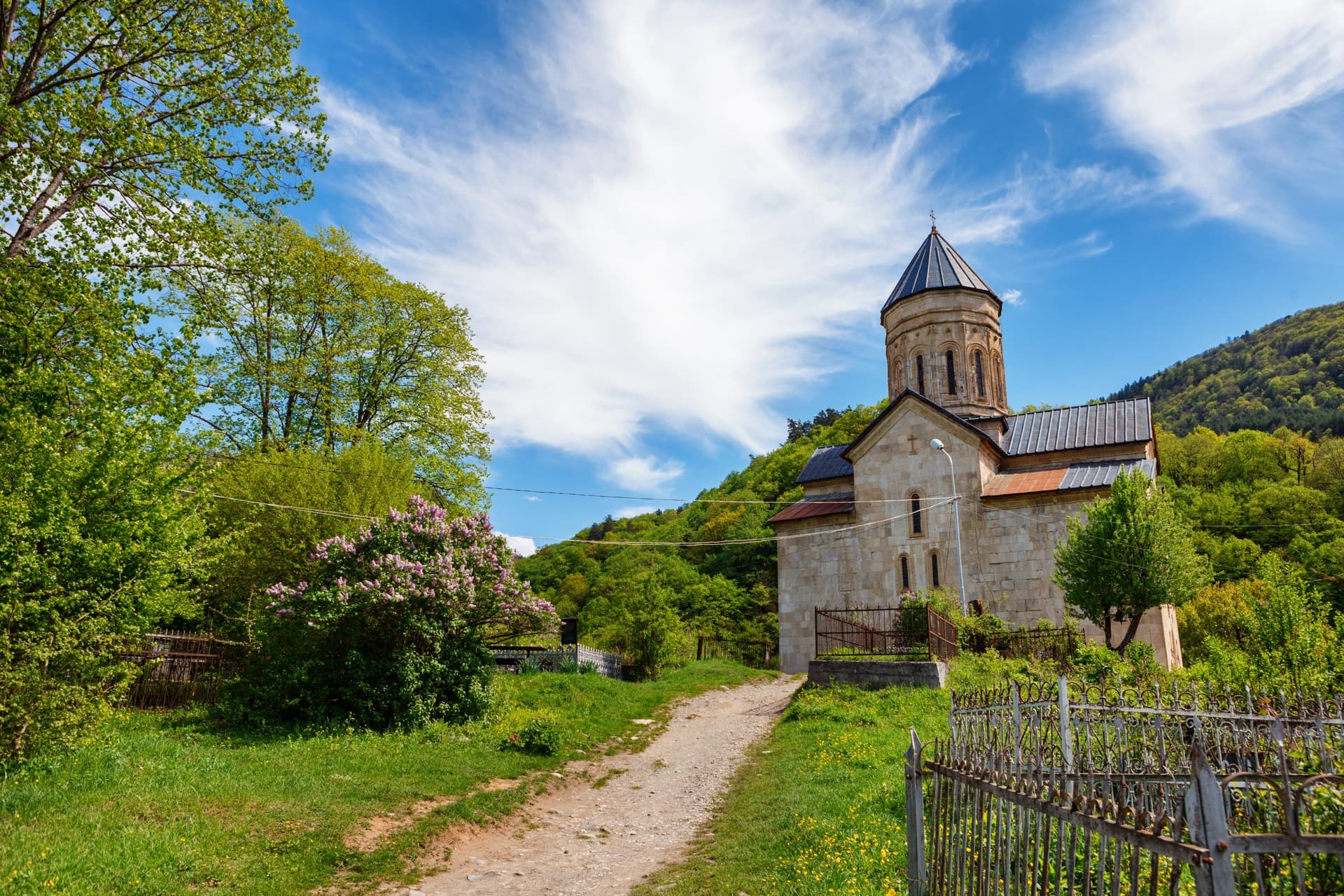
Barakoni Church, also known as the Church of the Mother of God of Barakoni, is a Georgian Orthodox church located in the village of Tsesi, a few kilometers from Ambrolauri, in the mountainous province of Racha. Built on a clifftop above the confluence of the Lukhuni and Rioni rivers, it ranks among the most representative examples of Georgian religious architecture from the 18th century.
Why visit Barakoni Church
Barakoni holds a special place in the history of Georgian sacred architecture. Built in 1753, it is often described as one of the last monuments of significance continuing the medieval Georgian tradition, at a time when religious architectural production of this scale was becoming increasingly rare in the country.
Its location on a rocky spur dominating the valley, combined with the sobriety of its cruciform layout and the fine sculptural details of its façade, makes it a worthwhile stop on an itinerary through Racha, a region still rarely visited by foreign travelers.
History of the building
The church was erected in 1753 by architect Avtandil Chulaveli, at the request of Prince Rostom of Racha. It represents a tradition of princely patronage that shaped much of Georgia's religious heritage.
Under the Bolshevik regime in the 20th century, the building was closed and desecrated, like many places of worship across the country. Services were forbidden here throughout the Soviet period. The church also sustained minor damage during the Racha earthquake of 1991, which struck the region with particular force. Returned to worship after Georgia's independence, it has since resumed its liturgical function.
What to see on site
Architecture and layout
The church features a cruciform plan with right angles, without lateral extensions or annexes, topped by a central dome. This austere structure is characteristic of the final phases of medieval Georgian sacred architecture, still visible in 18th-century Georgia.
Façade and ornamentation
The exterior walls are built from finely dressed and carefully laid stone. Multiple registers of sculptures ornament the façade, accompanied by inscriptions dating to the 18th century. Close observation reveals typical motifs of Georgian decorative art: interlacing patterns, carved crosses, and elaborately framed windows.
The site and its immediate surroundings
The church stands on a rocky promontory above the confluence of the Lukhuni and Rioni rivers. The viewpoint from the esplanade offers a clear reading of Racha's relief and explains the defensive and symbolic choice of the location.
Practical information
- Status: active Orthodox church, open to visitors outside of services.
- Admission: free entry; donations welcome.
- Dress code: modest clothing recommended (shoulders and knees covered), headscarf for women, as in most Georgian churches.
- Duration: allow 30 minutes to 1 hour on site; longer if you combine it with the nearby citadel.
- Photography: permitted outside; inside, check signage or ask staff.
How to get there
The church is located in the village of Tsesi, approximately 7 km west of Ambrolauri, along the road descending toward the Rioni valley.
- From Ambrolauri: short drive or taxi ride along the main road; a few marshrutkas (minibuses) also serve the route.
- From Kutaisi: approximately 2 to 3 hours by road via Tkibouli or Khoni; winding but paved mountain route.
- From Tbilisi: 5 to 6 hours by road; it is generally more comfortable to split the journey with an overnight stay in Kutaisi or directly in Ambrolauri.
A private vehicle or hired driver remains the most practical option, as Racha is poorly served by public transport.
When to go
Racha is a mid-altitude mountain region where access and visiting conditions vary significantly by season.
- May to October: most favorable period, with clear roads and lush landscapes.
- Summer (June-August): pleasant temperatures at altitude, good compromise for combining Barakoni with other Racha sites.
- Autumn (September-October): particularly striking colors in the valleys, moderate visitor numbers.
- Winter: access possible but conditions sometimes difficult; snow and ice to expect on secondary roads.
Nearby attractions
Just across from the church, on the opposite slope, stands the Minda Citadel, one of the few still well-preserved fortresses in Racha. Visiting both sites complements the experience nicely.
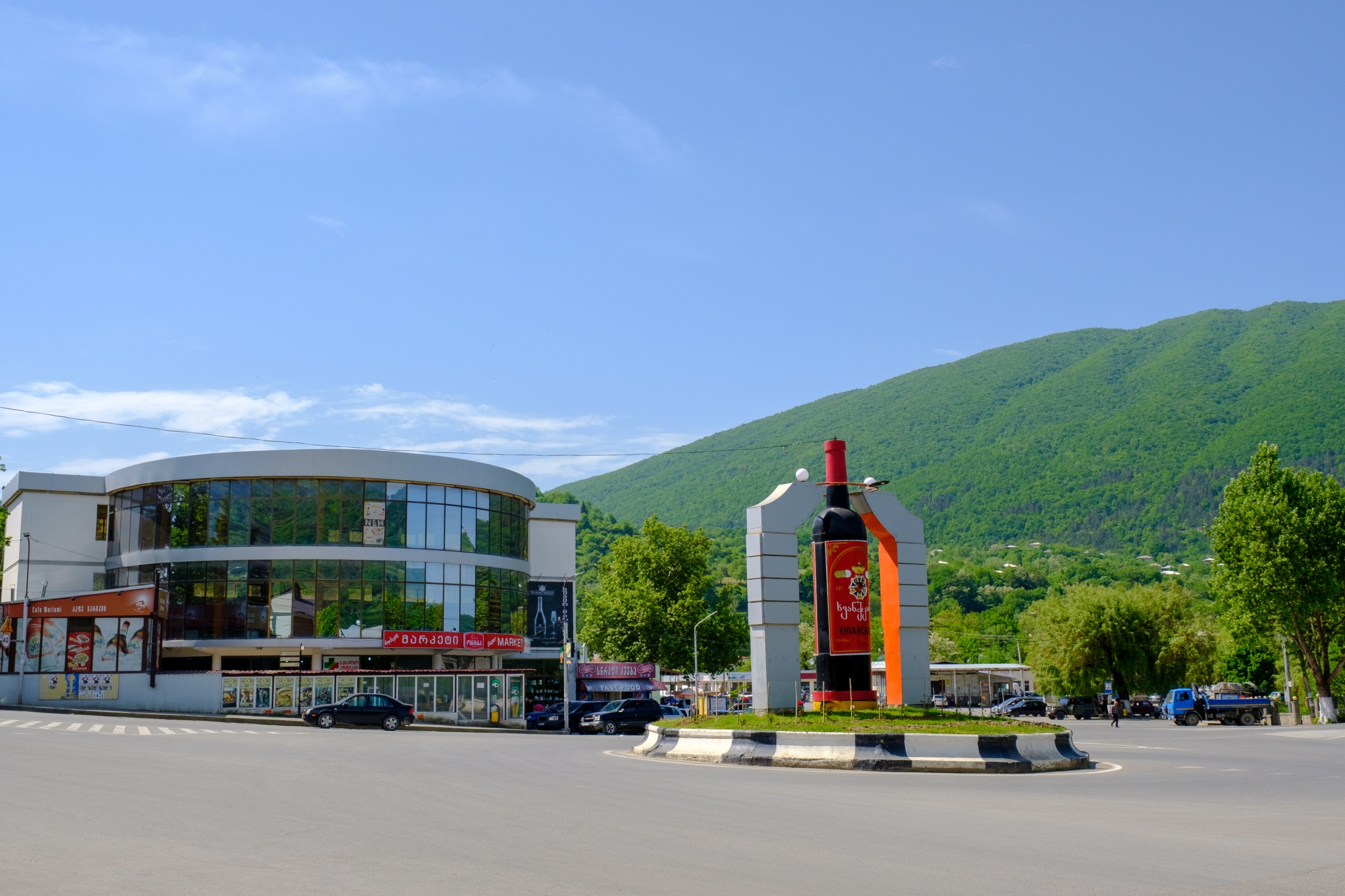
Ambrolauri, the regional capital, serves as a logistical base and allows you to extend the itinerary toward the Khvanchkara vineyards, the villages of Nikortsminda, or the more remote valleys of Upper Racha. To compare Barakoni with other Georgian religious complexes, you can then visit the Ghélati monastery near Kutaisi, or the Bodbe monastery in Kakheti.
Incorporating Barakoni into your itinerary
Barakoni Church fits naturally into an itinerary combining western Georgia (Imereti, Racha) and the return to Tbilisi via Kartli. To build a coherent circuit around this site, see our suggestions for travel in Georgia.

Interested in this visit?
We can include it in your personalised itinerary.