Tbilisi Open-Air Ethnographic Museum
Tbilisi Open-Air Ethnographic Museum
Sprawling across 52 hectares above Vake, the Tbilisi Ethnographic Museum brings together 70 authentic dwellings from Georgian regions, painstakingly reconstructed stone by stone.
West of Turtle Lake, on a hillside overlooking the Vake district, the Tbilisi Open-Air Ethnographic Museum sprawls across 52 hectares, offering a panorama of Georgian rural architecture. Seventy buildings, relocated from their original regions and faithfully reconstructed, compose a "Georgia in miniature" envisioned in the late 19th century and realized in the 20th.
Why visit the Tbilisi ethnographic museum
The site offers a tangible understanding of Georgia's regional diversity without having to travel across the country. In half a day, you traverse the vernacular architecture of Kakheti, Svaneti, Imereti, and Mingrelia, with dwellings furnished according to local customs. It's also one of the few green heritage spaces in immediate proximity to central Tbilisi, and a pleasant place to explore on foot far from urban traffic.
- 52 hectares of open air, ideal for leisurely wandering
- 11 regional ethnographic zones
- Traditional costumes, ceramics, furnishings, and household objects
- Summer programming including the Art Geni folklore festival
History of the museum
The idea of a museum bringing together all of Georgia's regions in one place dates back to the late 19th century. The project took shape under the impetus of Georgian ethnographer Giorgi Chitaia, who officially founded the institution on April 27, 1966. The work of transferring and reconstructing buildings lasted a decade: the museum opened to the public only in 1976.
Since December 30, 2004, the site has been under the Georgian National Museum, which oversees its management and conservation. The dwellings that make up the museum are not reconstructions: they are authentic buildings, dismantled in their original villages and then reassembled stone by stone, beam by beam, according to traditional techniques.
What to see on the site
Eastern Georgia: stone, wood, and flat roofs
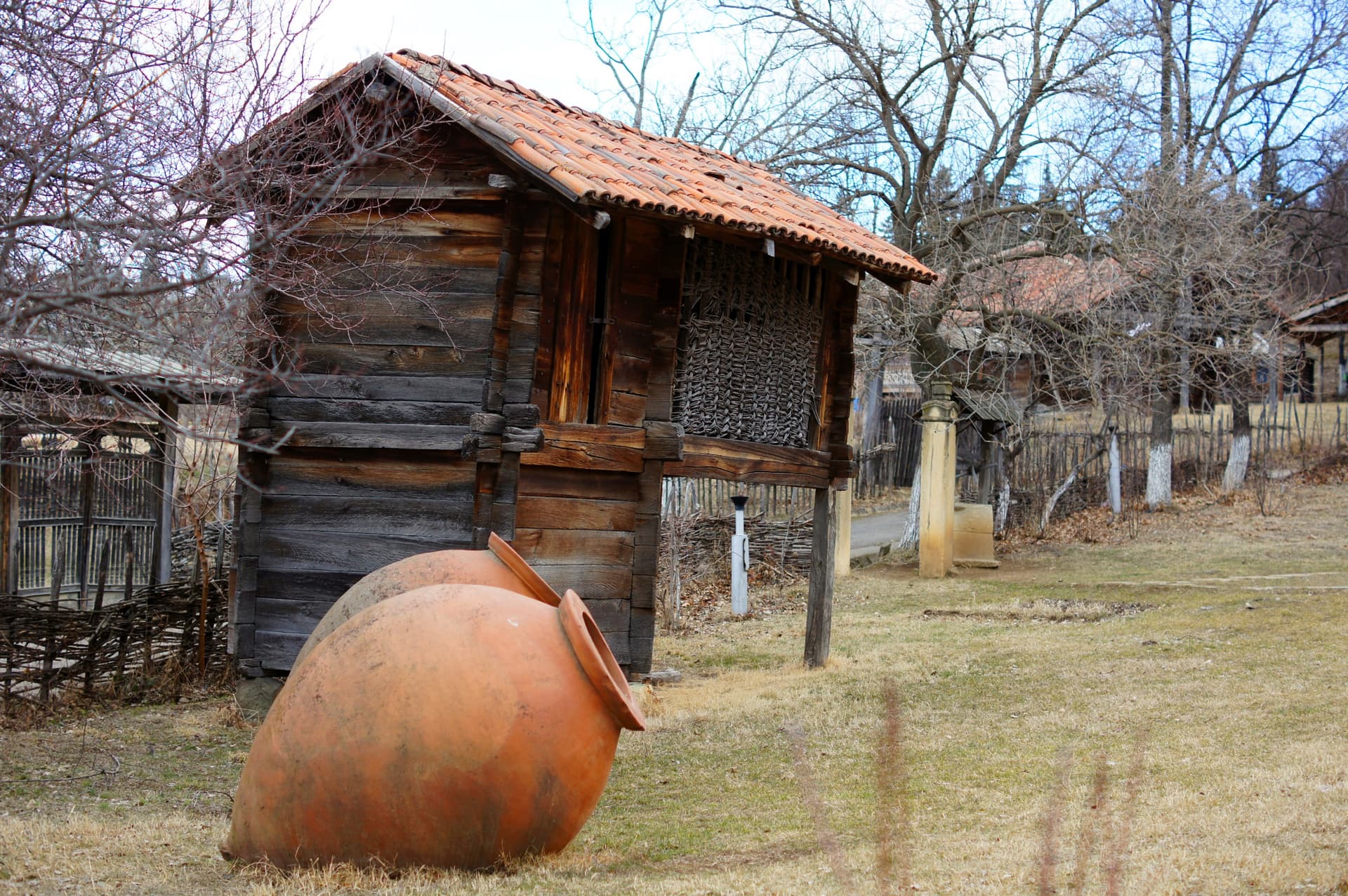
The zone devoted to the country's east features stone and wood dwellings with flat roofs, characteristic of the plains of Kakheti and Kartli. Inside, furnishings and utensils evoke peasant daily life. You'll notably see a wine cellar from the Kakheti region, equipped with qvevris (underground jars used for traditional winemaking, inscribed on UNESCO's intangible cultural heritage list).
Svaneti and high valleys
Mountainous regions are represented by their famous Svaneti defensive towers, tall stone structures that served both as shelter and defensive posts. The contrast with lowland dwellings illustrates how Georgians adapted to vastly different environments.
Western regions: gabled roofs
The western regions (Imereti, Mingrelia, Guria) are evoked through wooden houses with gabled roofs, better suited to more humid climates. The volumes, carved balconies, and assembly techniques differ markedly from those in the east.
Costumes, crafts, and everyday objects
An exhibition area brings together traditional costumes, furnishings, ceramics, agricultural tools, and household utensils, organized by region. This complements your wandering through the dwellings and helps you grasp the ways of life associated with each area.
When to visit
Since the museum is an open-air site, visiting is decidedly more pleasant from late spring to early autumn (May to October). Summer months can be warm midday: favor mornings or late afternoons. In winter, certain areas may be less accessible depending on weather conditions. The Art Geni folklore festival, held in summer over several days, offers an opportunity to see the site come alive with musicians, dancers, and artisans from across Georgia.
Practical information
- Duration of visit: allow 1.5 to 3 hours depending on your pace and interest in the interiors
- Admission: moderate entry fee, additional charge possible for guided tours
- Hours: daytime opening, generally closed one day per week — verify before visiting
- To bring: comfortable walking shoes (sloped terrain, unpaved paths), water, hat in summer
How to get there
The museum is located west of Turtle Lake (Kus Tba), above the Vake district. From central Tbilisi, allow approximately 15 to 20 minutes by taxi or ride-share. It's also possible to combine the visit with a cable car ride to the lake, followed by a twenty-minute walk. Municipal buses serve the Vake area, from where an uphill walk leads to the site.
Nearby attractions
Turtle Lake, just next door, is a favorite haunt for Tbilisi residents, with waterside cafés and shaded paths. The Vake district, down below, offers restaurants, parks, and galleries. To further explore Georgia's cultural heritage, you can complement your visit with major sites such as the Gelati Monastery, the Bodbe Monastery, or the Dmanissi archaeological site.
Frequently asked questions
A comfortable visit takes 1.5 to 3 hours. If you want to enter most dwellings and read the panels, allow about 3 hours.
Yes, but since it's an open-air site on a hillside, visiting is far more pleasant between May and October. In winter, certain areas may be slippery or closed.
Art Geni is a summer folklore festival held at the museum site, taking place over several days. It brings together music, dance, crafts, and gastronomy from Georgia's various regions.
The simplest way is by taxi or ride-share (15–20 minutes). You can also take a bus to Vake and walk uphill, or take the Turtle Lake cable car and walk approximately 20 minutes.
Yes, since December 30, 2004, the Open-Air Ethnographic Museum has been part of the Georgian National Museum.
Extend your journey
The ethnographic museum is an excellent introduction to the country's regional diversity before exploring Kakheti, Svaneti, or Imereti. To build a bespoke itinerary combining heritage, mountains, and traditions, consult our Georgia trips.
Nearby
Interested in this visit?
We can include it in your personalised itinerary.