Qvevri Museum
Qvevri Museum
In Napareuli, Kakheti, the Qvevri Museum tells the story of 8,000 years of Georgian winemaking centered around clay jars inscribed on the UNESCO World Heritage list.
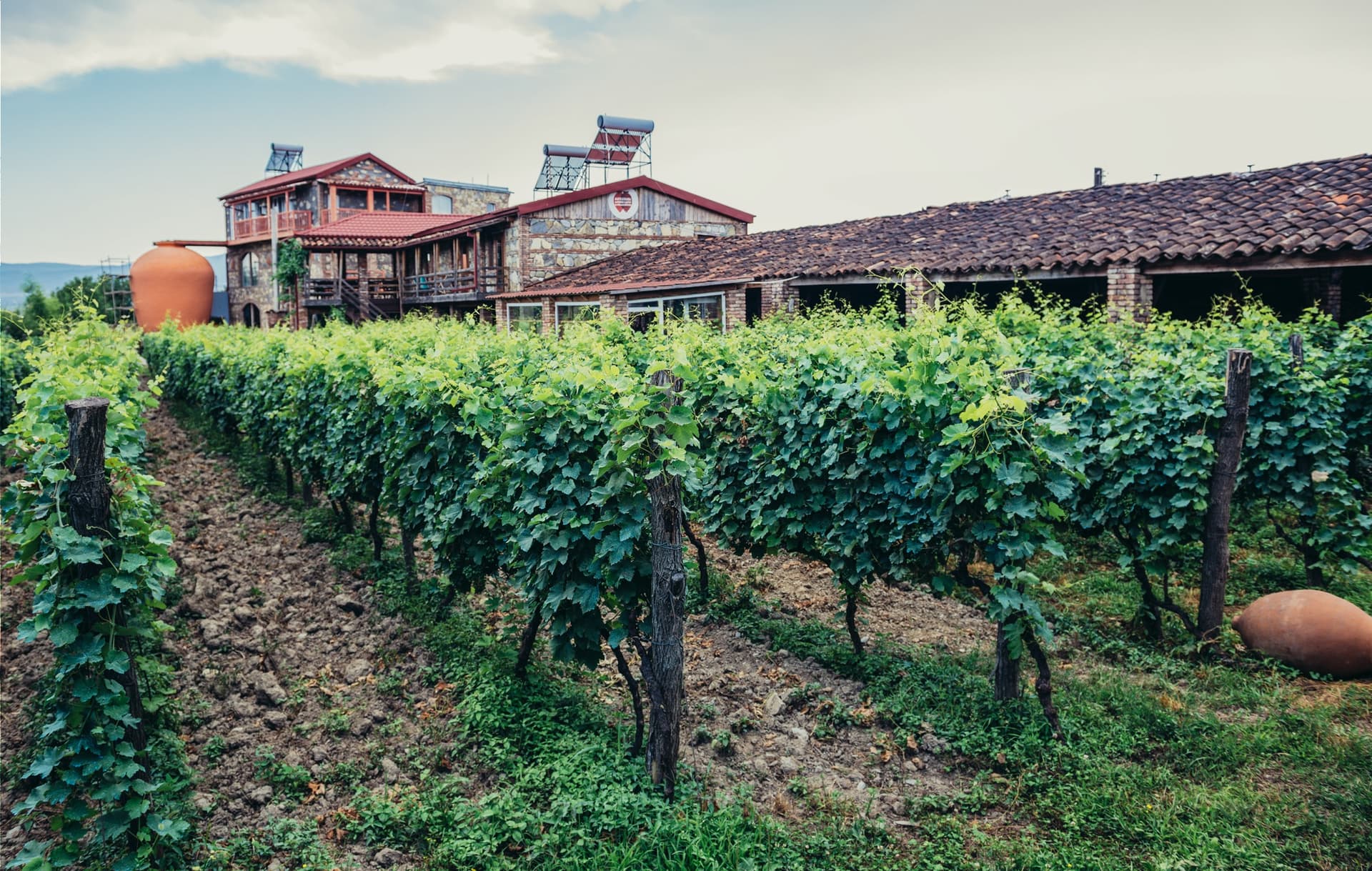
In the heart of the village of Napareuli, in the Kakheti region, the Qvevri Museum traces one of the oldest winemaking traditions in the world. Housed within an active wine estate, it documents the crafting of qvevris, those large earthenware jars buried underground that have served to ferment Georgian wine for millennia.
Why visit the Qvevri Museum
The museum holds a unique place in Georgia's cultural landscape: it is entirely devoted to the qvevri winemaking technique, inscribed on the UNESCO List of Intangible Cultural Heritage in 2013. The visit combines the archaeology of craft—clay shaping, wood-fired kiln firing, jar burial—with direct observation of a working cellar. A rare advantage: three 500-liter vessels have been cut in thirds and covered with glass, allowing you to follow visually each stage from pressing to natural filtration.
The site combines museum, tastings, a restaurant, and a guesthouse, making it a substantial stop for anyone interested in the winemaking culture of the Napareuli region.
A winemaking history spanning 8,000 years
Georgia claims a winemaking history of 8,000 years, and the oldest qvevris found on its soil date back approximately 7,000 years. Inhabitants of the South Caucasus developed early a method to transform wild grape juice into wine using buried earthenware vessels, where fermentation occurs naturally.
The country traditionally divides into two major wine zones:
- Eastern zone: Kakheti, Meskheti, Kartli
- Western zone: Samegrelo, Imereti, Guria, Racha-Lekhchumi, Adjara, Abkhazia
Kakheti concentrates a major share of production. Protected to the north by the Caucasus and tempered by the distant influence of the Black Sea, it offers climate conditions ideal for viticulture.
A museum founded by two winemaking brothers
The Qvevri Museum was founded in 2014 by twin brothers Gia and Gela Gamtkitsulashvilis, on their ancestral estate called Twins Wine Cellar. The cellar today counts 107 qvevris still in production, grounding the museum in actual winemaking activity rather than reconstructed scenography.
What to see on site
The tour spans 363 m² and combines artifacts, life-size exhibitions, and photographic archives.
Standout features
- An 8-meter-long vessel statue, a visual landmark of the museum
- The three 500-liter vessels cut in thirds and sealed with glass, revealing the interior of an active qvevri
- A section dedicated to firing clay in a large wood-fired kiln
- Illustrated panels on Georgian wine regions and grape varieties
The winemaking process explained
A qvevri is an egg-shaped earthenware container with a maximum capacity of 2,000 liters, lined inside with beeswax or melted fat. Once buried, it stabilizes temperature year-round. A quality qvevri can produce wine for over a century.
Manufacturing follows several stages:
- Grape pressing, traditionally in a wooden press called Satsnakheli
- Pulp fermentation for 3 to 4 weeks, with indigenous yeast, stirred 4 to 5 times daily
- Sealing the qvevri with a stone or wooden lid, sealed with clay for maturation
- For white wine: maturation for 6 months beneath stone slabs, covered with clay and ash
The resulting wine displays a characteristic amber color, an spiced aroma with yeast notes, and elevated antioxidant concentration from prolonged contact with skins and stems.
Activities offered
The visit is often accompanied by tastings of the estate's vintages, a demonstration of bread baking in a traditional oven, and preparation of churchkhelas, string desserts made from grapes and walnuts. Visitors can also try the Satsnakheli press.
Practical information
- Visit duration: allow 1 to 2 hours depending on tastings
- Rates: modest entrance fee, free for young children; tastings may incur a surcharge
- Hours: open during day and evening; check with the estate before visiting
- Accommodation and dining: a guesthouse and restaurant are adjacent to the museum
Tip: if your itinerary includes multiple Kakheti wine estates, schedule the Qvevri Museum early. The theoretical foundation provided here facilitates understanding of other domains.
When to visit
The museum is open year-round, but two periods are particularly worthwhile:
- Late September to mid-October: the rtveli (Georgian harvest) is in full swing. This is when qvevris are filled and fermentation begins.
- May to June: mild weather in Kakheti, vines in full growth, moderate crowds.
Winter remains possible but winemaking activity is more subdued.
How to get there
Napareuli is located in northern Kakheti, about 2 hours' drive from Tbilisi and 30-40 minutes from Telavi, the regional capital.
- By car: the most practical option, via Telavi then the road following the Alazani River
- By marshrutka (minibus): connections from Tbilisi (Ortachala or Isani bus stations) to Telavi, then local transfer to Napareuli
- By organized excursion: many wine tours from Tbilisi include this museum in a Kakheti loop
Nearby attractions
Kakheti groups a high concentration of wine and heritage sites. To extend your visit, you can explore several other cultural locations in Georgia:
- The open-air ethnographic museum in Tbilisi, a useful complement to understanding Georgian rural habitat
- The Gelati Monastery, a medieval ensemble inscribed on the UNESCO World Heritage list
- The Dmanissi archaeological site, where the earliest hominids outside Africa were uncovered
Frequently asked questions
Frequently asked questions
It is a large egg-shaped earthenware jar, buried in the ground, used to ferment and age wine in Georgia for about 7,000 years. Its capacity can reach 2,000 liters.
Yes, but we recommend confirming hours before your visit, especially outside the wine season. The busiest period coincides with the harvest, in September-October.
Yes. The museum belongs to Twins Wine Cellar, which produces its own wines in 107 active qvevris. Tastings are offered, sometimes for an additional fee beyond the entrance ticket.
Allow 1 hour for the museum tour alone, and 2 to 3 hours if you include a tasting, a meal at the adjacent restaurant, or a demonstration of the Satsnakheli press.
Because skins, seeds, and sometimes stems macerate with the juice for 3 to 4 weeks, transferring pigments and tannins. The white wine thus obtains its characteristic hue and a spiced aromatic profile.
Preparing your trip
The Qvevri Museum fits naturally into an itinerary centered on Kakheti. To build a circuit including Tbilisi, medieval monasteries, and wine routes, consult our suggestions for travel to Georgia.
Interested in this visit?
We can include it in your personalised itinerary.