Rabati Fortress (Akhaltsikhe)
Rabati Fortress (Akhaltsikhe)
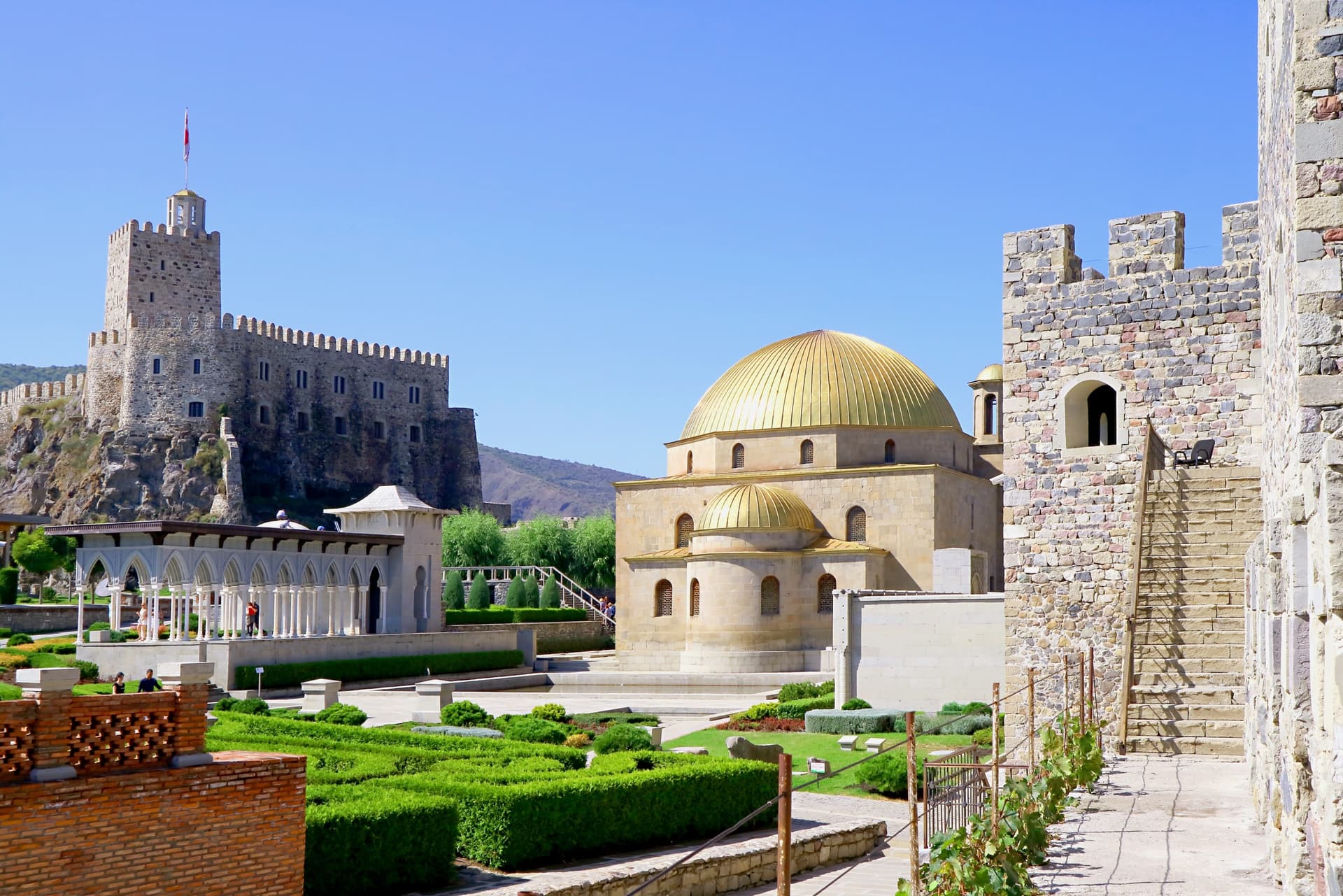
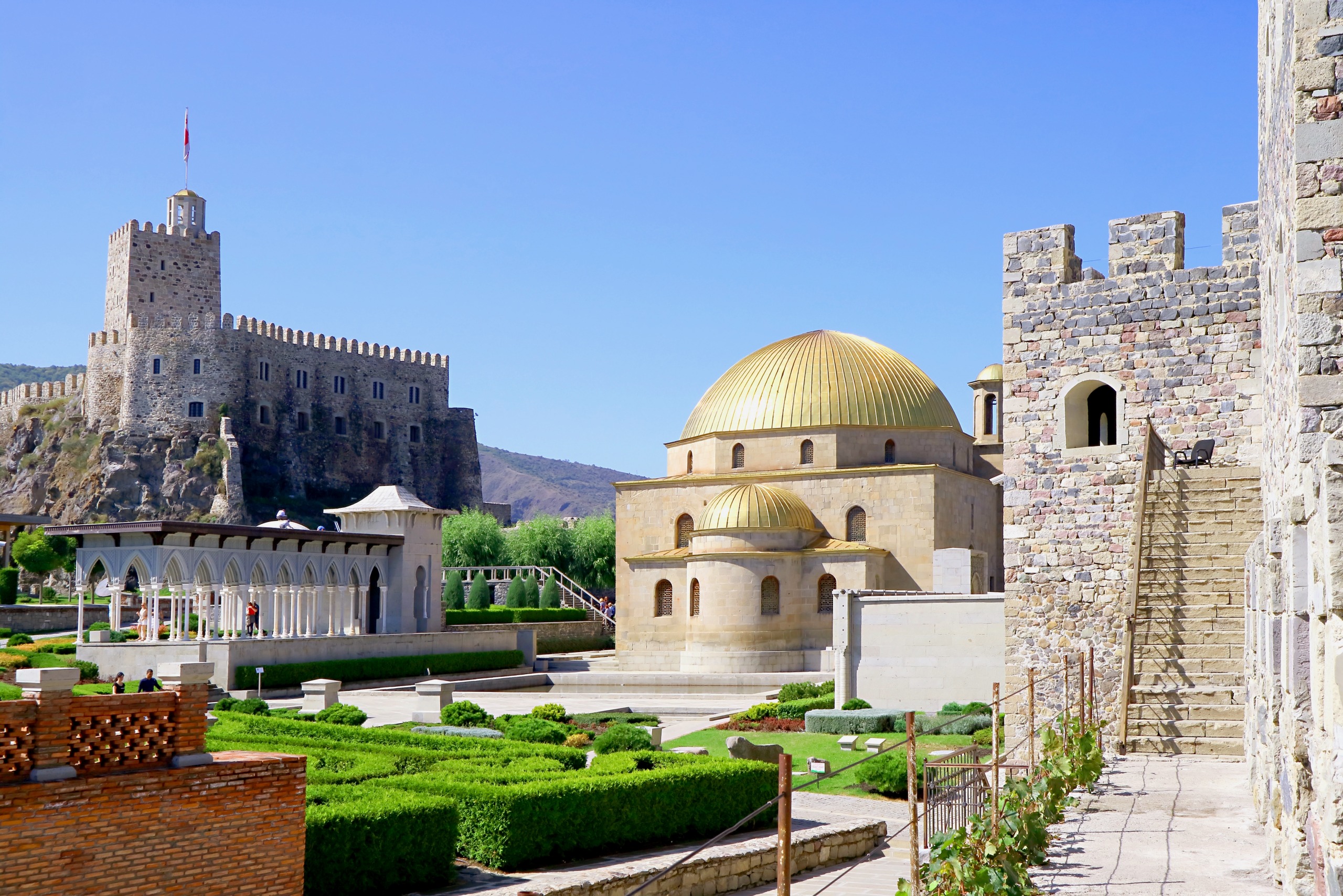
Overlooking Akhaltsikhe, Rabati Fortress brings together on a single site a mosque, an Orthodox church, a minaret and medieval ramparts. A unique testament to Georgian and Ottoman influences in southern Georgia.
Rabati Fortress overlooks the city of Akhaltsikhe in the Samtskhe-Javakheti region of southern Georgia. Built in the 12th century and substantially remodeled under Ottoman rule, it concentrates on a single site a mosque, an Orthodox church, a minaret, a palace and ramparts. This unique architectural blend reflects the successive layers of the region's history.
Quick Facts
- Access: the fortress is accessible on foot from central Akhaltsikhe by climbing the hill that overlooks the Mtkvari River.
- Admission: part of the site (museum, palace) is fee-based; the outer ramparts and main courtyard are freely accessible.
- Recommended duration: allow 1.5 to 2 hours to explore the entire complex.
- Dress code: modest dress is recommended to enter the Orthodox church (shoulders and knees covered).
What to See
The complex is divided into two zones: the restored lower town with its shops and cafés in stone buildings, and the higher citadel, older in origin. Here you will find the Ahmadiye Mosque (18th century), the Church of the Dormition, a minaret, the ruins of the Jakeli palace and a regional museum dedicated to the history of Samtskhe-Javakheti.
History and Context
The fortress is mentioned as early as the 9th century. It becomes the center of the Duchy of Samtskhe under the Jakeli dynasty in the 12th–13th centuries. The Ottomans capture it in 1628 and rename it "Akhaltsikhe" ("new fortress" in Georgian). Russia conquers it in 1828. A major restoration, controversial for its heavily reconstructed character, was completed in 2012.
Highlights of the Visit
The Ahmadiye Mosque
Built in the 18th century by Pasha Ahmet, it is today one of the few active mosques in Georgia. Its austere interior contrasts with the rich decorative sculpture of its stone portal.
The Church of the Dormition
Constructed in the medieval Georgian period, it was converted into a mosque under Ottoman rule before being returned to Orthodox worship. The partially preserved frescoes testify to its antiquity.
The Ramparts and Panoramic View
From the rampart walks, the gaze extends over the Mtkvari valley, the rooftops of Akhaltsikhe and, on clear days, toward the reliefs of the Lesser Caucasus. It is one of the best vantage points in the city.
The Regional Museum
Housed in the restored palace, it presents archaeological objects, Georgian manuscripts and Ottoman artifacts related to the history of Samtskhe-Javakheti.
Etiquette and Visiting Rules
- Cover shoulders and knees when entering the Orthodox church; shawls are sometimes available at the entrance.
- In the mosque, remove your shoes and dress modestly.
- Avoid noisy visits during religious services.
- Photography is generally permitted in outdoor spaces; check with staff at the entrance of places of worship.
Photography Tips
Morning light is ideal for photographing the mosque façade and minaret, which face east. In late afternoon, the western ramparts offer golden light over the valley. For a wide view of the complex, descend toward the bridge over the Mtkvari.
Location and Access
Akhaltsikhe is located approximately 200 km southwest of Tbilisi. Marshrutkas (minibuses) connect Tbilisi and Akhaltsikhe daily from Didube bus station. The fortress is visible from almost everywhere in town and is reached on foot in just a few minutes from the center. The site is partially accessible to people with reduced mobility in the restored lower area; the upper citadel features cobblestones and slopes.
In the Vicinity
- Sapara Monastery — medieval complex perched in the forests about fifteen kilometers from Akhaltsikhe, with a 13th-century church featuring remarkable frescoes.
- Vardzia — rock-hewn city carved into volcanic stone in the 12th century under Queen Tamar, approximately 60 km to the south.
- Khertvisi Fortress — one of Georgia's oldest fortresses, on the road to Vardzia, at the confluence of the Mtkvari and Paravani rivers.
Frequently asked questions
Spring (April–June) and autumn (September–October) offer pleasant temperatures and favorable light. Summer is warm but the fortress remains visited year-round.
Yes, this is a classic itinerary from Akhaltsikhe. Visit Rabati in the morning, then head to Vardzia in the afternoon. Arrange a vehicle or taxi, as direct public transport is limited.
Yes, the Ahmadiye Mosque welcomes non-Muslim visitors outside prayer times. Modest dress and removal of shoes are mandatory.
Yes. The renovation completed in 2012 has been criticized by historians and architects for its overly new appearance and partly speculative reconstructions. The site remains nevertheless an important testament to the region's multicultural history.
Photography is free in outdoor spaces. Inside the mosque and church, check the rules posted at the entrance; certain areas may be restricted.
Interested in this visit?
We can include it in your personalised itinerary.