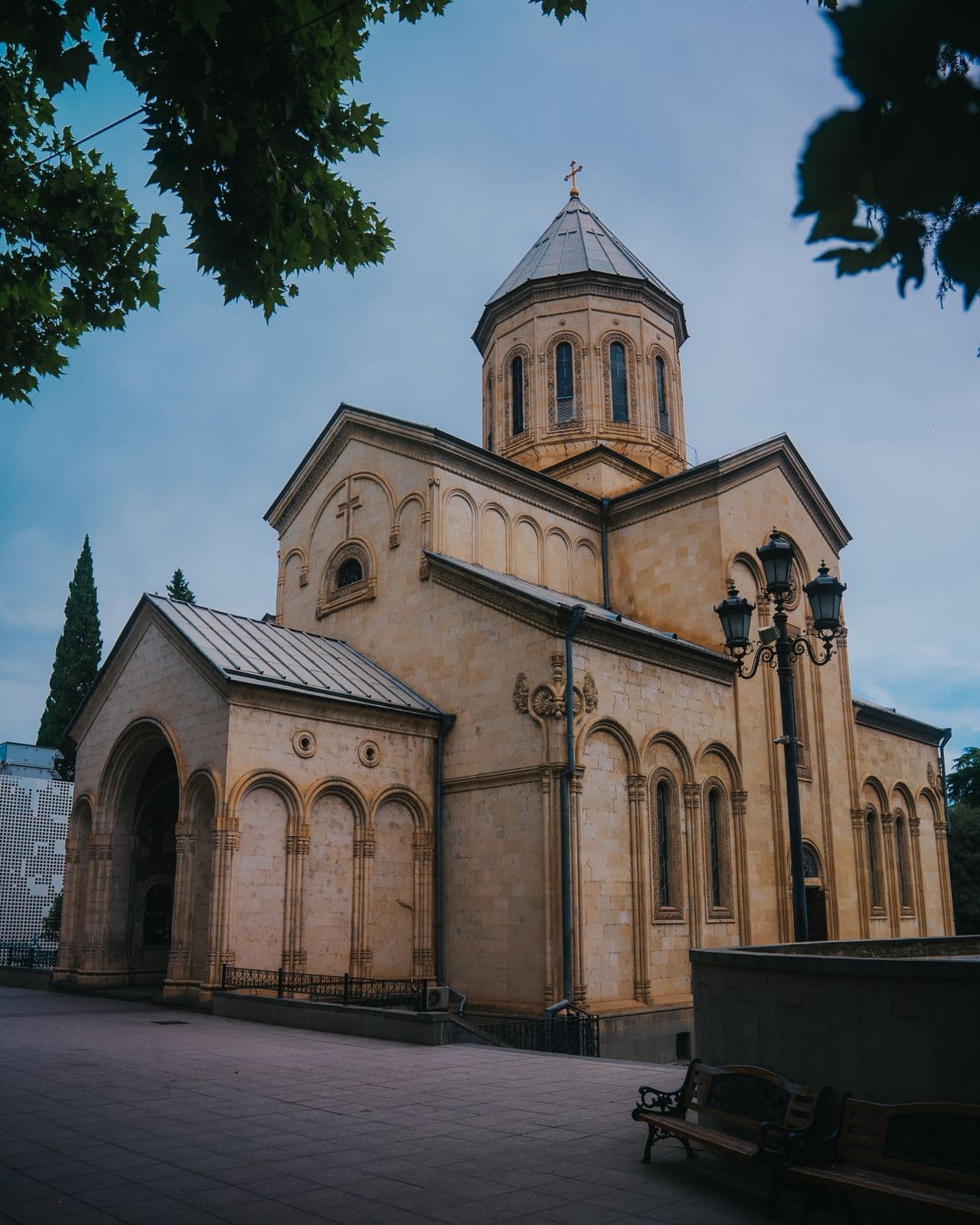
Sioni Cathedral in Tbilisi
Sioni Cathedral in Tbilisi
At the heart of Tbilisi's Old Town, Sioni Cathedral houses the Cross of Saint Nino, Georgia's most sacred relic. A living place of worship, marked by austere architecture and remarkable frescoes.
Sioni Cathedral rises in old Tbilisi, mere steps from the sulfurous baths of Abanotubani. Dedicated to the Dormition of the Virgin, it served for centuries as the principal cathedral of the Georgian Orthodox Church. Its austere architecture of dressed stone, interior frescoes, and the Cross of Saint Nino—Georgia's national relic—make it both a pilgrimage destination and a historical landmark at the city's heart.
Practical information at a glance
- Admission: free
- Dress code: shoulders and knees covered; headscarf for women inside
- Suggested duration: 20 to 40 minutes
- Access: Kala district (Old Town), reachable on foot from Liberty Square or Avlabari metro station
What to see
The exterior presents a facade of beige limestone, typical of medieval Georgian ecclesiastical architecture. Inside, frescoes cover the walls and central dome. The centerpiece is the Cross of Saint Nino, woven from vine shoots and bound with hair—a symbol of Georgia's evangelization in the 4th century. Candles burn perpetually before the icons, creating an atmosphere of living devotion.
History and context
The first church on this site dates back to the 5th century, under the reign of Vakhtang Gorgasali, founder of Tbilisi. The current building dates mainly from the 12th–13th centuries, with successive reconstructions following damage from Mongol and Persian invasions. Sioni served as Georgia's patriarchal cathedral until the consecration of the Holy Trinity Cathedral (Tsminda Sameba) in 2004.
Highlights of your visit
The Cross of Saint Nino
Preserved in a glass case on the left side of the nave, this cross of vine shoots is Georgia's most venerated relic. Saint Nino is said to have brought it during her evangelizing mission around 330 CE. The faithful spend long moments in prayer before it; observe respectfully without disturbing.
Frescoes and iconostasis
The carved and gilded wooden iconostasis separates the nave from the sanctuary. The wall frescoes, restored multiple times, blend Byzantine and Georgian styles. Some date to the 19th century, while others recreate medieval compositions.
Liturgical atmosphere
Services are held regularly. Hearing Georgian Orthodox polyphonic chanting in this acoustically rich space is an experience unto itself, distinct from ordinary sightseeing.
Etiquette and visiting rules
- Cover shoulders and knees before entering; shawls are sometimes available at the entrance.
- Women must wear a headscarf inside.
- Maintain silence and discretion during services; do not walk in front of the altar.
- Photography is generally permitted without flash, but avoid photographing worshippers in prayer without permission.
- Turn off your phone or switch it to silent mode.
Photography tips
Natural light enters through high windows late in the morning, illuminating the central nave's frescoes. Photograph the exterior from the lane to the south to frame the bell tower against the Old Town roofline. Inside, without flash, a bright lens (f/1.8–2.8) compensates for low light without disturbing worshippers.
Location and access
Sioni Cathedral stands on Sioni Street in the historic Kala district, two minutes on foot from the Peace Bridge and the Mtkvari riverbank. Avlabari metro station (Line 1) is roughly ten minutes' walk away. From Liberty Square, allow five minutes on foot heading down toward the river. The immediate area is entirely pedestrianized.
Nearby attractions
- Peace Bridge — glass and steel pedestrian footbridge over the Mtkvari, two minutes on foot.
- Abanotubani sulfurous baths — district of traditional bathhouses with brick domes, five minutes on foot.
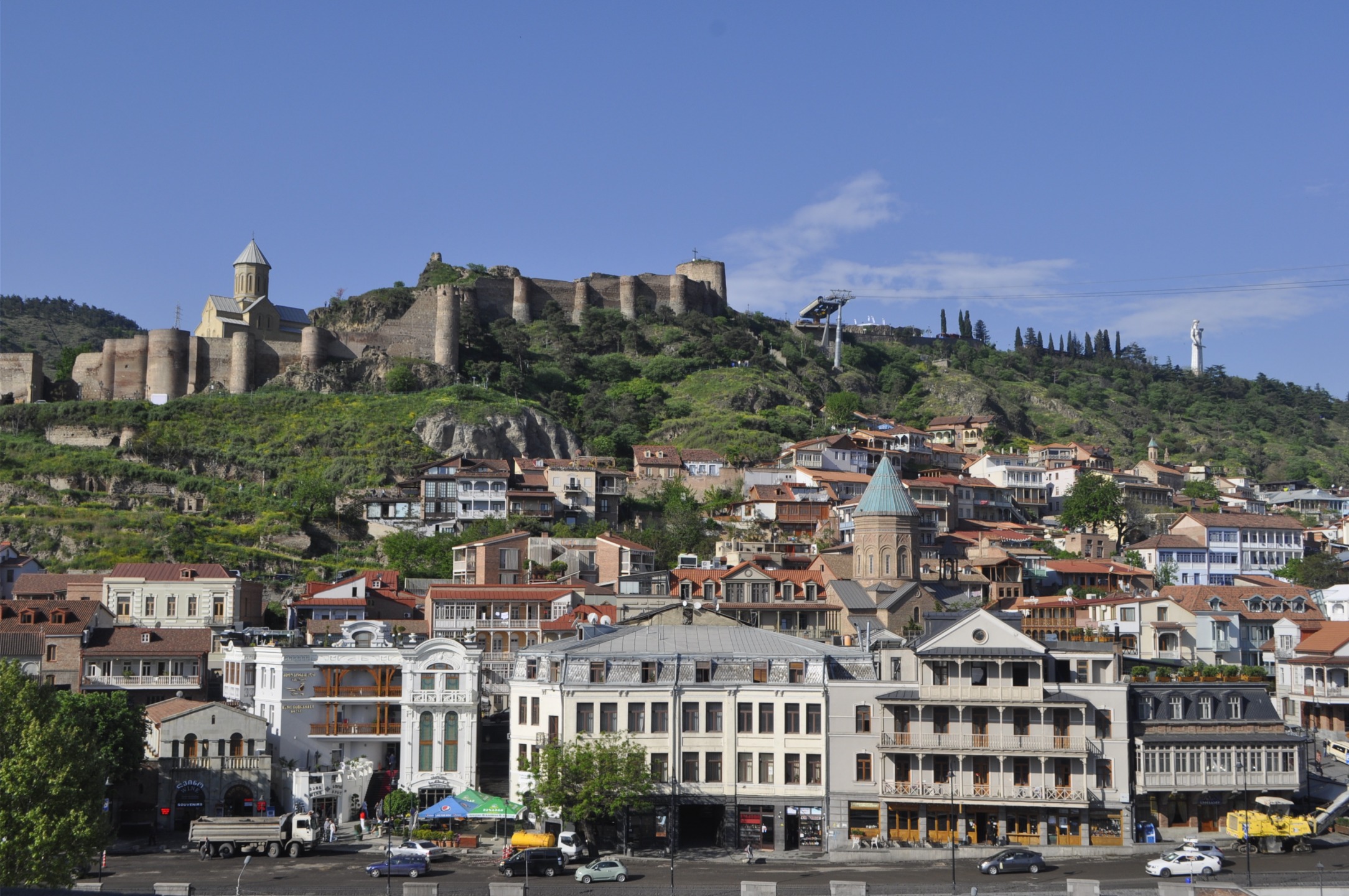
- Narikala Fortress — medieval ruins overlooking the Old Town, accessible on foot or by cable car.
- Metekhi Church — 13th-century church on a promontory facing the Old Town, ten minutes on foot.
- Shardeni Street — pedestrian thoroughfare lined with cafés and galleries, two minutes from Sioni.
Frequently asked questions
The cathedral is generally open to the public daily, including Orthodox holidays. Exact hours may vary according to services; plan your visit outside mass times for a more peaceful experience.
Yes. Shoulders and knees must be covered for everyone. Women must wear a headscarf inside. Plan ahead, as there isn't always a supply of loaners at the entrance.
Photography without flash is generally allowed. Avoid photographing worshippers in prayer and remain discreet during services. Some areas near the altar may be restricted.
Sioni can be visited year-round. Spring (April–May) and autumn (September–October) offer pleasant weather for exploring the Old Town on foot. In summer, heat can be intense; favor early morning visits.
Yes. Sioni, Abanotubani baths, Narikala Fortress, and Metekhi Church form a coherent walking circuit through the Old Town, achievable in half a day.
The cross of vine shoots symbolizes Georgia's evangelization by Saint Nino in the 4th century. It is the country's most sacred relic, preserved in Sioni Cathedral and venerated by Georgian Orthodox faithful.
Interested in this visit?
We can include it in your personalised itinerary.