Bagrati Cathedral
Bagrati Cathedral
Rebuilt in 2012, Bagrati Cathedral has dominated Kutaisi since the 11th century. History, architecture and tips for your visit.
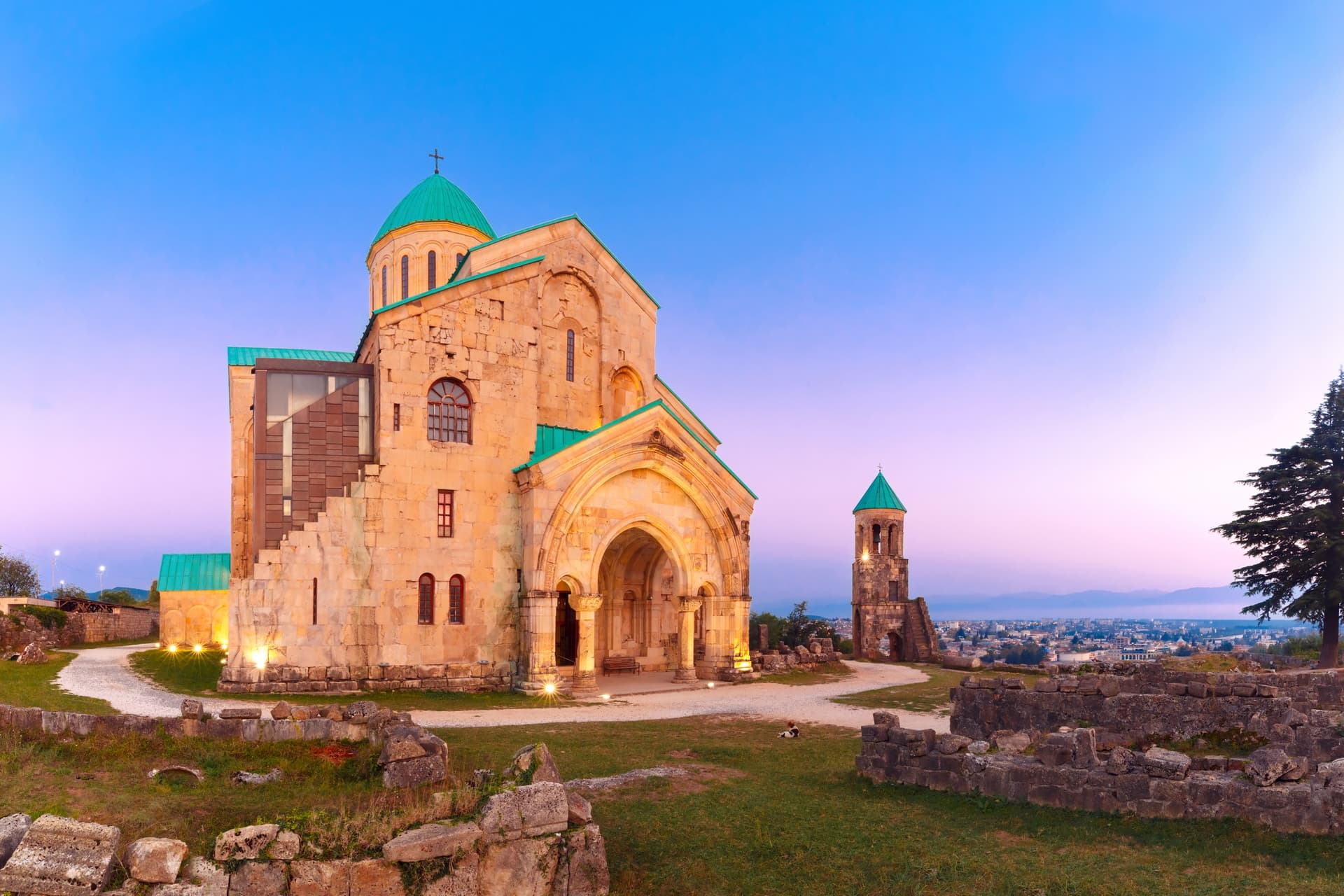
Bagrati Cathedral, also known as the Cathedral of the Dormition of the Virgin, stands majestically on the Ukimerioni hill overlooking Kutaisi, in the Imereti region. Its construction was ordered during the reign of Bagrat III, Georgia's first unified king — hence the cathedral's name. Rebuilt in 2012 after centuries of ruin, it remains an architectural landmark and an active place of worship.
Why visit Bagrati Cathedral
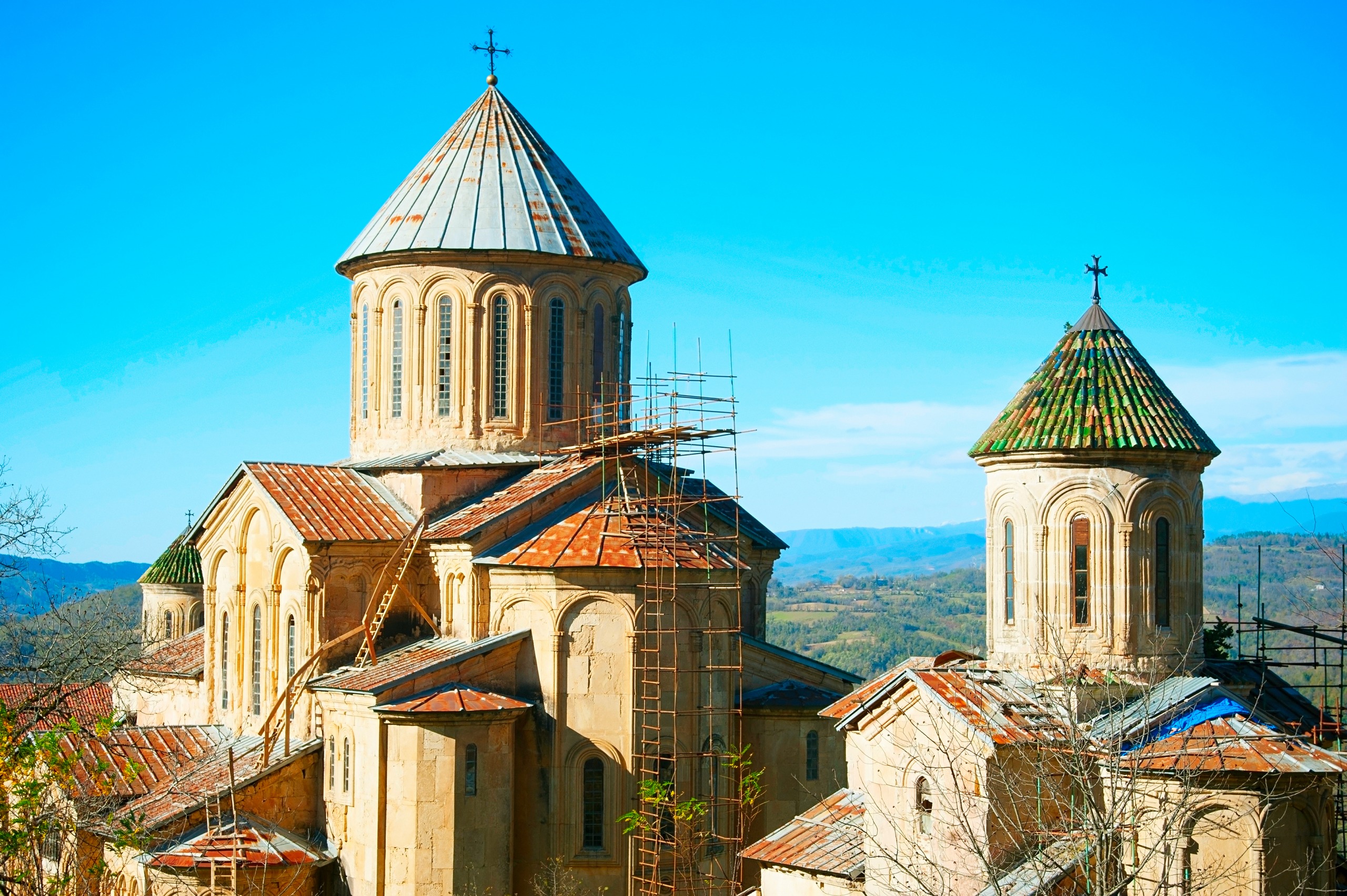
The cathedral offers several compelling attractions: a historic site linked to medieval Georgia's unification, 11th-century architecture reconstructed in the 21st, and sweeping views of Kutaisi from the surrounding terrace. Its elevated position makes it one of the city's most accessible vantage points. A visit pairs naturally with the Gelati Monastery, located about ten kilometres away.
History
Construction of Bagrati began in the final quarter of the 10th century and was completed in the early 11th century. Its consecration took place in the presence of representatives from the kingdom's different regions, marking medieval Georgia's political and religious unity.
In the Middle Ages, Bagrati ranked among the three major cathedrals of the country. It notably hosted the coronation of David IV the Builder, a central figure of Georgia's golden age. At its presumed height of 57 metres, it was considered Georgia's tallest cathedral until its destruction by the Ottomans in the 17th century, which left it in ruins for nearly three centuries.
Inscribed on UNESCO's World Heritage list in 1994, the cathedral underwent complete reconstruction, officially inaugurated on 16 September 2012. This restoration, deemed overly invasive by UNESCO as it compromised the monument's authenticity, led to its removal from the World Heritage list in 2017. The neighbouring Gelati Monastery remains inscribed. The cathedral is now restored to active worship and hosts religious ceremonies.
What to see
The sculpted portals
The two portals were added after the original nave. The western portal, at the main entrance, is adorned with griffins and wolves carved in stone. The southern portal features capitals decorated with grape clusters, ram's heads and foliage — a repertoire typical of medieval Georgian art.
Stone and light
The stone takes on a golden hue at twilight, when raking light accentuates the carved reliefs. This is when the building photographs best.
The contrast between original and reconstruction
The eye easily distinguishes the original stones, preserved in the lower and middle sections of the walls, from elements added in 2012. The glass wall panel and the dome date from the latest reconstruction and embrace their contemporary character.
The interior
The symbolism of colours structures the décor: azure blue evokes the Kingdom of the Lord, emerald green refers to paradise and resurrection. Among contemporary icons is that of the Dormition of the Virgin, which lends the building its alternative name.
The panoramic terrace
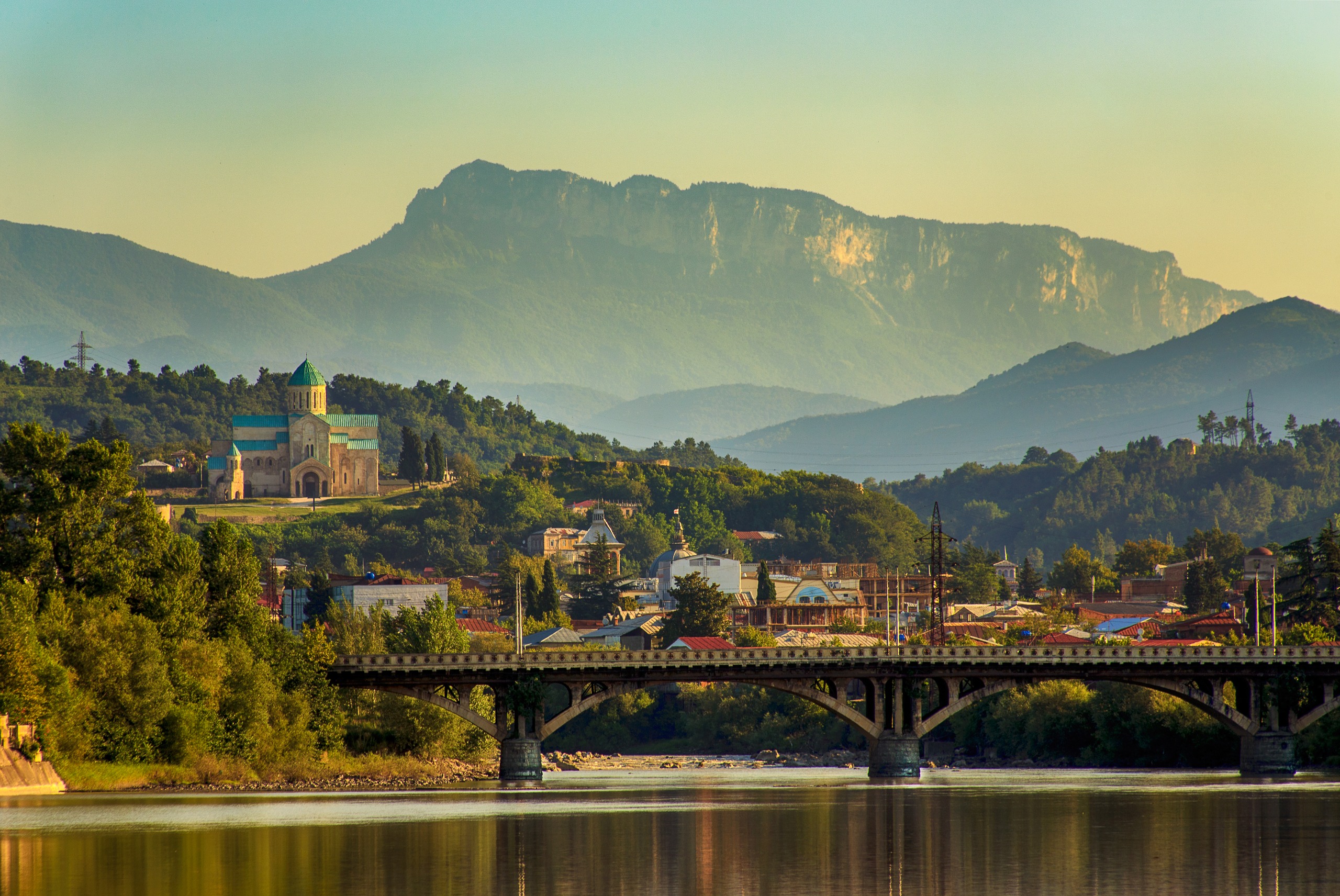
Walking around the cathedral towards the fortifications, you reach a large metal cross facing the city. The panorama encompasses Kutaisi and the Rioni valley.
Practical information
- Duration: allow 30 to 45 minutes for the site and terrace.
- Admission: free entry.
- Dress code: shoulders covered, trousers or long skirts. A headscarf is recommended for women inside.
- Photography: permitted outside; check on-site for interior photography during services.
- Accessibility: the hill is accessible by car to the car park, but the ground around the building is uneven.
When to visit
The cathedral is open year-round. May to October offers the best conditions, with long days and mild weather in Imereti. Late afternoon is the most rewarding time: the golden light reveals the stone's warm tones and Kutaisi's panorama glows with sunset colours. Avoid the height of summer at midday, as the hill offers little shade.
How to get there
From central Kutaisi, the cathedral can be reached by:
- On foot: 30 to 40 minutes uphill from the central square, crossing the Rioni bridge.
- By taxi: a short and inexpensive ride, the easiest option.
- By car: a car park is located at the building's base.
Kutaisi's international airport is about 25 km away, making the site accessible to travellers with connections.
Nearby
The region concentrates several complementary sites:
- The Gelati Monastery, about ten kilometres away, founded by David the Builder and still inscribed on UNESCO's list.
- The Alaverdi Cathedral, another major landmark of Georgian religious architecture.
- The historic centre of Kutaisi with its market, winding streets and Mtsvanekvavila Park.
Frequently asked questions
No, not since 2017. Inscribed in 1994, it was removed from the World Heritage list due to the 2012 reconstruction, which was deemed overly invasive. The neighbouring Gelati Monastery remains inscribed.
Allow 30 to 45 minutes to tour the building, go inside and enjoy the views over Kutaisi.
No, entry is free. Respectful dress is expected inside, as it is an active place of worship.
Late afternoon and dusk, when the stone takes on a golden hue and the panorama of Kutaisi is most photogenic.
Plan your journey
Bagrati Cathedral fits naturally into an itinerary combining Kutaisi, Gelati Monastery and the neighbouring wine regions. To tailor your stay to your interests, explore our Georgia travel packages.
Interested in this visit?
We can include it in your personalised itinerary.