Gori
Gori
Medieval fortress, Stalin Museum, troglodytic city of Uplistsikhe: Gori condenses centuries of Georgian history within 1.5 hours of Tbilissi.
Gori is an industrial city located in the Kartli region in central Georgia. The magnificent fortress, Gori Tsikhé, overlooking the city, is not the only attraction here. Indeed, Gori also owes its fame to Stalin, who was born here in 1878.
Gori, discovering the city of Stalin
Gori sits at the confluence of the Mtkvari and Liakhvi rivers. It is an industrial city founded by one of the country's greatest kings, David the Builder, who reigned from 1089 to 1125.
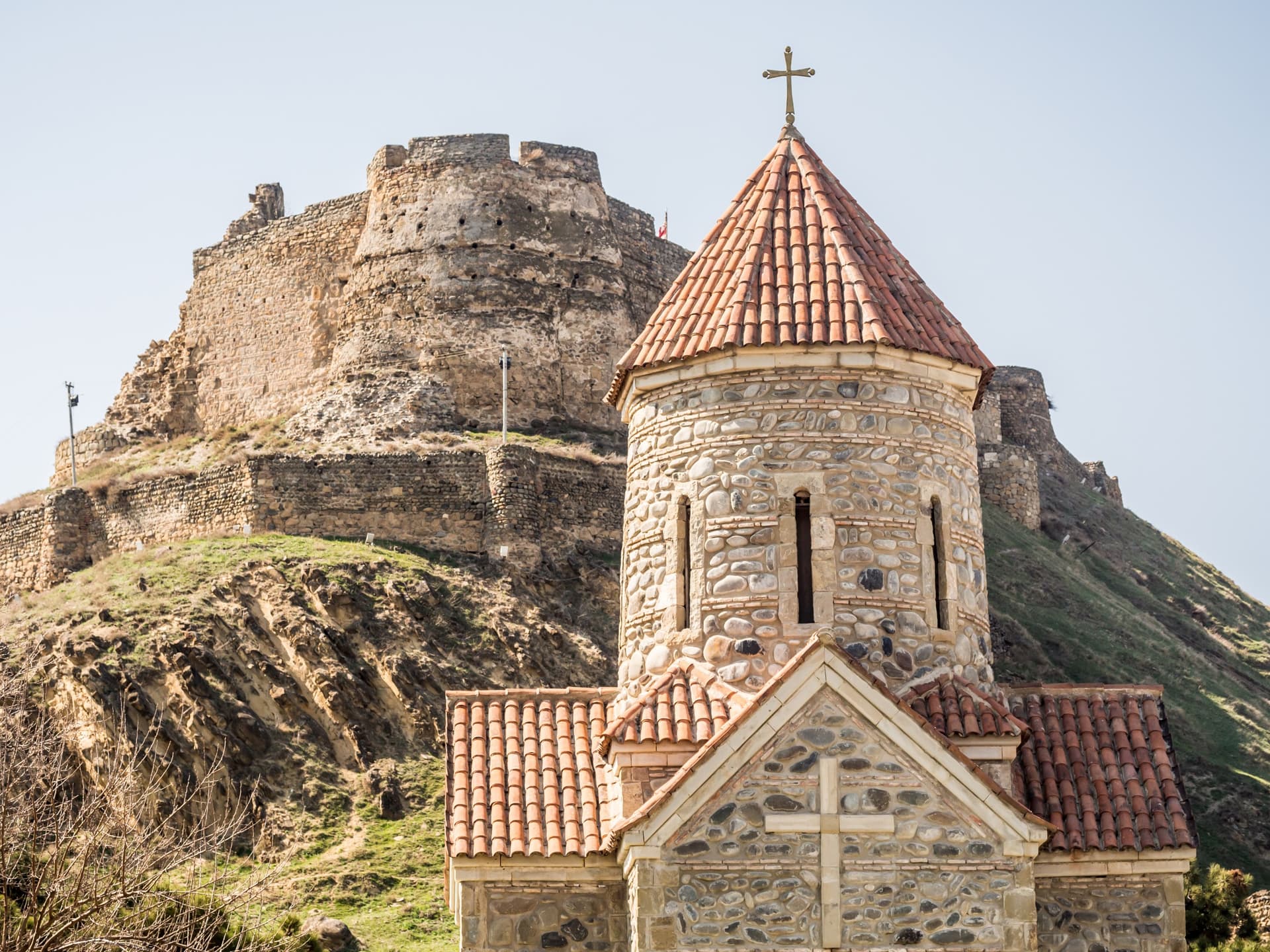
This "royal city" was founded in the 12th century, at the foot of the Gori Fortress. This medieval Georgian citadel is built on a rocky hill and dominates the city of Gori. Indeed, the name "Gori Tsikhé" means "the fortress on the hill". Archaeological excavations conducted throughout central Kartli revealed that Gori was already inhabited in 65 BC, during the era of Pompey.
Gori was and continues to be one of Georgia's most important cities. Its fortress served to control the main economic and strategic routes. In the 17th and 18th centuries, it was a prosperous merchant city. Moreover, Georgia's first theological university was founded here in 1818.
Gori is also the birthplace of Joseph Stalin. Yet, despite his lack of contribution to the prosperity of this Kartli city, the "father of nations" continues to be venerated by Gori's inhabitants. Indeed, they take great pride in one of history's most powerful men. The Stalin Museum, which was built during his lifetime, represents the city's flagship attraction.
Gori and its finest assets
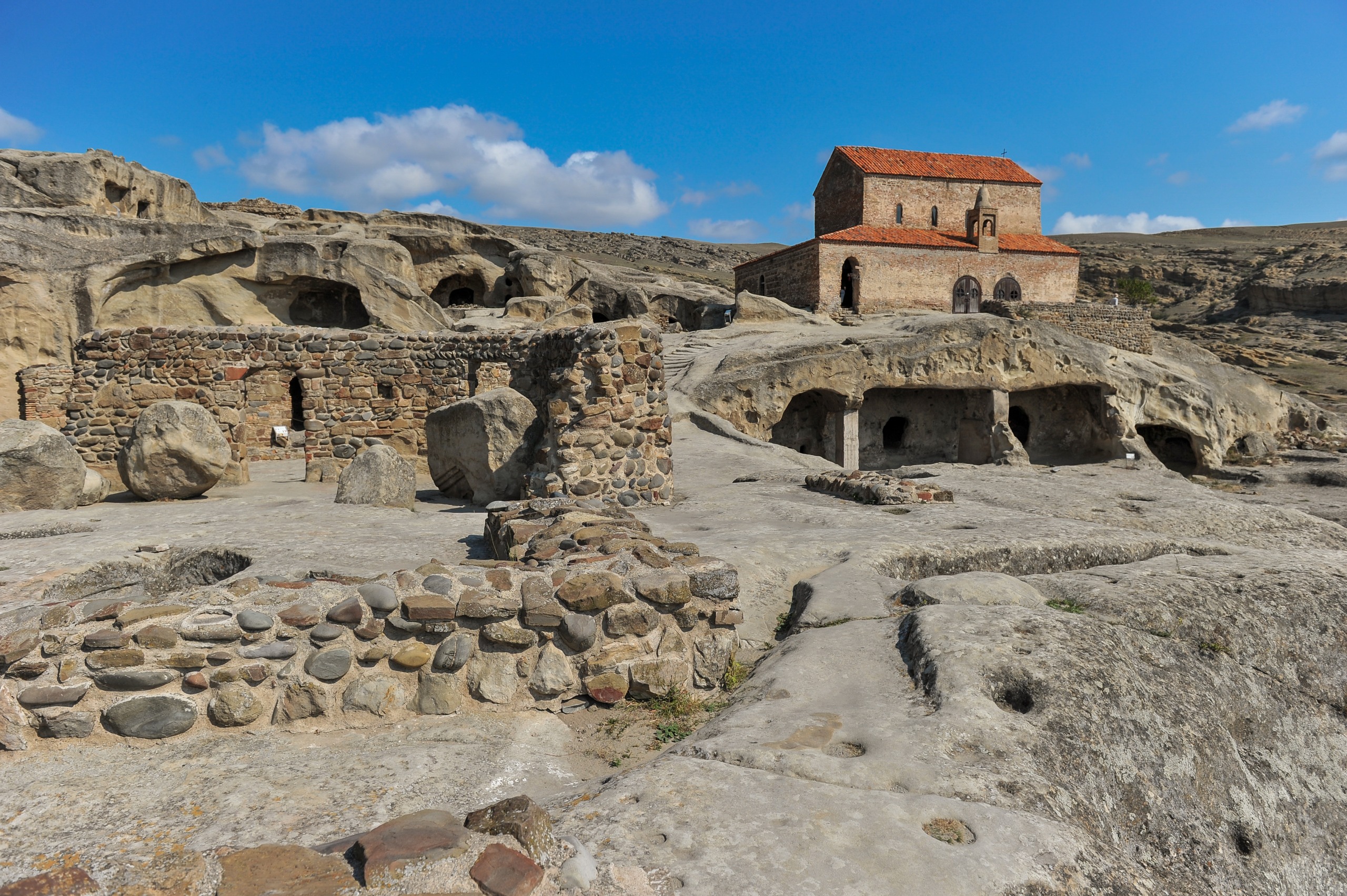
Gori is a city dominated by the medieval fortress of Gori Tsikhé. Just outside the city stands the ancient troglodytic city of Uplistsikhe and the Atenisa Sioni Church, dating from the 7th century.
Stalin, a native of Gori, made the city a major tourist destination in Georgia. You'll find the Stalin Museum, built in the city center by police chief Beria in 1937. This hagiographic state museum chronicles Stalin's entire life journey.
Indeed, the dictator's death mask is displayed in one of the museum's rooms. As you explore, you'll also discover his personal office brought from Moscow and numerous gifts presented to Stalin. Among these gifts are an original radio shaped like a tank and carpets bearing his image from Central Asia and Azerbaijan.
Near the museum stands Stalin's personal railway car. This served as his mode of transport to destinations such as Potsdam and Yalta. This armored car included a kitchen, a lounge, and several small bedrooms.
Stalin's birthplace is the highlight of the visit. It is a small two-room wooden house surrounded by a mausoleum. In the basement, Stalin worked as a cobbler. A statue of Stalin stands in front of the museum's monumental staircase. It previously stood in the city center until 2010.
In the old town, behind Stalin Avenue, you'll discover the Cathedral of the Virgin Mary, dating from the 17th century. During the Soviet era, it housed the city's music school. It was converted back into an Orthodox church in the 1990s.
The Gori Fortress, magnificently overlooking the city, is another major tourist attraction. Its medieval structure is characterized by rounded crenellations. At the top of the fortress, enjoy magnificent views of the Greater Caucasus and the Gori Djvari peak. On the western side of the citadel stands an immense defensive staircase. At the summit of the fortress lie the remains of an 11th-century chapel, accessible via a paved path.
Also take the opportunity to visit Stalin Square during your time in Gori. The Gori City Hall, built by German prisoners of war during World War II, is the main point of interest on this square.
The Historical and Ethnographic Museum, founded in 1935, will complete your cultural and historical tour through Gori. Located on Kiron II Street, this museum now houses over 48,100 objects, including metalwork masterpieces, heraldic artifacts, and Colchic silver coins.
What is the climate like in Gori?
In Gori, the climate is quite warm and temperate. Throughout the year, the city has an average temperature of 10.6°C. From January to March, the climate is not ideal for visiting the city. Indeed, during this period, rainfall is quite frequent, especially in March.
In April, the climate is rather favorable for a leisurely walk through Gori, with average temperatures reaching up to 16°C. From May to June, the weather is pleasant. In the morning, temperatures average around 13°C. By July, the climate is excellent, with average temperatures reaching a maximum of 31°C.
Gori is located west of Georgia, 4 km south of the Tbilissi highway. Marshrutkas (shared minibuses) can drop you off at this highway exit. Taxis are also available for those wishing to go to the city center.
Marshrutkas also run daily from the Didube Station in Tbilissi to Gori's bus station. Departures occur approximately every 20 minutes. Another option is to rent a taxi, though the fare can be quite expensive.
Train is another efficient way to reach Gori. Most trains heading toward Batumi pass through Gori. Moreover, the station is located near the city center. Furthermore, to reach Gori at a lower cost, the minibus, which departs from the Didube metro station in Tbilissi, is recommended. The journey takes approximately 1 hour and 30 minutes.
Want to discover this destination?
Our local advisors design your tailor-made trip.