Tsinandali
Tsinandali
Aristocratic palace, English park and historic cellar: Tsinandali captures the soul of Kakheti and the birthplace of modern Georgian winemaking.
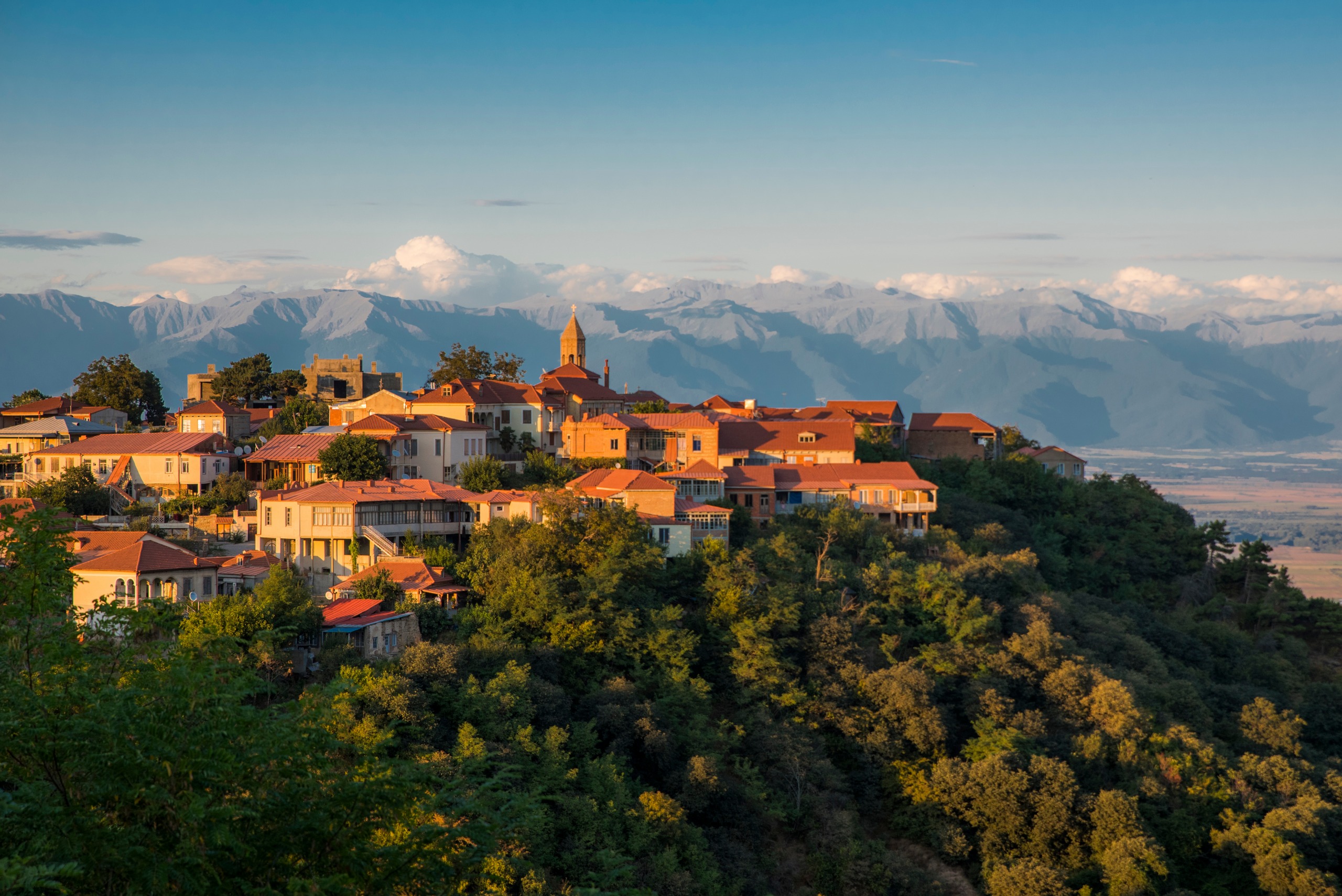
Tsinandali is a village in the Kakheti region, located in eastern Georgia.
A visit to the Tsinandali Palace and its sprawling English-style park will enrich a historical journey through the region.
This experience offers insight into the history of the Chavchavadze family, who ruled the region from the 18th century onwards.
Wine tastings of fine vintages at the Tsinandali Estate will delight the most discerning palates.
Discover this gem of Kakheti.
A Journey Through Tsinandali's History
Tsinandali was the home of the Chavchavadze family for centuries. Garsevan Chavchavadze, an ambassador of Georgia to Russia, lived here and was the first owner of Tsinandali Palace.
King Erekle II had sent him to Imperial Russia to negotiate the Treaty of Georgievsk in 1783, a treaty focused on relations between Russia and Georgia.
The king chose him because he was well-educated, but more importantly, his family belonged to Georgia's royal dynasties.
Following the treaty's signature, King Erekle II granted Garsevan Chavchavadze an immense estate. He later passed this inheritance to his son Alexander Chavchavadze.
The latter was an important military figure, a great poet, and one of Georgia's most respected aristocrats.
Alexander Chavchavadze notably fought alongside the Russian Empire against Napoleon during the military campaign for the conquest of Europe from 1812 to 1814.
Weary of military campaigns, Alexander Chavchavadze decided to leave Paris and moved his entire family to Georgia, to a peaceful village called Tsinandali.
He built the palace there in 1818.
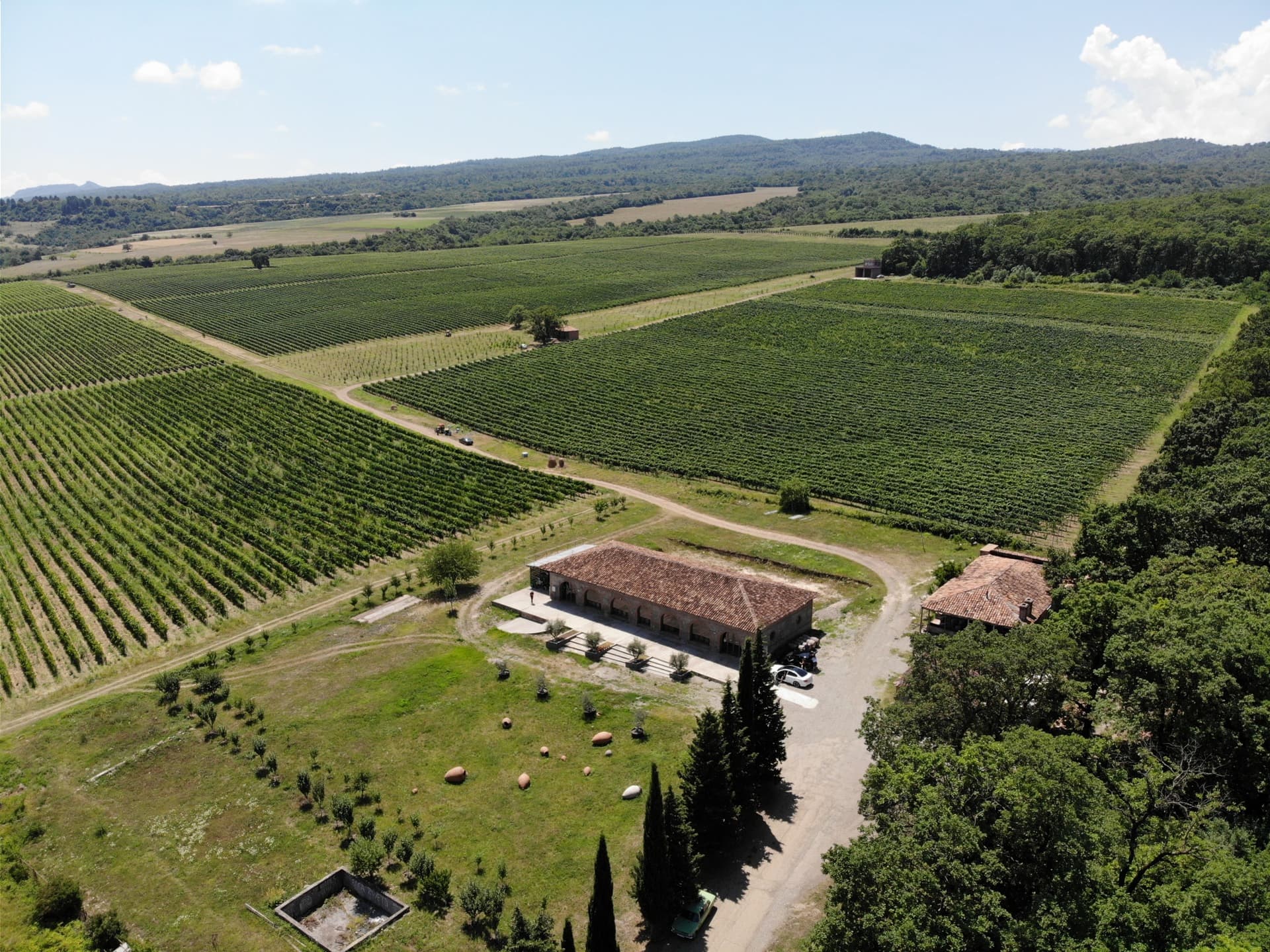
The Tsinandali Estate constitutes the birthplace of winemaking in Georgia. It features a vineyard surrounded by canyons and forests, creating magnificent terroir where 11 different species of Georgian grapes flourish.
Located approximately 2 hours from Tbilisi, it is one of Georgia's earliest renowned wine appellations.
The 19th century was a pivotal period in Georgian winemaking history.
Georgia's annexation by Russia weakened the country's wine industry. However, thanks to Prince Chavchavadze's expertise, Georgian wine quality rivaled European wines by the late 1830s.
Beyond cultivating and producing wine, the Chavchavadze family loved collecting grand crus. Indeed, certain prestigious wine bottles from the 19th century are displayed today in the Chavchavadze Estate Museum.
The factory built by Alexander Chavchavadze still operates today.
On July 2, 1854, Tsinandali and the Chavchavadze Estate fell victim to a raid led by the troops of the Caucasus Muslim leader, Imam Shamil, under the command of Ghazi-Muhammad, Shamil's son. This raid was motivated by revenge from mountain dwellers against the Chavchavadze family, who had contributed to Russia's success in the Caucasian War. The mountain dwellers plundered the estate and kidnapped the wife of Prince David, Alexander Chavchavadze's son, his sister, and several close relatives.
The captives were meant to serve as an exchange to allow Shamil to recover his son held in Russia.
Held prisoner for 9 months, the Chavchavadze family members were released in 1855, following a ransom payment and the liberation of Ghazi-Muhammad.
Unfortunately, the ransom payment completely ruined the family, and in 1886, following David Chavchavadze's death, the estate became the summer residence of the Romanov royal family.
Tsinandali Village Today
Prince Alexander Chavchavadze, through the Tsinandali Estate, blends an 8,000-year-old Georgian winemaking tradition, still using qvevris, with a classical European approach. Today, this noble tradition continues to be applied.
Tsinandali is also home to a winemaking facility. It is one of Georgia's oldest and houses massive wine cellars.
On an estate of 40 hectares, the facility produces, in traditional fashion, entirely organic wine. Additionally, several parcels of the estate are reserved for biodynamic viticulture.
Why Stop at Tsinandali?
Tsinandali is a village known for its estate and historic vineyard that once belonged to Alexander Chavchavadze, a celebrated poet-aristocrat of the 19th century.
This village is located in the Telavi district, east of Tbilisi.
Tsinandali houses the residence of the Chavchavadze princes, a powerful Kakheti aristocratic family.
The residence has undergone renovations, particularly regarding the ornamentation of its balconies.
The mansion displays architecture typical of 19th-century Georgian aristocracy.
Tsinandali Palace was a major center of intellectual life in Georgia.
Great Georgian cultural and social figures lived here. Among them are famous Russian poets such as Alexander Pushkin and Mikhail Lermontov, as well as French writer Alexandre Dumas.
Since 1946, a museum has been set up inside the palace, open to the public from 10am to 6pm, with an entrance fee of 4 lari.
It houses personal belongings of Alexander Chavchavadze, musical instruments and several manuscripts.
Today, this museum regularly hosts concerts, exhibitions, master classes and literary events.
Near the museum stands the Shumi Wine Center. It houses approximately four hundred grape varieties, a hundred of which come from abroad.
Continuing the visit, you discover tools once used to make wine, such as the pressing trough, a vat carved from a tree trunk.
This wine center also contains an ancient Chacha distillery and an old bakery still in operation.
Tsinandali Palace reflects Alexander Chavchavadze's aspirations.
A vast landscaped garden, in English style, covering 18 hectares, surrounds Tsinandali Palace. This verdant park is unique thanks to its exotic plants, its century-old trees and wild nature. It was designed by landscape architects from Europe. This garden is moreover considered Georgia's first outdoor leisure space in European style.
The wine cellar concludes the estate visit. It was built at Alexander Chavchavadze's initiative in the early 19th century.
This wine cellar is unique today as it contains a significant collection of 16,500 bottles, including prestigious European wines.
It also houses qvevris and wooden barrels.
Tasting sessions are scheduled during the visit, notably featuring the famous Tsinandali wine.
What is the Climate Like in Tsinandali?
In Tsinandali, summers are hot and winters are long and partly cloudy.
Generally, the warm season extends from June to September.
The average maximum temperature exceeds 24°C. July is the warmest month of the year with temperatures around 29°C.
During the cold season from November to March, the average maximum temperature is below 10°C. January is the coldest month with average temperatures ranging from -2°C to 5°C.
The city experiences maximum precipitation from April to September.
The ideal time to explore the village is between early June and late September.
By Air
Tsinandali is a locality located on the Gurjaani-Telavi route, about ten kilometers from Telavi. The nearest airports are Kutaisi, Tbilisi and Batumi.
From there, Tsinandali is accessible by bus or car.
Distances between various airports and Tsinandali
From Tbilisi: 104 km. The journey takes 1 hour 45 minutes.
From Kutaisi: 327 km, the trip takes 5 hours 30 minutes.
From Batumi: 470 km, the journey takes 8 hours 30 minutes.
By Minibus
From Tbilisi, the best option is a minibus or marshrutka; the journey takes approximately 2 hours 40 minutes and the ticket price ranges from 24 to 33 lari.
By Taxi
This is the fastest way to travel from Tbilisi to Tsinandali. The journey takes approximately 1 hour 21 minutes.
By Car
For budget-friendly travel, the ideal option is to drive from Tbilisi to Tsinandali. The journey takes 1 hour 21 minutes.
Want to discover this destination?
Our local advisors design your tailor-made trip.