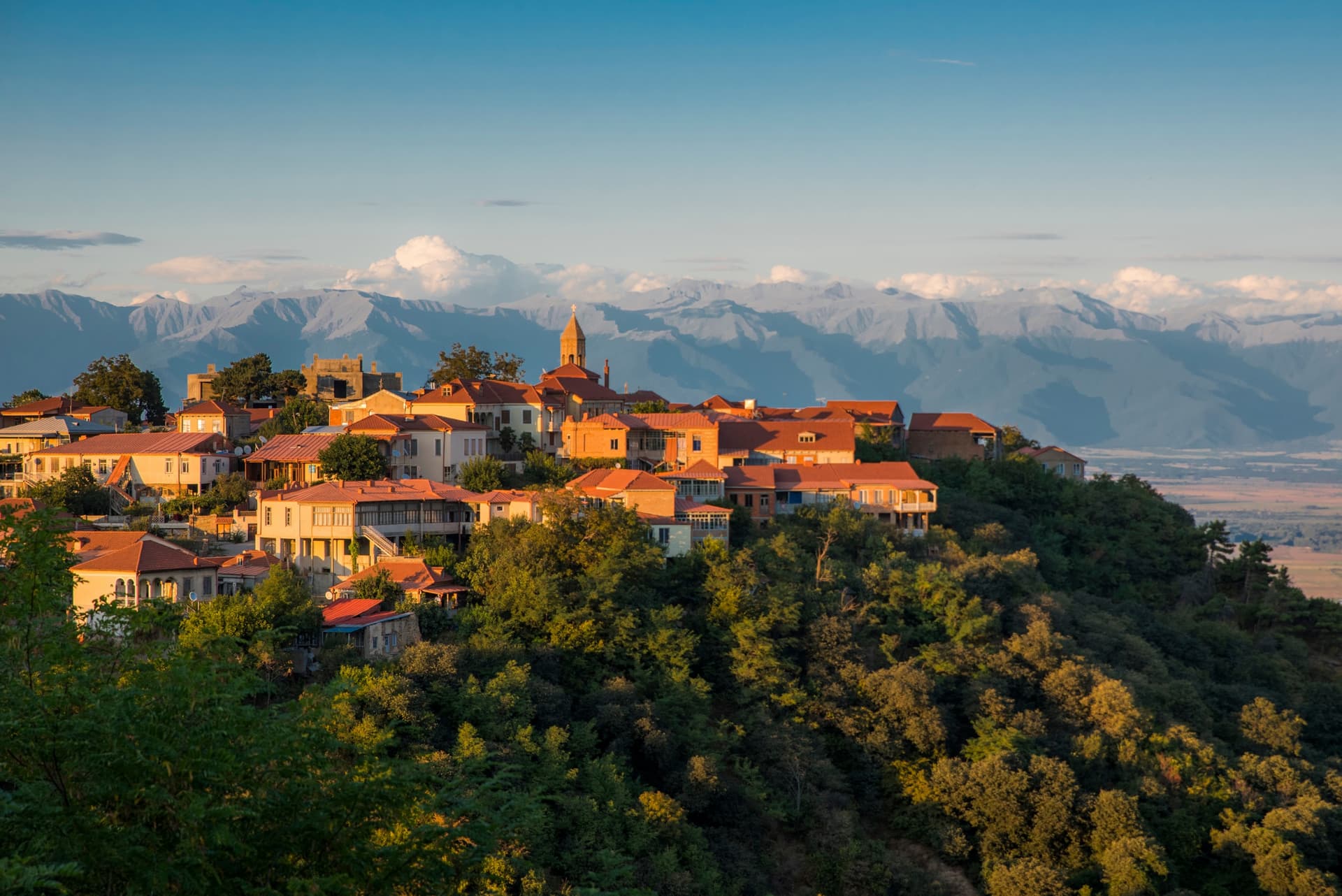
Kakheti, the Historic Cradle of Wine
Kakheti is a renowned wine region located in the east of Géorgie.
Kakheti is a celebrated wine region situated in the east of Géorgie.
Considered the "cradle of Georgian wine," this region captivates visitors with its sumptuous landscapes and verdant pastures. The country's premier wine-producing region is also endowed with a rich historical and architectural heritage.
Adding to this the great hospitality of its inhabitants, it is easy to understand why Kakheti is a must-visit destination in modern Géorgie.
A Journey Through Kakheti's History
Kakheti is an administrative region located in the south-east of Géorgie. Its capital is Telavi. Kakheti is undeniably Géorgie's premier wine-producing region.
Archaeologists have established that the first wine was produced in the southern part of the Greater Caucasus between 6,000 and 8,000 years before Christ. Grape seeds belonging to the Vitis Vinifera species have been found scattered across various locations in Géorgie, including Kakheti.
Indeed, more than a hundred varieties of vines are cultivated at the Monastery of Saint George in Alaverdi, dating back to the 6th century.
The hallmark of Georgian wine production is its ancient winemaking technique.
Wine is crafted in qvevris, which are immense earthenware vessels adorned with bunches of grapes. This viticultural tradition was fortunately preserved despite waves of occupation that sought to reduce Géorgie to ruin.
The history of Kakheti is particularly fascinating. At the end of the 8th century, the region is an autonomous feudal principality. In the early 11th century, it is briefly annexed to the unified Georgian kingdom. In the early 12th century, from 1089 to 1125, King David II the Builder succeeded in integrating the region into his realm.
Following the fragmentation of the Georgian kingdom, Kakheti becomes, in the 1460s, an autonomous kingdom.
In 1762, the Kingdom of Kakheti, and its capital Telavi, are united with Kartli, a neighboring kingdom.
This merger enabled Telavi to become the capital of the unified eastern Georgian kingdom, known at that time as Kartli-Kakheti.
Frequent Persian invasions gradually weakened both kingdoms, leading to the annexation in 1801 of the Kingdom of Kartli-Kakheti by the Russian Empire.
Since Géorgie's independence in 1991, Kakheti has become a region in its own right, with Telavi as its capital.
Kakheti Today, a Region Rooted in Tradition
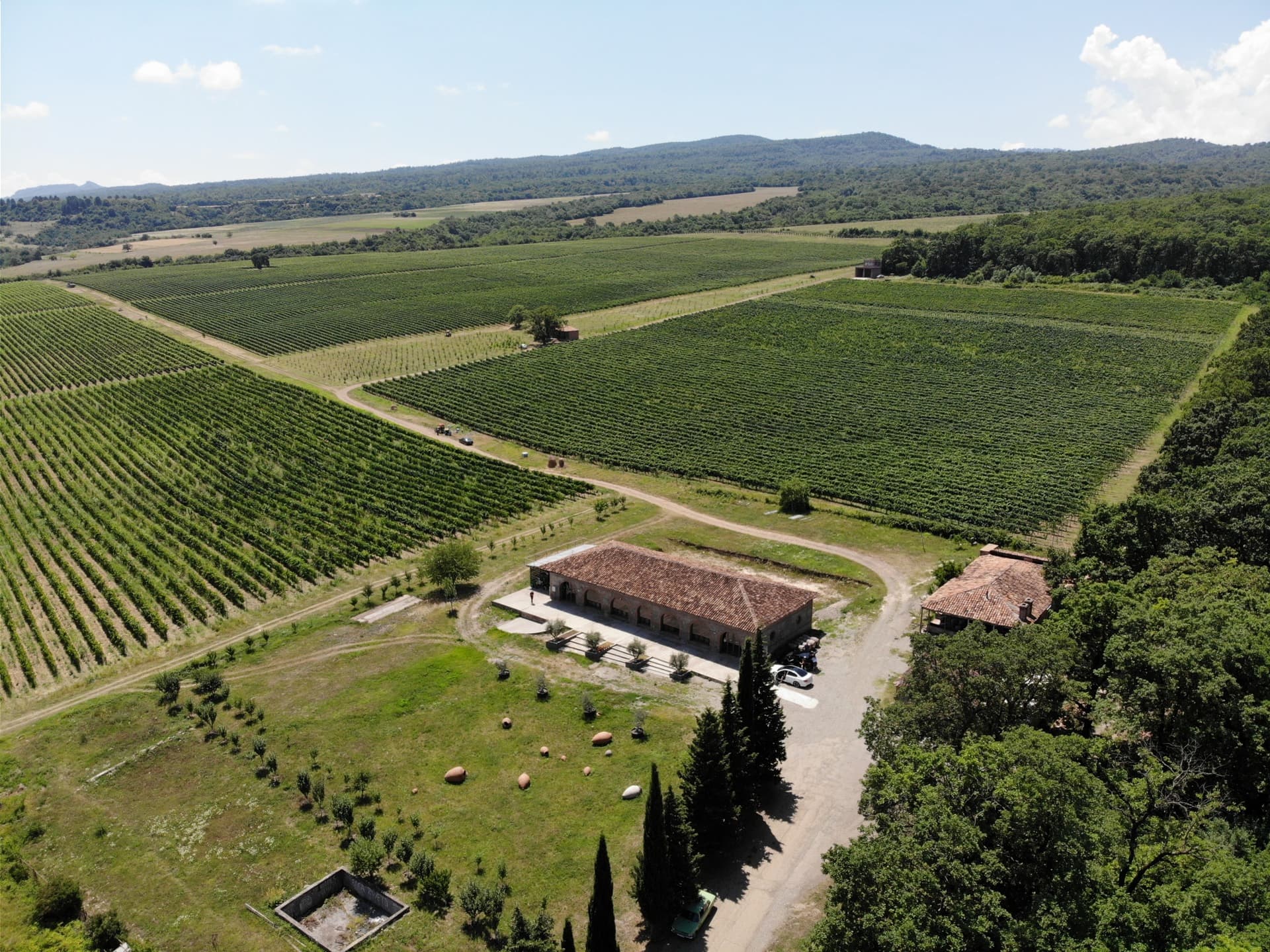
Kakheti is a vast wine-producing region of Géorgie, traversed by the basin of the Alazani River and the Iori River.
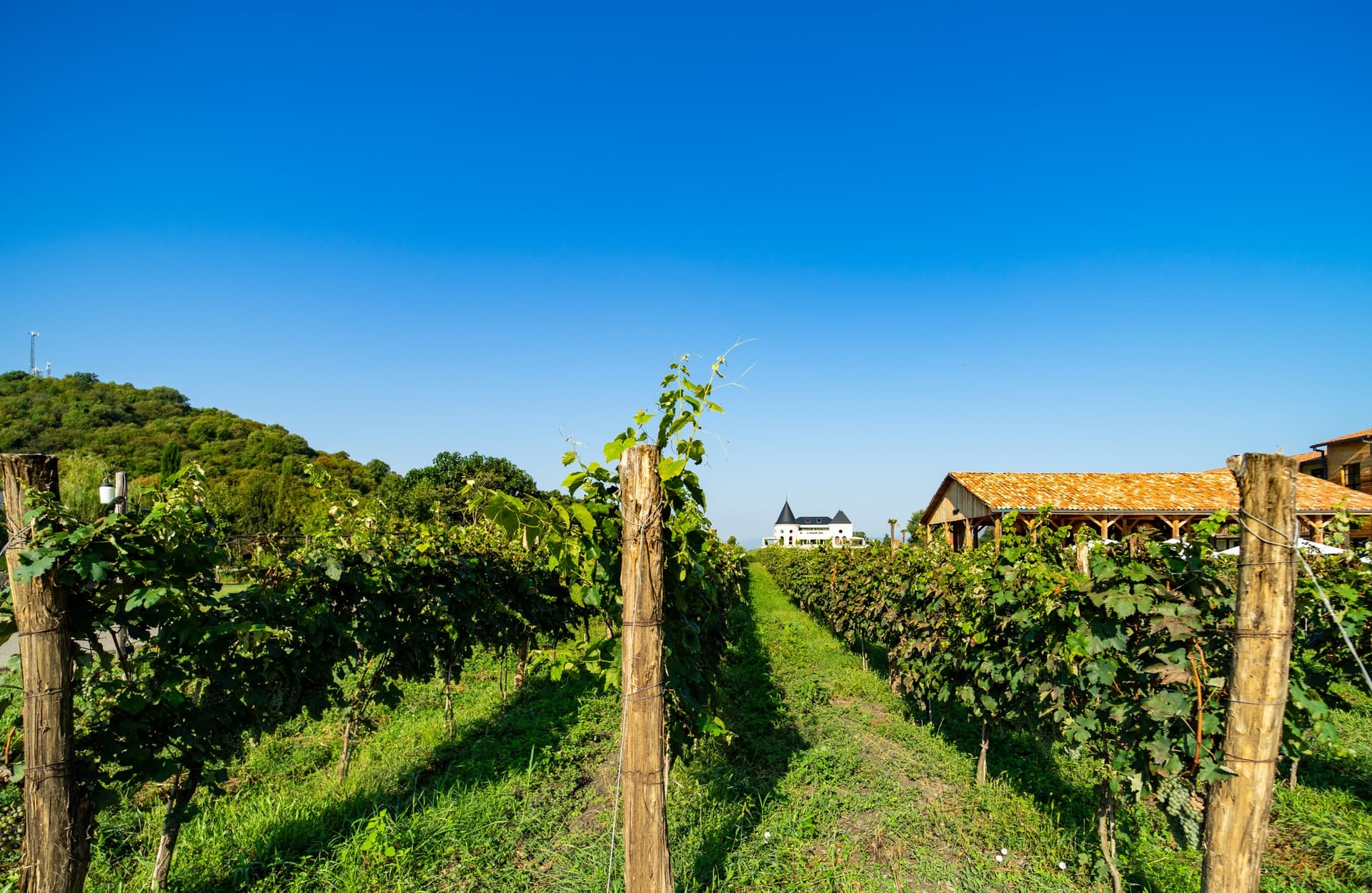
Georgians take great pride in their wine, and hundreds of different grape varieties are today cultivated on family-run estates.
Being the cradle of wine, Kakheti produces 75% of the country's wines. More than a mere tradition, it constitutes a true ancestral cult, and as in the Greco-Roman era, winemaking is carried out in vast earthenware vessels, also called qvevris.
Often renowned for the quality of its wine, this region is also known for its agriculture and its brandy.
For hiking enthusiasts, the Vashlovani and Lagodekhi nature reserves are among the country's most beautiful sites.
Beyond wine production, the traditional manufacture of churchkhela, a regional specialty confection, also contributes to its renown.
The artisanal crafting of this sweet involves dipping walnut kernels strung on a thread into a juice made from grapes thickened with flour.
Another tradition still deeply rooted in Géorgie, and particularly in Kakheti, is the Rtveli festival, symbolizing the end of the grape harvest.
During the celebration, winemakers venture into their cellars to retrieve their finest bottles and earthenware amphorae. These will be savored during sumptuous feasts.
Banquets, or supra, are also an important tradition in Géorgie**.**
The head of the table, or tamada, animates and orchestrates these lengthy meals, notably by pronouncing memorable toasts. The aim is to foster a convivial atmosphere by highlighting the rules and insights related to festive traditions.
During traditional banquets in Géorgie, guests also have the opportunity to savor various wines served in khantsit, horns used as drinking vessels.
What is the Climate Like in Kakheti?
Kakheti is one of Géorgie's beautiful regions. Located in the east of the country, it is divided between mountains and plains. The plains extend throughout the Alazani and Lori valleys. As for the mountainous part, it stretches toward the Tsivgombori mountain ranges and along the slopes of the Caucasus.
Kakheti's highly diverse natural environment includes forests and various water sources. The plains situated in the eastern part of Géorgie are shielded from the influence of the Black Sea by mountains, thus fostering a continental climate.
An alpine climate dominates in the mountains of the east and west of the country.
Generally, Kakheti has a warm, humid subtropical climate.
Over the course of a year, the average temperature reaches 12.7°C, with average rainfall of 246.2 mm/hour.
The best time to explore the region is between May and September.
Winter temperatures average between 2 and 4°C, while in summer they typically range between 20 and 24°C.
Kakheti is a region that can be explored by bus, minibus, or train from Tbilisi, Poti, Bakuriani, Kutaisi... Kakheti is among the most easily accessible places from Géorgie's capital Tbilisi, situated approximately 45 km away.
From Tbilisi, buses and minibuses depart from the Ortachala, Vukzali, and Didube stations.
Trains depart from Tbilisi's central station, located at Vukzali.
Since there are no direct buses to Kakheti, taking a shared taxi from Isani station remains the best option. The fare is approximately 15.32 GEL per person, regardless of destination.
Note also that a driver will not leave a station without having gathered a minimum of 4 passengers. However, it is possible to ask the driver to drop you at your desired location.
If you wish to travel more comfortably without waiting for other passengers, the best option is to rent a taxi from a private taxi company. However, the fare is more expensive.
For budget-friendly travel, the best option is to take the minibuses. These depart from the railway stations at Ortachala, Isani, and Navtlughi. Their stops are only a few meters from the bus stations. This allows you to plan a full itinerary in advance.
Essential Cities to Visit in Kakheti
Telavi is the main city, as well as the administrative and cultural center of the Kakheti region; it served as the capital of the Kingdom of Kakheti from the 16th to 18th centuries.
It overlooks the Alazani Valley and stretches along the slopes of Mount Gombori. From the Alazani Valley, the view of the Caucasus Mountain range is exceptional.
The city center is dominated by the Batonistsikhé Royal Palace, constructed in the 18th century.
You will find numerous restaurants and cafés here, offering an opportunity to enjoy the region's typical dishes during a culinary break.
Some 79 km east of Tbilisi lies Tsinandali. This Kakheti village is celebrated for its stately manor, surrounded by a historic vineyard. It once belonged to 19th-century aristocratic poet Alexander Chavchavadze. The property is open to the public and features a 19th-century cellar containing 16,500 prestigious bottles from different countries, along with scheduled wine tastings.
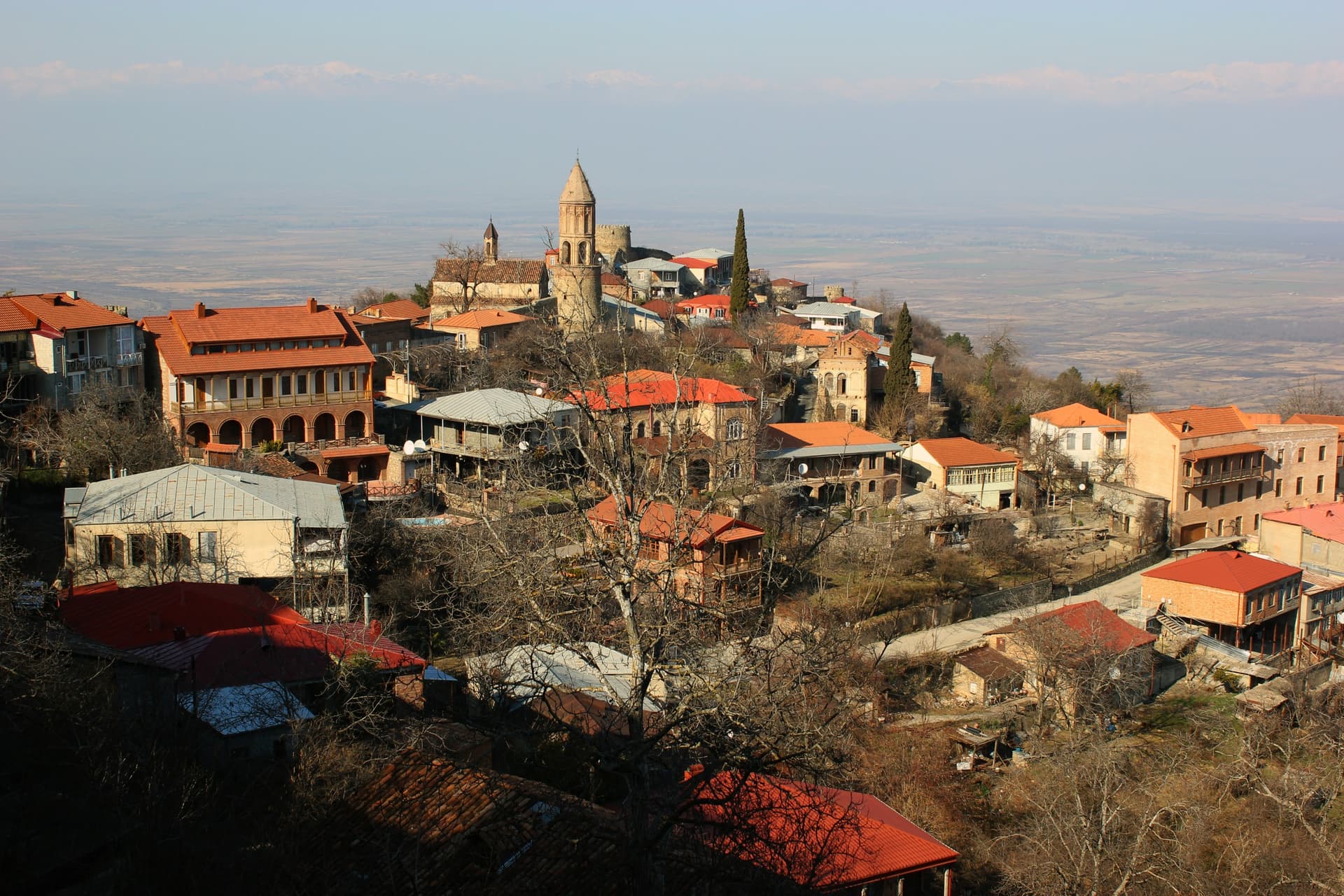
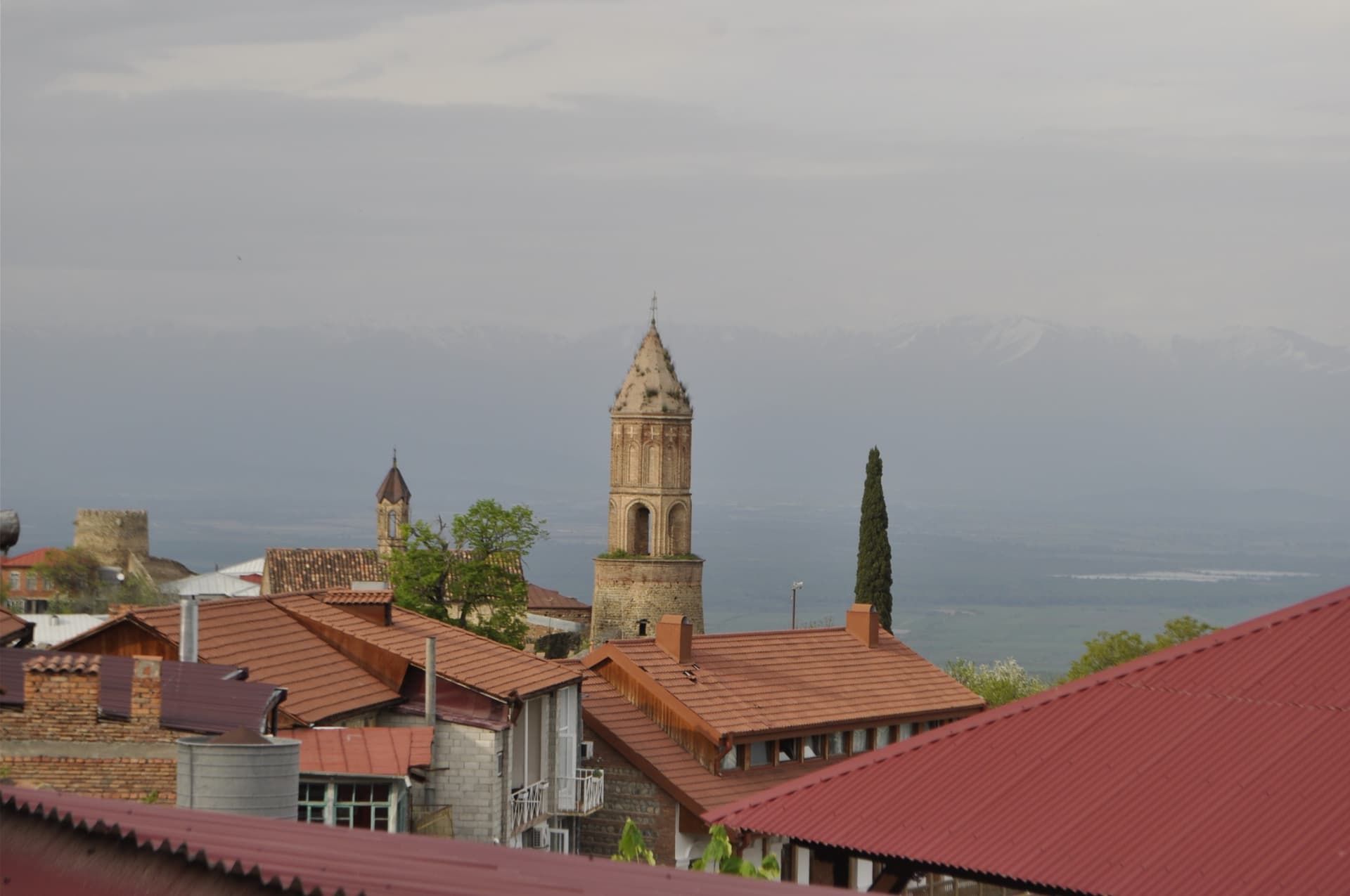
Sighnaghi is another gem of the Kakheti region. It is a fortified town constructed in the 18th century during the reign of King Erekle. The fortress wall, stretching approximately 2 km, features 5 entrances and 25 towers. Its other assets include the vineyards all around, offering views over the Alazani Valley and the Caucasus Mountains.
The town is renowned as a romantic destination, thus attracting numerous couples wishing to marry.
Following the roadside between Telavi and Kvareli, you come upon the picturesque locality of Gremi, which is distinguished by its brick construction.
If you take a minibus to Kvareli, this town is its final stop.
Between 1466 and 1672, Gremi served as the region's capital, but was razed by Shah Abbas.
Perched atop a citadel at the foot of the Dagestan Mountains, its fortified church remains an iconic symbol of Géorgie.
You will also see along the roadside a small museum testifying to the historical wealth of ancient Gremi.
Must-See Experiences in Kakheti
Explore Kakheti's wine region. It is renowned for its ancient human settlements and its archaeological discoveries.
During your stay, you will learn more about the ancient winemaking technique and the traditional manufacture of churchkhela, a sweet specialty of this region.
Visit a wine and spirits production facility, then taste fine Georgian wine.
At Badiauri, savor bread with cheese and chacha, a homemade brandy, sometimes called "grape vodka."
Head next to Sighnaghi, which captivates with the unusual architecture of its houses. It is a romantic city best discovered on foot. Stroll through its cobblestone streets or visit a traditional cooking workshop to learn how to prepare typical Georgian dishes.
Discover the history of the celebrated Georgian painter Niko Pirosmani at the eponymous museum in Mirzaani, another signature activity of the region. Located in the painter's native village, the museum includes a room displaying some of his original works as well as his personal effects.