Abanotubani Sulfur Baths
Abanotubani Sulfur Baths
At the heart of Tbilisi's Old Town, the Abanotubani sulfur baths perpetuate a thermal tradition linked to the very founding of Georgia's capital.
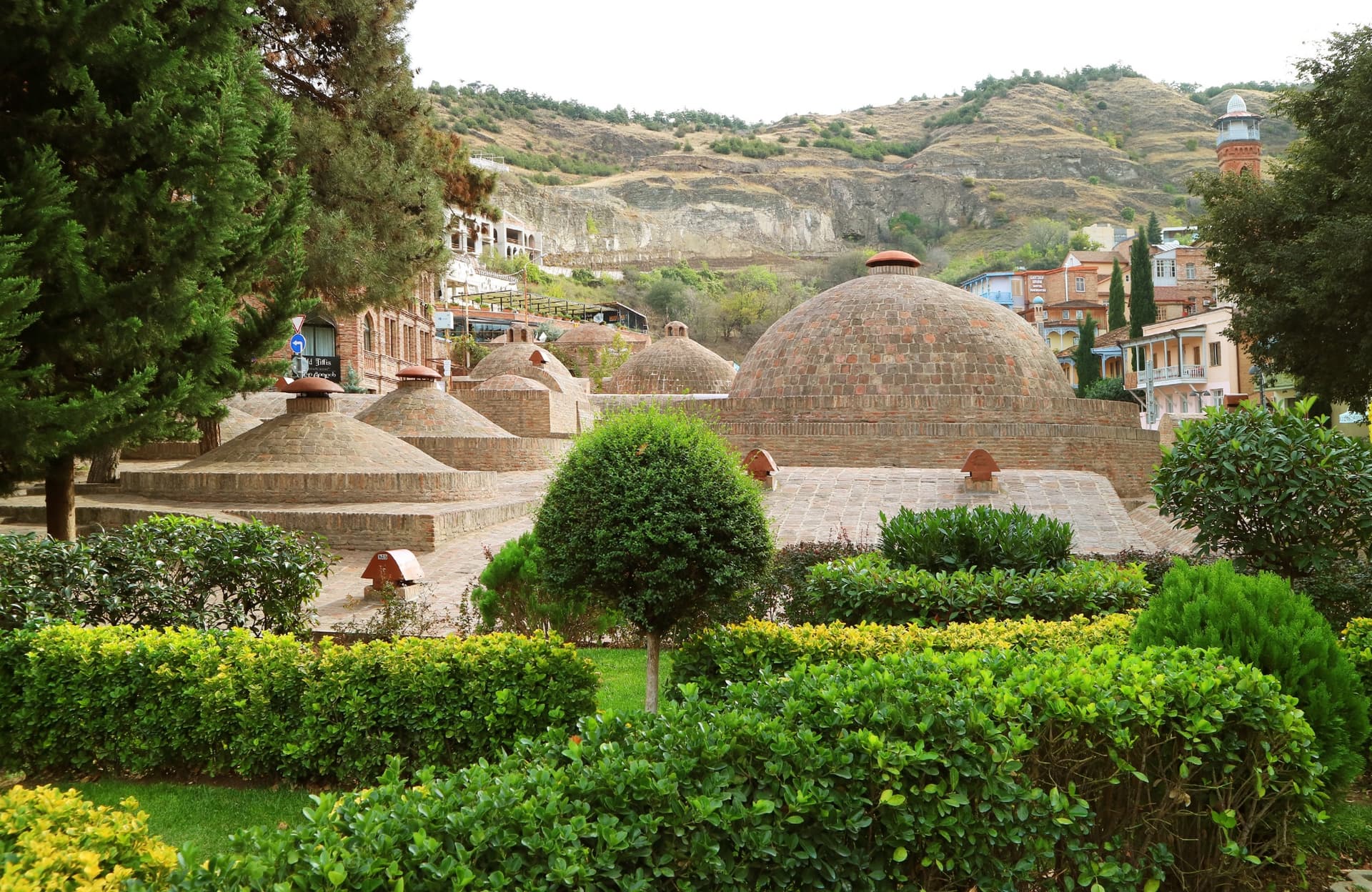
At the foot of Narikala Fortress, in the Old Town of Tbilisi, the Abanotubani quarter groups together baths fed by sulfurous springs that gave their name to Georgia's capital (from tbili, meaning "warm"). Recognizable by their brick roofs topped with oculi, these baths have remained in operation for several centuries and represent one of the rare places where thermal tradition, vernacular architecture, and Tbilisian social life still converge.
Why Visit the Abanotubani Baths
Abanotubani is not a museum site: it is a thermal complex still frequented by locals. A visit combines several points of interest:
- Sulfurous water at approximately 38 °C, never artificially heated, renowned for its effects on skin and joints.
- Semi-subterranean architecture, designed to channel water by gravity, without pumping.
- Local expertise in kissa, the scrub-massage performed by a Meqise.
- A direct link to Tbilisi's founding history and a dense quarter that can be explored on foot as you venture out.
History and Founding Legend
Tradition traces the discovery of the springs to King Vakhtang I Gorgasali, an Iberian sovereign of the late 5th century. According to the founding legend, the king was hunting in the Mtkvari valley when a falcon dove upon its prey in a hot spring. Struck by the virtues of these waters, he is said to have decided to establish a city there. The episode, transmitted through medieval chronicles, is as much myth as history, but it has durably linked Tbilisi to its baths.
From the Middle Ages to modern times, Abanotubani accumulated multiple functions: public baths, meeting places, festive spaces, and even lodging for passing travelers. Women visited for rituals preceding marriage and displayed jewelry and formal attire. In the 19th century, French writer Alexandre Dumas, while passing through the Caucasus, praised the baths in his travel narratives and contributed to their reputation beyond Georgia.
What You Will See
Bath Architecture
The buildings are constructed in brick and river stone. The lower half is semi-subterranean, allowing underground sulfurous water to circulate by gravity through ceramic conduits, without mechanical systems. Above ground, the roofs take the form of domes pierced by a central oculus that provides both overhead lighting and ventilation—a silhouette that rhythms the entire quarter.
Inside, floors are marble, walls are whitewashed and dotted with stone mosaics; some rooms retain frescoes. Each cabin is organized in two spaces: an anteroom serving as changing room and rest area, and the bathing room proper, equipped with a basin fed by sulfurous water and, most often, a massage table.
The Bathing Experience
The traditional protocol is simple: 15 to 20 minutes immersed in the 38 °C basin, then 10 minutes of rest in a robe in the anteroom, all repeated two to three times. A session with the Meqise, the traditional masseur, completes the experience with vigorous scrubbing using a horsehair glove followed by lathering with foam.
The Chreli Abano Façade
In the heart of the quarter, the Chreli (or Orbeliani) baths stand out with a façade of Persian-inspired blue mosaics, which has become the postcard image of Abanotubani.
Practical Information
- Bath Type: common public baths (men/women separated) or private cabins available by the hour. Public rates remain modest; private cabins are considerably more expensive, with variation depending on amenities.
- Hours: public baths open in the morning and remain accessible much of the day; private cabins often offer extended hours. Check on site or by phone, as conditions vary from establishment to establishment.
- Duration: allow 1 to 1.5 hours for a complete session with massage.
- What to Bring: swimsuit (optional in private cabin), sandals, water bottle. Towels and soap are usually provided or available for rent on site.
- Reservation: recommended for private cabins, especially in the evening and on weekends.
How to Get There
Abanotubani is located in the Old Town, south of the Mtkvari River, at the foot of Narikala Hill.
- On Foot: from Liberty Square, allow about ten minutes through the Sololaki alleys and Kote Abkhazi Street.
- Metro: Avlabari station (opposite bank, 10 min on foot via Metekhi Bridge) or Liberty Square.
- Taxi / Ride-sharing: short ride from anywhere in the center; use a local app (Bolt) to avoid negotiation.
When to Visit
The baths can be visited year-round. Winter, between November and March, remains the most pleasant time: the contrast with the cold outside enhances the sulfurous warmth, and tourist crowds are lighter. In the evening, private cabins often fill up on weekends.
Nearby Attractions
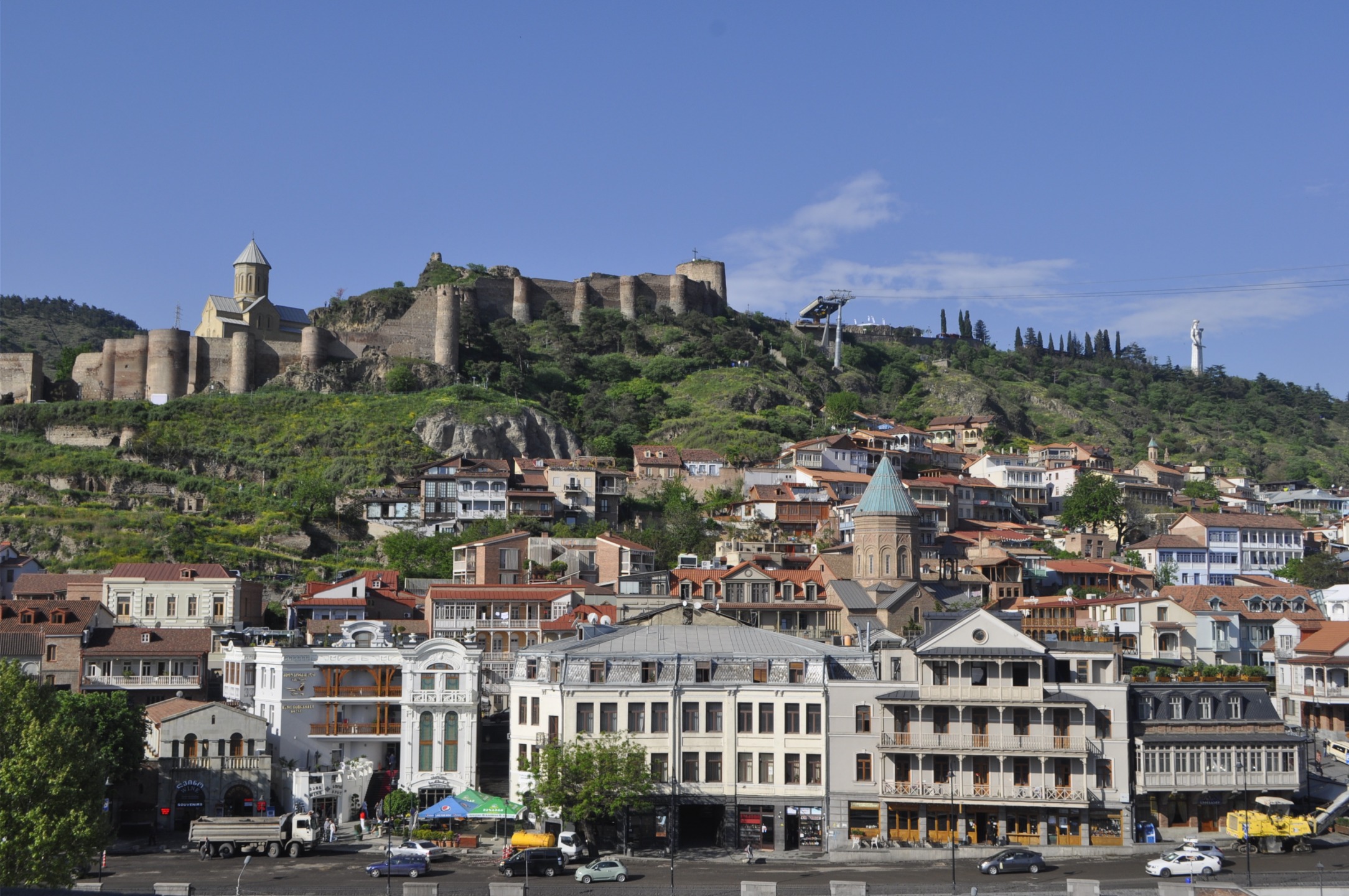
- Narikala Fortress, perched on the hill just above the quarter.
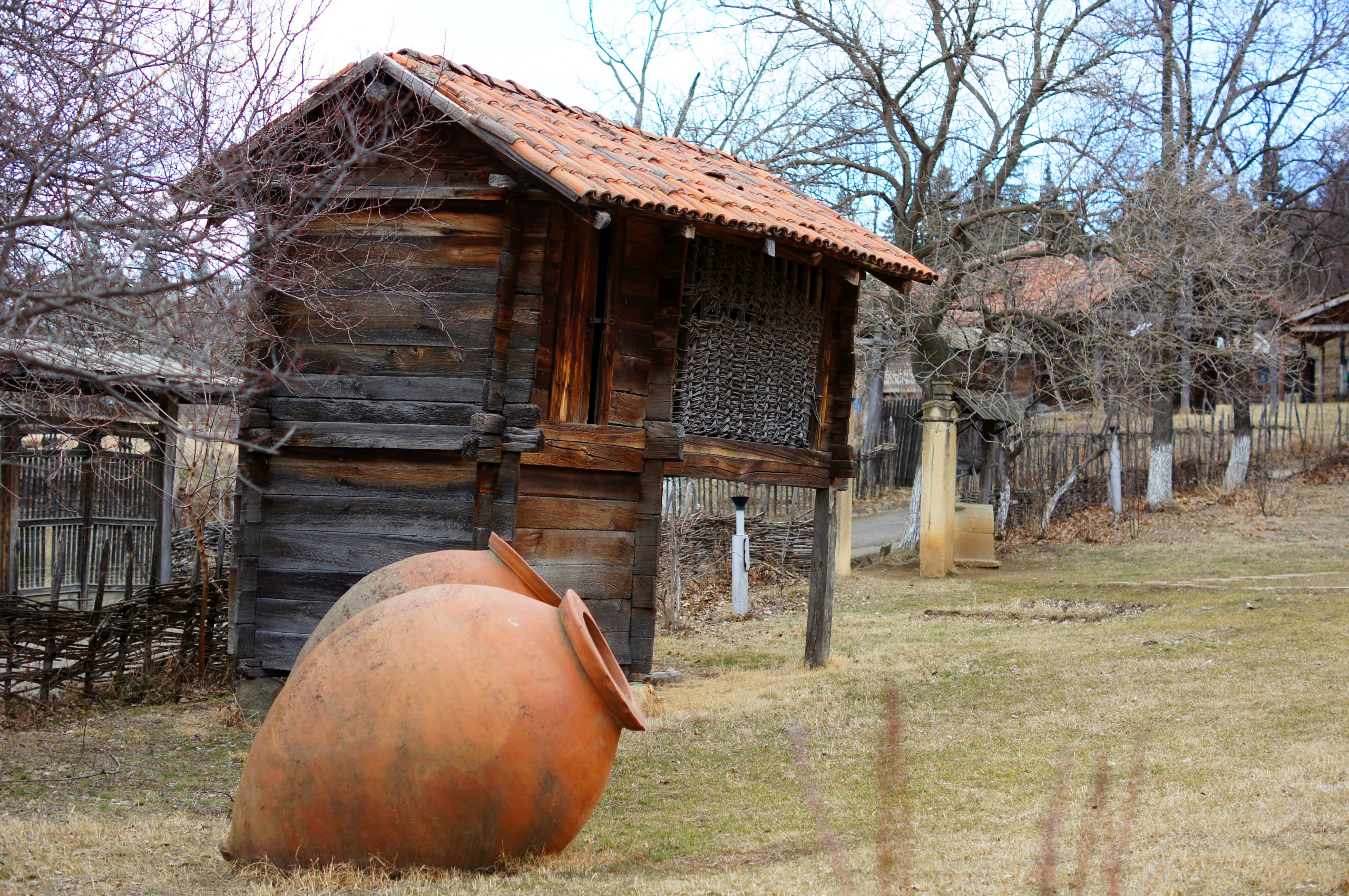
- The Open-Air Ethnographic Museum, which extends your discovery of Georgian heritage.
- Leghvtakhevi Waterfall, accessible in a few minutes from Chreli Abano by a trail ascending the ravine.
- Metekhi Church and bridge of the same name, on the opposite bank of the Mtkvari.
Frequently asked questions
To include Abanotubani and Tbilisi's Old Town in a larger itinerary, browse our trips to Georgia.
Nearby
Interested in this visit?
We can include it in your personalised itinerary.