Bodbe Monastery
Bodbe Monastery
Located 2 km from Sighnaghi, Bodbe Monastery houses the tomb of Saint Nino, evangelist of Georgia in the 4th century, and overlooks the Alazani valley.
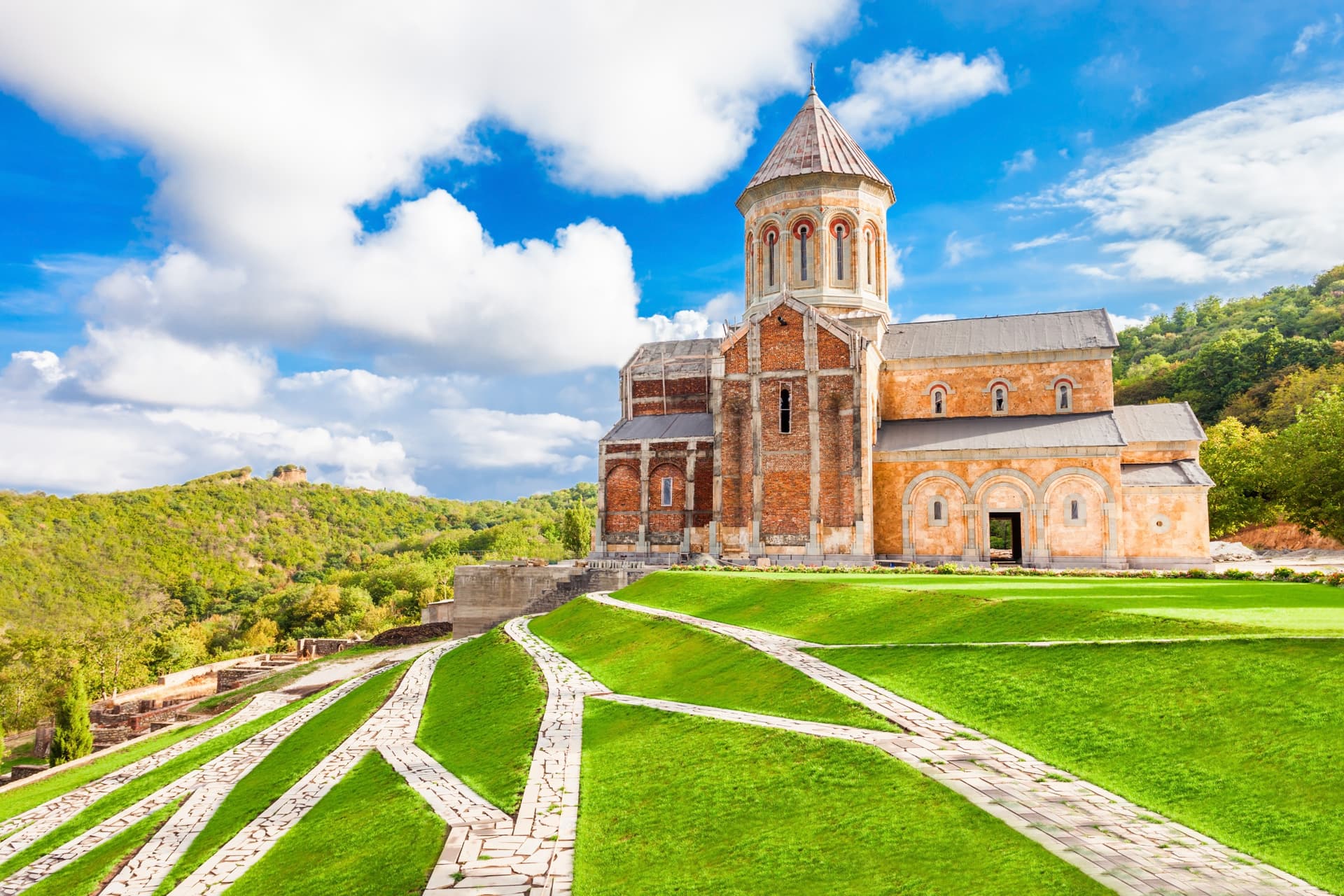
Bodbe Monastery stands 2 km from Sighnaghi, in the Kakheti region, in eastern Georgia. Originally built on the tomb of Saint Nino, the country's evangelist in the 4th century, it now houses an active convent and is one of the Caucasus's principal Orthodox pilgrimage sites.
Why visit Bodbe Monastery
The site combines three reasons that make it worth the detour from Tbilisi or Sighnaghi. First, its historical significance: the earliest chapel dates to the 4th century, making it one of Georgia's oldest Christian sanctuaries. Then there is the landscape: set in the foothills of the Gombori mountains, the monastery overlooks the Alazani river valley, Georgia's great wine region.
Finally, there is the living spiritual dimension: the tomb of Saint Nino, inside the basilica, attracts pilgrims from across the country each day. The community of nuns, led by Abbess Theodora, has maintained an active monastic life since reopening in 1991.
History of the monastery
Royal origins (4th–9th century)
In the 4th century, King Mirian commissioned the first chapel at Bodbe, built over the tomb of Saint Nino, whose role proved essential to the Georgians' conversion to Christianity. In the 5th century, King Vakhtang Gorgasali undertook the church's expansion. A three-nave basilica was erected between the 8th and 9th centuries; it remains the heart of the complex today.
Medieval peak and theological school
The sanctuary underwent complete renovation in the 12th century under King Demetrius I. Bodbe subsequently became a coronation site for Kakheti's kings: Alexander I was crowned there in 1492, followed by Teimuraz I in 1605. In the 17th century, a theological school was founded on the premises, alongside a library renowned for the richness of its manuscripts.
Modern Renaissance and Soviet period
In 1811, Ioane Makashvili became Metropolitan of Kakheti and oversaw the complex's renovation. Following his death in 1837, the monastery passed under the direction of Archimandrites. Archimandrite Makari established a music school, and in 1888, under Tsar Alexander III, a convent and gymnasium for women were founded. Closed during the Soviet period, the monastery reopened in 1991 and has since been led by a community of nuns.
What to see on site
The basilica and tomb of Saint Nino
The three-nave basilica (8th–9th century, altered in the 12th) houses, on the south side of the altar, the tomb of Saint Nino. It is the devotional heart of the site: pilgrims gather here in silence, sometimes leaving personal objects and jewels. According to local Orthodox tradition, pilgrims receive blessings here. The interior walls retain frescoes and sculptures restored over the centuries. The relics of Saint Nino are preserved in the Saint George Cathedral of the complex.
The icon of the Virgin Mary
On the north wall of the church stands an icon of the Virgin Mary with a singular history. During the Soviet period, it was diverted from liturgical use to serve as a table in a hospital and was damaged several times. Restored and reintegrated into the church, it still bears the marks of this period and represents one of the sanctuary's most historically charged objects.
The architectural complex
The ensemble comprises two churches and a three-story bell tower, protected by an enclosure wall. The oldest building dates back more than 1,600 years, though the current silhouette dates essentially to the 11th century. The buildings are surrounded by cypress trees, gardens maintained by the nuns, and vines, in keeping with Kakheti's winemaking tradition.
The spring of Saint Nino
Approximately 3 km from the monastery, in a wooded valley below, flows the spring of Saint Nino. Georgian popular tradition ascribes healing properties to it, and a small baptistry allows pilgrims ritual immersion. Access is on foot via a stairway path, or by taxi via the road.
Practical information
- Hours: open daily during daytime, with possible closures during liturgical services. Verify locally before visiting.
- Admission: free entry, as is the case for most Georgian Orthodox monasteries.
- Dress code: skirt and headscarf required for women (headscarves provided at the entrance). Shorts and hats to be avoided by all.
- Photography: permitted outside, subject to authorization inside the churches.
- Duration of visit: allow 1 to 1.5 hours on site; longer if you descend to the spring.
How to get there
The monastery is located 2 km from Sighnaghi, which serves as the logical base for your visit. From Tbilisi (approximately 110 km), two main options prevail:
- By marshrutka: minibuses depart from Samgori bus station toward Sighnaghi (2 to 2.5 hours travel time). From Sighnaghi, a local taxi reaches Bodbe in a few minutes.
- By taxi or private car: more flexible, especially for combining Bodbe with other Kakheti sites on the same day.
To reach the spring of Saint Nino from the monastery, you have two options: on foot via a stairway path (approximately 30 minutes downhill, more challenging on the return), or by taxi via the road.
What to see nearby
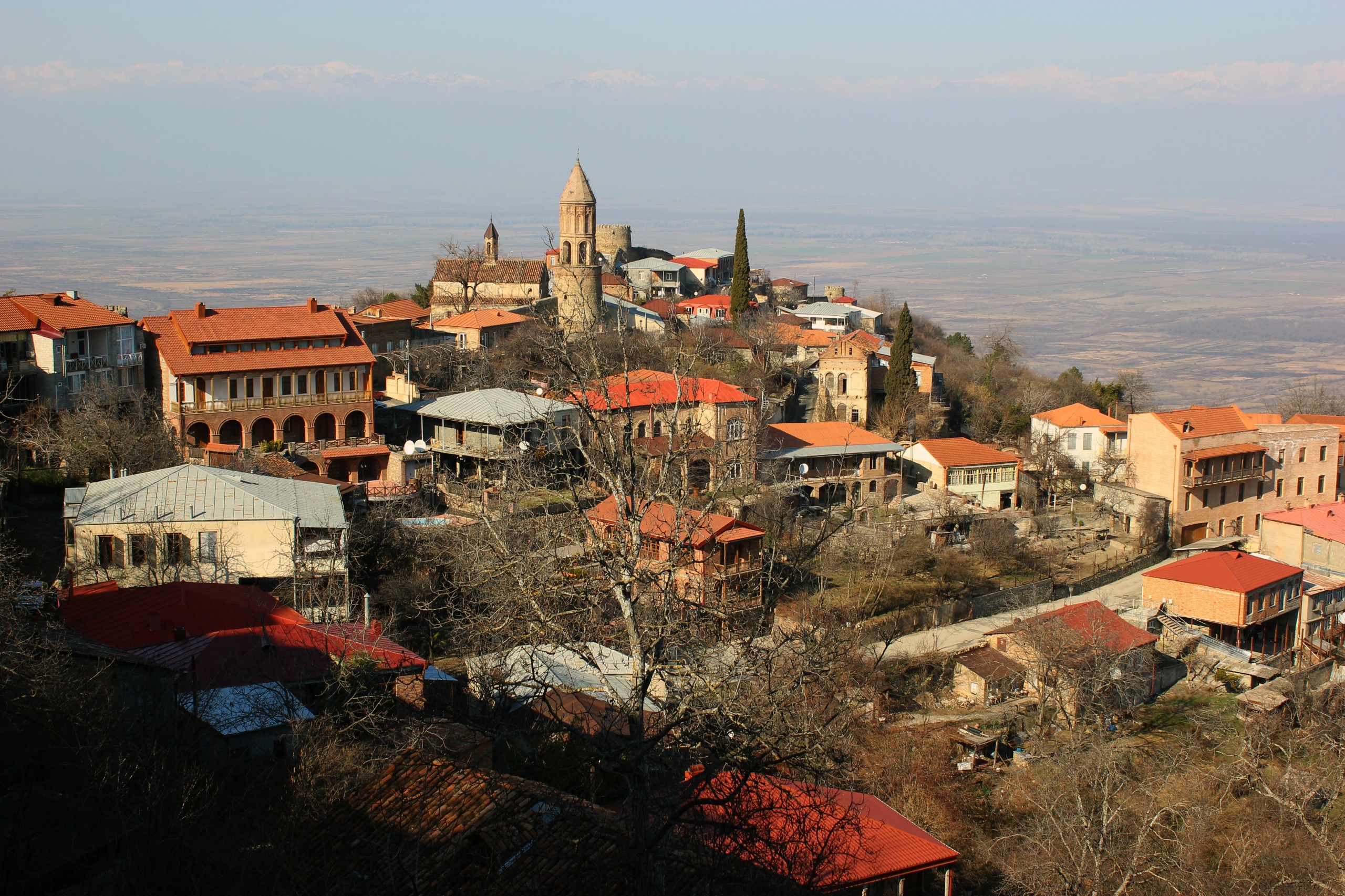
A visit to Bodbe naturally combines with Sighnaghi, nicknamed the "city of love" for its panoramic ramparts and red-brick architecture. The Kakheti region also boasts numerous wine estates open for tastings, as well as the Davit Gareja monastic complex, more austere, near the Azerbaijani border.
To further explore Georgian religious heritage, the Ghélati Monastery near Kutaisi (12th century, UNESCO-listed) or the Sion of Bolnisi, one of the country's oldest basilicas, provide interesting architectural counterpoints.
Frequently asked questions
Frequently asked questions
Allow 1 to 1.5 hours for the monastery and its gardens. Add 1 to 2 hours if you descend to the spring of Saint Nino, as the return hike is demanding.
Yes, the site welcomes all visitors regardless of religion. The dress code and respect for silence during services remain expected.
Yes, it is in fact the most common format. Most excursions combine Bodbe, Sighnaghi, and a Kakheti wine estate on the same day.
Spring (April–June) and autumn (September–October) offer the most pleasant conditions. September, during the Kakheti wine harvest, is particularly interesting for combining the visit with a wine tour.
Yes, the spring is used by pilgrims for drinking and ritual ablutions. Local tradition ascribes healing properties to it, presented here as an element of belief rather than medical fact.
Plan your trip
Bodbe Monastery naturally integrates into a Kakheti circuit, Georgia's emblematic wine region. To build a tailored itinerary combining Orthodox heritage, tastings, and Caucasus landscapes, explore our trips to Georgia.
Interested in this visit?
We can include it in your personalised itinerary.