Gelati Monastery
Gelati Monastery
Founded in 1106 by David the Builder and UNESCO-listed, Gelati Monastery preserves near Kutaisi unique frescoes of Georgian art.
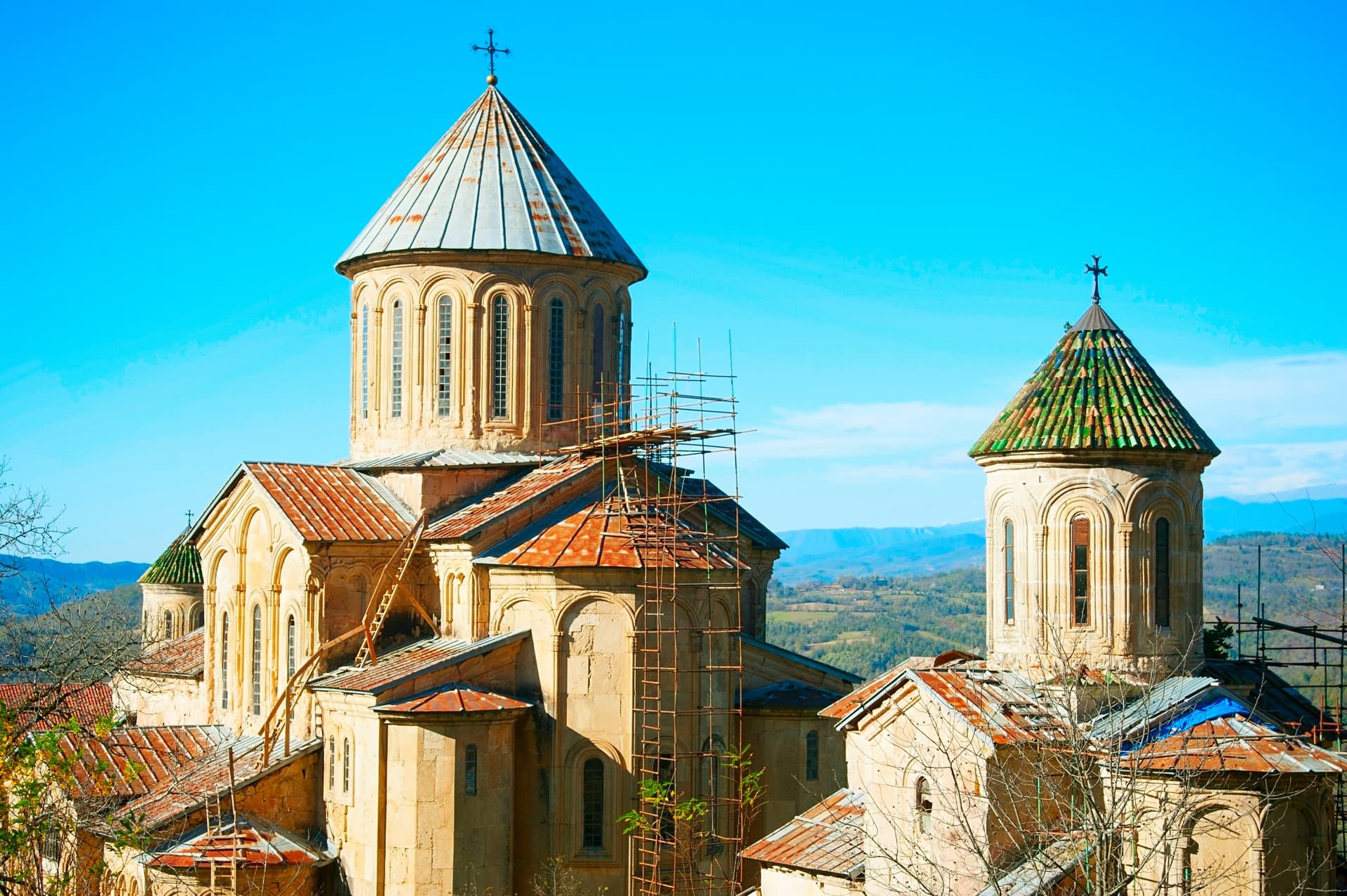
Gelati Monastery overlooks a forested hillside just a few kilometres from Kutaisi, in western Georgia. Founded in 1106 by King David IV the Builder, this monastic complex inscribed on the UNESCO World Heritage List was long the principal intellectual and religious centre of the medieval Georgian kingdom. Its churches preserve exceptional frescoes spanning nearly eight centuries of Byzantine Orthodox mural painting.
Why visit Gelati Monastery
- UNESCO World Heritage site since 1994.
- Complex founded by David the Builder, a major figure in Georgian history.
- Wall paintings from every era displayed side by side, making it an open book on Georgian culture.
- The development of Georgian culture legible on-site since the 11th century.
- Natural setting overlooking the foothills of the Caucasus and the Imereti valley.
- Visit easily combined with Kutaisi and Bagrati Cathedral.
A royal foundation of the 12th century
The Gelati project began in 1106 under King David IV, nicknamed "the Builder" for having unified Georgia and expelled the Seljuks. The sovereign conceived the monastery as both a political and spiritual project: he wished to give his kingdom a religious centre capable of rivalling the great Byzantine sanctuaries.
The main church, dedicated to the Virgin, was consecrated around 1130, shortly after the king's death, and he was buried there. Around it quickly developed an academy, a scriptorium and several other churches. The Academy of Gelati became one of the most active intellectual centres in the medieval Caucasus, where philosophy, rhetoric and sciences were taught. Georgian chroniclers would call it the "new Athens" and the "second Jerusalem".
The monastery endured centuries of invasion, pillage and restoration, notably under the Mongols and then the Ottomans, before regaining its role within the Georgian Orthodox Church. It was inscribed on the UNESCO World Heritage List in 1994, initially with Bagrati Cathedral, then as an independent site from 2017 onwards.
What to see on site
The Church of the Virgin
This is the main and oldest building. Its pale stone facade, austere in design, contrasts with an interior entirely covered in frescoes. The great mosaic in the apse, depicting the Virgin and Child surrounded by archangels, dates from the 12th century; it is considered one of the last Byzantine mosaics of this scale.
The layered frescoes
Gelati's major interest lies in the coexistence, on the same walls, of mural paintings from every era displayed side by side. You can read successively the Byzantine style of the 12th century, additions from the 14th, royal portraits from the 16th and later compositions. This stratification concretely illustrates the development of Georgian culture since the 11th century.
Saint George's and Saint Nicholas churches
More modest, these two churches frame the ensemble. Saint Nicholas stands out for its unusual two-storey structure, set on open arches, which likely served as a library.
The bell tower and academy
The 13th-century bell tower, square in plan, frames the entrance. The ruins of the Academy, nearby, preserve stone benches and inscriptions that recall its former teaching function.
The tomb of David the Builder
According to tradition, David IV requested to be buried beneath the threshold of the south door, so that all who enter the monastery tread upon his tomb. The funeral stone, engraved with an inscription in old Georgian, remains visible at this location.
Practical information
- Location: approximately 11 km north-east of Kutaisi, in the Imereti region.
- Duration of visit: allow 1 to 2 hours on site depending on your interest in the frescoes.
- Admission: entrance to the monastery is free; modest contribution possible for certain restored sections.
- Dress code: shoulders covered, long trousers or skirt; scarves provided for women at the entrance.
- Photography: permitted outside; frequent restrictions inside churches, notably without flash.
- Accessibility: sloping terrain with irregular paving, not well-suited to pushchairs or persons with reduced mobility.
When to visit
The monastery can be visited year-round, but the period from May to October offers the most pleasant conditions, with long days and clear access. In summer, mornings before 11am allow you to avoid groups from Kutaisi and the heat. Autumn, from late September to mid-October, enhances the colours of the surrounding forests. In winter, the site remains open but the access road may be icy and certain chapels are closed for conservation.
How to get there
Gelati can be reached from Kutaisi, Georgia's second city and the most convenient gateway to the western part of the country.
- By taxi: 20 to 25 minutes from the centre of Kutaisi; drivers often offer a return trip with time to wait on site.
- By marshrutka: shared minibuses from Kutaisi bus station, variable frequency, journey of approximately 30 minutes.
- By rental car: asphalt road to the car park next to the entrance.
- Combination visit: most excursions combine Gelati with Bagrati Cathedral and Motsameta Monastery, located on the same route.
What to see nearby
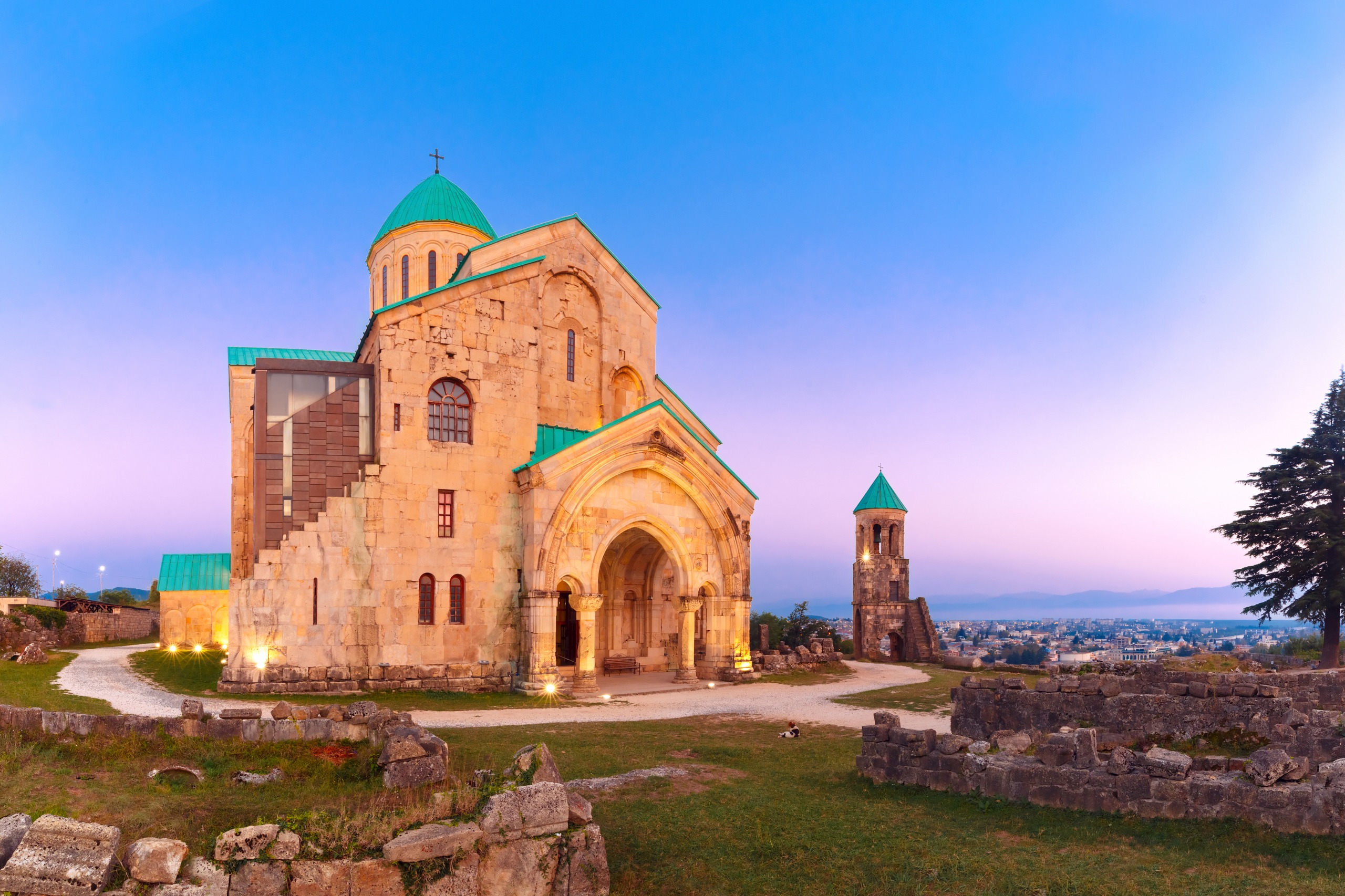
- Bagrati Cathedral: royal edifice of the 11th century overlooking Kutaisi, long associated with Gelati as part of the same UNESCO site.
- Bodbe Monastery: another major monastic site in Georgia, located to the east, in the wine-growing region of Kakheti.
- Open-air Ethnographic Museum of Tbilisi: useful complement to understand Georgian rural and religious architecture.
- Mukhrani Castle: wine estate and princely residence, to be combined with a stay around Tbilisi.
Frequently asked questions
Frequently asked questions
Yes. Gelati is inscribed on the UNESCO World Heritage List since 1994, initially with Bagrati Cathedral, then as an independent site from 2017.
It is situated in the Imereti region, about ten kilometres north-east of Kutaisi, on a wooded hillside overlooking the valley.
One to two hours are sufficient to tour the complex and observe the main frescoes. Allow longer if you are interested in medieval iconography.
Yes, Gelati remains an active Orthodox monastery. Services are held there and visitors are expected to dress appropriately.
Yes, the two sites are about twenty minutes apart by car and form the classic excursion from Kutaisi.
Include Gelati in your Georgia trip
The monastery lends itself particularly well to a two or three-day stay around Kutaisi, as part of an itinerary that combines Tbilisi, Kakheti and the Caucasus. To build a tailor-made route, consult our suggestions for travel to Georgia.
Interested in this visit?
We can include it in your personalised itinerary.