Gonio Fortress
Gonio Fortress
15 km south of Batumi, the Roman fortress of Gonio spans 4.75 hectares of ramparts, 18 towers and a rich archaeological museum featuring ancient coins.
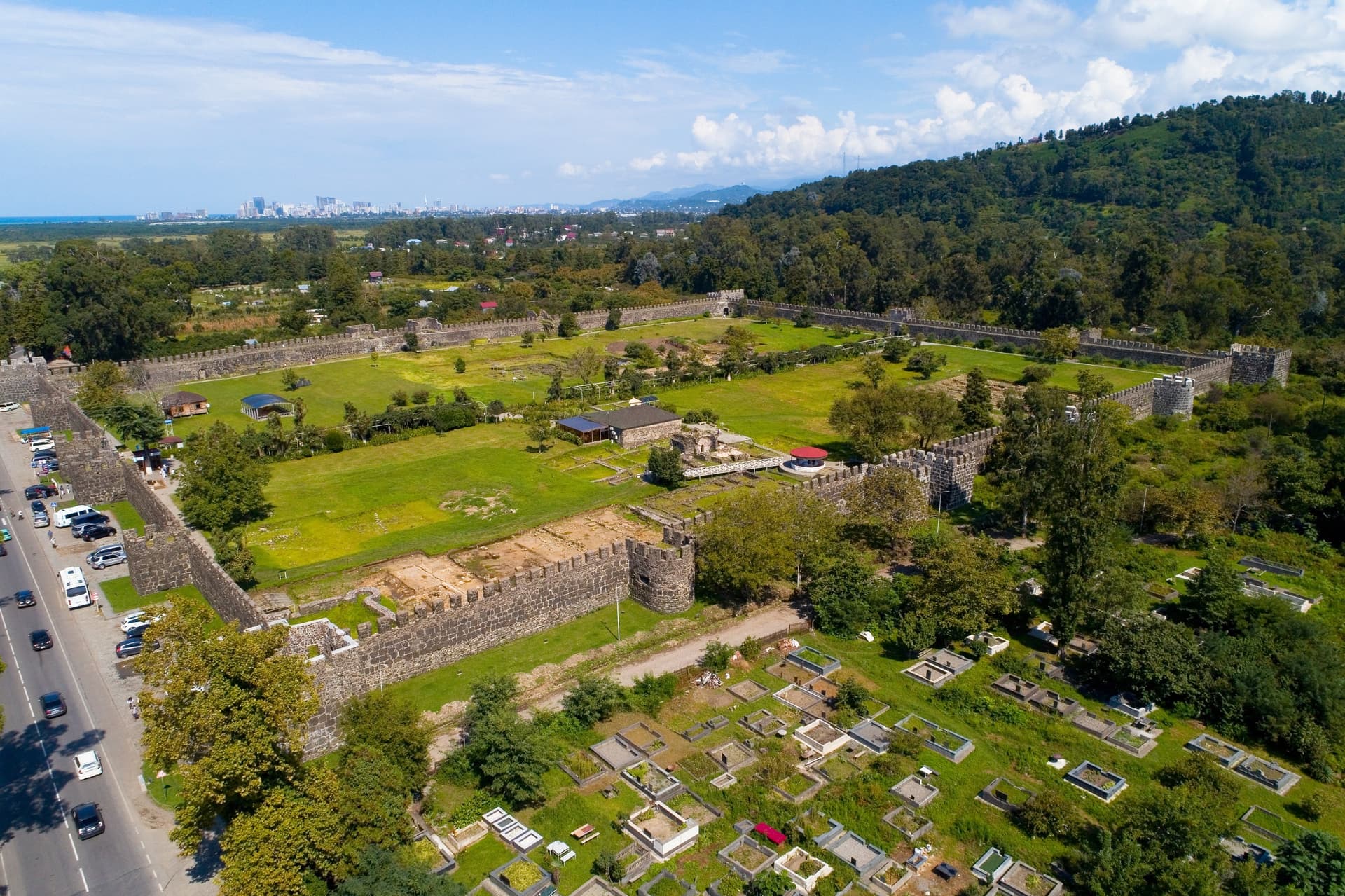
Approximately 15 km south of Batumi, in the village of Gonio, Gonio Fortress (formerly Apsaros or Apsaruntos) occupies a coastal plain between the Black Sea and the Adjara mountains. This archaeological site, whose earliest stones date back to the 1st century BCE, ranks among the best-preserved Roman fortifications in the Caucasus. Spanning 4.75 hectares, its rectangular walls, 18 still-standing towers and museum chronicle nearly two millennia of occupation, from Rome to the Ottoman Empire.
Why Visit Gonio Fortress
The site combines several compelling reasons to make it a worthwhile detour from Batumi:
- A nearly intact Roman rectangular layout (222 m x 195 m), rare at this scale in Georgia.
- A modest yet well-documented archaeological museum showcasing coins from Tiberius, Vespasian and Nero, along with gold objects, statues and jewelry recovered from excavations.
- A dense layer of legend, from the myth of the Golden Fleece to the tradition of Saint Matthew's tomb.
- An open natural setting, between Black Sea coastline and the first slopes of the Adjara range.
- The classical music festival Night Serenades, held within the fortress each summer since 2009.
History of Apsaros-Gonio
The oldest written mention of the site comes from Pliny the Elder (Plinius Secundus) in the 1st century CE, who refers to it as Apsaros. The modern name "Gonio" appears much later, first used by Greek historian Michael Panaretos in the 14th century.
The fortress controlled a strategic military and trade route connecting Anatolia to Lazica (western Georgia), Persia and Armenia. By the 2nd century, it had developed into a fortified city with a hippodrome and theatre, whose existence is attested by ancient sources. Excavations have uncovered baths, barracks, a praetorium, a sewage system, a water reservoir, oil lamps, gemstones and red-glazed pottery.
From 1547 to 1878, the site was occupied by the Ottoman Empire, which built a mosque within the fortress walls as well as Oriental baths erected atop the existing Roman structures. The Treaty of San Stefano, signed in 1878, placed all of Adjara under Russian imperial rule. Systematic archaeological exploration of the site began in the 1960s and continues today.
Legends Associated with the Site
Two traditions, to be taken as such, lend Gonio mythological depth:
- The myth of the Golden Fleece: according to one version, Apsyrtus, brother of Medea, was murdered by Jason within the fortress, while King Aeëtes attacked the Argonauts to recover the Fleece.
- Saint Matthew's tomb: Christian tradition places the burial of the apostle at Gonio, said to have come to preach in the region after Christ's death. Large cross-shaped pedestals mark the supposed location. This identification remains legendary and has not been confirmed by archaeology.
What to See On-Site
The Fortified Enclosure
The outer perimeter of the walls measures approximately 900 m with a height of 5 m. The fortress originally had 22 towers and 4 gates; 18 towers remain today. The four corner towers, more imposing, reach 7 m in height and are accessible via stone stairways integrated into the masonry. The main entrance, marked by an arched gateway, is located in the western section. The original cut blocks are most visible in the lower sections of the walls, gates and towers.
Interior Remains
Within the enclosure, several excavation levels reveal Roman baths, barracks foundations, the praetorium, the drainage network and water reservoir. The Ottoman Oriental baths, superimposed on Roman structures, illustrate the site's stratification. A Soviet-era orange grove occupies part of the intra-mural space.
The Archaeological Museum
The site museum, modest yet well-documented, assembles pieces from excavations: Roman coins (Tiberius, Vespasian, Nero), jewelry, gold objects, statuettes, gemstones and ceramics. Allow 30 to 45 minutes for a thorough visit.
Practical Information
- Duration of visit: 1 to 2 hours to combine the enclosure, remains and museum.
- Admission fee: moderate entrance fee including museum access. Payment at the site.
- Opening hours: the site is generally accessible year-round, with extended hours during the summer high season.
- Comfort: little shade within the enclosure; bring water and a hat in summer.
- Accessibility: uneven ground, unsecured stairway access to towers; closed-toe shoes recommended.
When to Visit
The most pleasant period extends from May to October, with the humid subtropical climate characteristic of the Adjara coast. July and August are warm and busy, coinciding with Batumi's beach season. Spring and early autumn offer a better balance for archaeological exploration. If traveling in summer, check the Night Serenades festival schedule, which transforms the enclosure into an open-air classical music venue in the evenings.
How to Get There from Batumi
Gonio lies on the coastal road connecting Batumi to the Turkish border post at Sarpi.
- By marshrutka: regular minibuses from Batumi heading toward Sarpi, stopping at Gonio village. Journey of approximately 30 minutes.
- By taxi: quick ride from Batumi's center, to be negotiated beforehand or via a local app.
- By car: direct coastal route, parking available near the entrance.
Nearby Attractions
- Gonio Beach: just a few hundred meters away, a quieter pebble beach than those in central Batumi.
- Sarpi: border post with Turkey, about ten kilometers to the south, known for its modern seaside architecture.
- Batumi: the capital of Adjara, its seafront boulevard, contemporary architecture and beach atmosphere.
- To extend your archaeological itinerary in Georgia, the Gelati Monastery and the Narikala Fortress in Tbilisi complement a visit nicely.
Frequently Asked Questions
Frequently asked questions
Plan for 1 to 2 hours to tour the enclosure, observe the interior remains and explore the archaeological museum.
This is an ancient Christian tradition, materialized by cross-shaped pedestals. No archaeological evidence supports this identification, which remains in the realm of legend.
Marshrutkas (minibuses) heading to Sarpi pass through Gonio throughout the day and drop passengers near the site. Taxi remains a practical option for a round trip.
Yes, the enclosure is spacious and flat, pleasant to walk through with children. Access to the towers via stone stairways does require caution and supervision.
Yes. Gonio Beach is just a few minutes' walk from the fortress, allowing you to combine culture and swimming in the same half-day during the season.
Plan Your Trip
Gonio Fortress fits naturally into an itinerary combining the Adjara coast and inland Georgia. To build a bespoke itinerary including Batumi, the Caucasus and major archaeological sites, explore our Georgia trips.
Interested in this visit?
We can include it in your personalised itinerary.