Black Sea Coast and Adjara
From the seaside resort of Batumi to the wooden villages of Khoulo, Adjara blends subtropical climate, Ottoman heritage, and Georgian cuisine along the Black Sea.
Adjara occupies the southwestern corner of Georgia, wedged between the Black Sea, the Turkish border to the south, and the foothills of the Lesser Caucasus to the east. It is an autonomous republic within the country, populated by Georgians, a portion of whom converted to Islam during three centuries of Ottoman rule, giving the region a distinctive cultural character: wooden mosques in mountain villages, Orthodox traditions on the coast, and a cuisine that blends both influences.
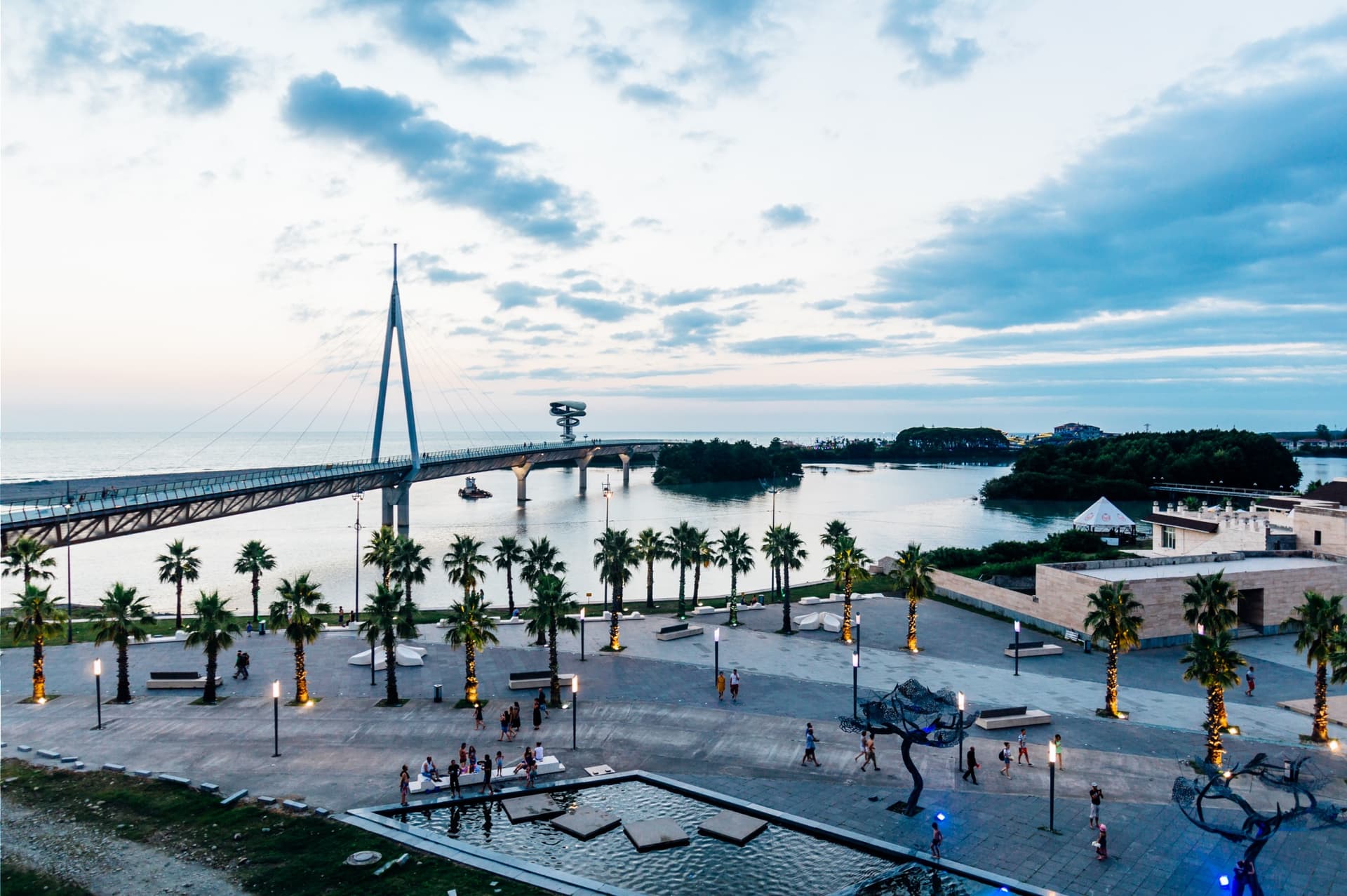
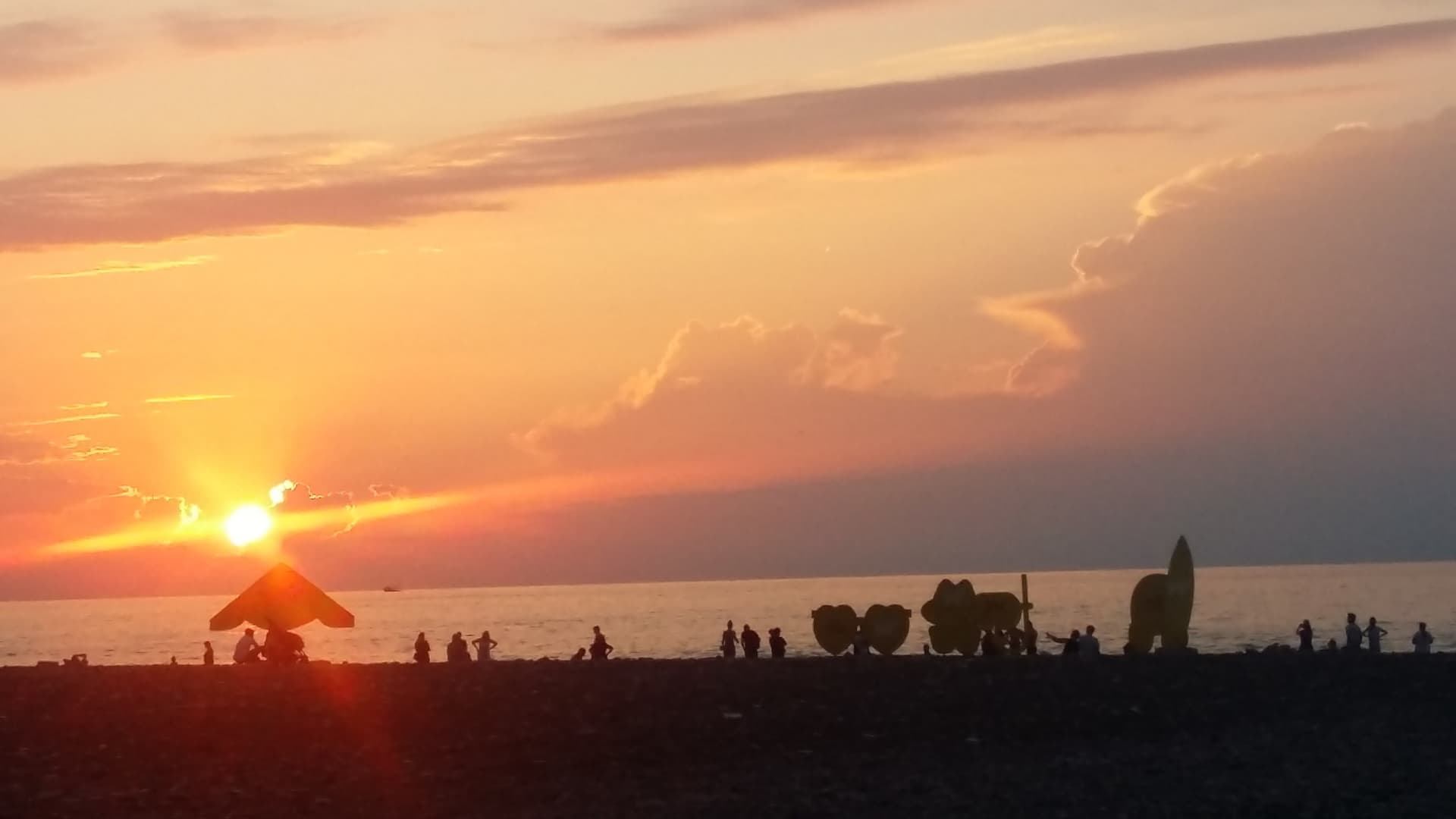
Batumi, the regional capital, concentrates most of the region's activity. A free port since the late 19th century, then an oil terminal for the Russian Empire, the city retains an old center with Art Nouveau and neoclassical facades around Europa Square and Memed Abashidze Street. Since the 2010s, a line of hotel and residential towers has grown along the waterfront, beside a 7 km boulevard that borders the pebble beach. The contrast is stark and deliberate—it's important to know before you arrive: Batumi is not a preserved old town, it's a resort reinventing itself.
The interior of Adjara takes on an entirely different character. From Makhuntseti, 30 km from the coast, the road climbs the Adjaristsqali valley toward Khoulo, then branches toward the villages of Beshumi and Goderdzi. Here you'll find two-story wooden houses typical of the region, medieval arched bridges (the one at Makhuntseti, attributed to Queen Tamar, dates from the 12th century), and above 1,500 meters, alpine pastures used in summer by shepherds who descend from Khoulo. The Goderdzi Pass, at 2,025 meters, connects with the Samtskhe-Javakheti region and remains snow-covered much of the year.
Humid subtropical climate is the region's signature. Annual rainfall in Batumi exceeds 2,200 mm, making it one of the Caucasus's wettest spots. This moisture explains the cultivation of tea, introduced in the late 19th century, and citrus crops (mainly mandarins, around Kobuleti and Chakvi). The Batumi Botanical Garden, established in 1912 on Cape Verde by botanist Andrei Krasnov, exploits this microclimate to grow subtropical species from around the world across 108 hectares on clifftop terrain.
On the culinary front, the regional specialty is adjaruli khachapuri: boat-shaped pastry filled with melted cheese (sulguni and imereti), topped with a raw egg cracked into it as it comes from the oven and a knob of butter. It's eaten throughout Georgia, but the authentic original is savored here—at Retro or Cafe Literaturuli in Batumi, for example. Other local dishes include borano (melted cheese in butter), sinori (phyllo pastry with fermented yogurt), and Black Sea fish (anchovies and horse mackerel) served fried in summer.
The region suits a mixed stay well: 2 or 3 days on the coast around Batumi and its immediate surroundings (Gonio, Kvariati, Sarpi at the Turkish border), then 1 to 2 days inland to understand true Adjaran identity, far from the seaside boulevard.
Must-See
Batumi Boulevard and Old Town. A 7 km promenade along the sea, dotted with contemporary sculptures and a cable car to Mount Anuria. The old quarter around Europa Square preserves its late 19th-century facades.
Batumi Botanical Garden. 108 hectares of subtropical collections on the cliffs of Cape Verde, 9 km north of the city. Allow 2 to 3 hours of walking between sections by continent, with sweeping views of the Black Sea.
Makhuntseti Bridge and Adjaristsqali Valley. 12th-century arched bridge attributed to the time of Queen Tamar, followed by a 30-meter waterfall. Starting point for mountain villages via a road that traces the river for 80 km to Khoulo.
Gonio Fortress. Roman then Byzantine site 15 km south of Batumi, mentioned by Pliny the Elder. Walls 900 meters long still standing, and according to tradition, the supposed tomb of the apostle Matthew within the fortress grounds.
Wooden Villages Around Khoulo. Traditional houses with galleries, 19th-century wooden mosques at Ghorjomi and Khoulo, a Soviet cable car that crosses the valley to Tago. An excellent vantage point for understanding highland Muslim Adjara.
When to Visit
The bathing season in Batumi runs from mid-June to mid-September, with water temperatures around 24°C in August and air temperatures of 26 to 30°C. July and August are the busiest months, particularly attracting regional visitors (Georgia, Armenia, Israel, Gulf states), and hotels are often fully booked. May, early June, and September offer interesting compromises: fewer crowds, pleasant temperatures (22 to 26°C), but possible showers. Autumn and winter are decidedly rainy, with monthly totals exceeding 250 mm from November to February, and ambient humidity that makes seaside visits unpleasant.
In the hinterland, the calendar is different. Roads to Khoulo and Goderdzi Pass are passable from late May to mid-October. Above 1,500 meters, summer temperatures remain cool (15 to 22°C during the day), making it a good escape from the humid heat of the coast. Goderdzi Pass is closed by snow from November to April or May depending on the year, and only a modest ski station operates in winter at Beshumi.
Practical Tips
Adjara can be visited in 3 to 5 days depending on your desire to combine sea and mountain. Batumi's international airport receives seasonal flights from Europe and year-round connections from Istanbul and Tbilisi. By road, Tbilisi is 370 km away (6 hours), Kutaisi 145 km (2.5 hours). The overnight train from Tbilisi to Batumi is a comfortable option and widely used. To reach Adjara's interior, a car is necessary, ideally with a driver on the Khoulo-Goderdzi section where the road becomes narrow and rocky.
The region naturally combines with Borjomi and central Georgia (via the road through Akhaltsikhe and Goderdzi Pass in summer, otherwise via the highway through Kutaisi), with Svaneti for those continuing to Mestia (5 to 6 hours by road), or with Tbilisi at the start or end of your itinerary. Comfort levels in Batumi are good, with a varied hotel range from major international chains to guesthouses in the old center. In the hinterland, homestays dominate, simple but genuine, with family table d'hôte. The region suits families well (developed beaches, short distances), contemplatives wanting to alternate city and countryside, and those interested in Georgian cuisine in its Adjaran version. For serious hikers, Svaneti or Kazbegi remain more relevant choices.