Thermal Baths and Thalassotherapy in Georgia
Georgia boasts the advantage of possessing a diverse natural landscape, featuring snow-capped mountains, lakes, glaciers, rivers... and mineral water springs.
Georgia enjoys the benefit of a remarkably diverse natural landscape, characterized by snow-capped peaks, pristine lakes, glaciers, flowing rivers... and precious mineral water springs. These waters are celebrated for their remarkable healing properties, offering the perfect setting for relaxation in thermal baths. Here is a selection of Georgia's renowned thermal stations.
Tbilissi and Its Celebrated Sulfur Baths
One of Georgia's most celebrated thermal baths is located in its capital, Tbilissi, more precisely in the Old City. The founding of the Georgian capital and its very name are inextricably linked to these sulfuric hot springs. These springs are found on the periphery of the Ortachala and Abanotubani districts.
Abanotubani is Tbilissi's "quarter of baths". Today it houses various establishments devoted to relaxation, including hammams, Turkish baths, and saunas.
Tbilissi was founded following the discovery of these thermal springs at Abanotubani by King of Iberia Vakhtang I Gorgassali.
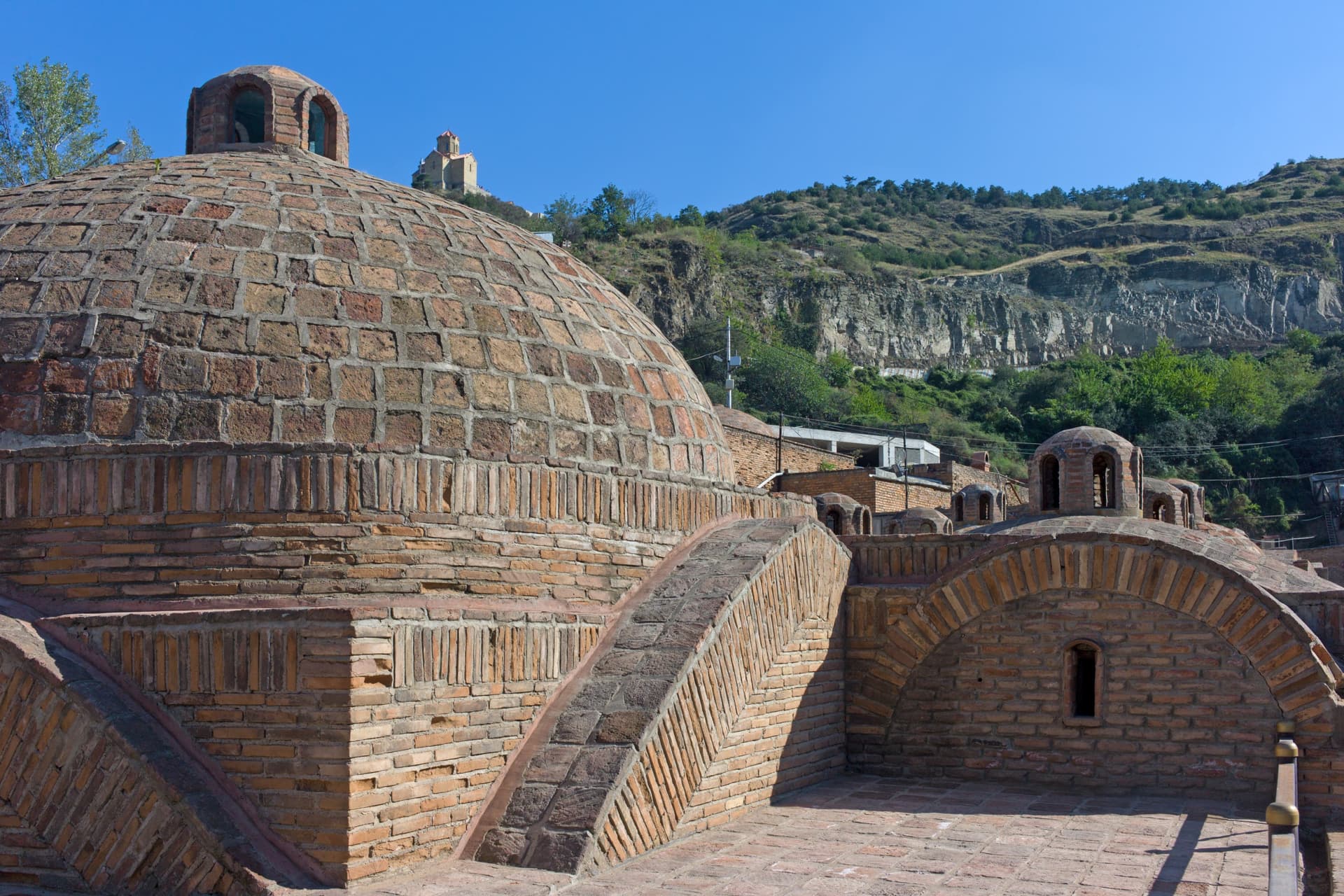
Built in an Oriental style, these thermal baths showcase Persian architectural design. Their sumptuous décor is admirably preserved. The structures are ingeniously situated partly underground and crowned with semi-spherical domes. As darkness falls, the baths are illuminated by atmospheric lanterns.
These baths, with temperatures ranging between 35 and 37°C, are cherished for their numerous therapeutic benefits as well as their deeply relaxing effects.
The Balneological Resort is another relaxation destination in the Ortachala district, still within Old Tbilissi. This facility features Persian architectural style combined with modern amenities: massage beds, sulfur showers, a sulfur-heated swimming pool, a sauna, private rooms with bathrooms and changing areas, among other facilities. You can enjoy a sulfur bath or simply choose a physiotherapy session, massage, or treatment using volcanic medicinal mud.
Sairmé, Another Flagship Georgian Thermal Station
Sairmé, located south of Kutaisi, sits at an altitude of 950 meters. The therapeutic mineral waters of this thermal station were discovered by chance in the late 19th century by shepherds.
The Sairmé resort boasts a total of 6 sulfuric hot springs. Found at 1,500 meters below the surface, these waters possess therapeutic properties effective against more than 60 ailments (chronic cholecystitis, ulcerative colitis, chronic hepatitis, arthritis, and more)
Zugdidi, a Haven for Relaxation
Tsaishi, situated 15 kilometers from Zugdidi in the Samegrelo region, is a village whose reputation is built upon the therapeutic qualities of its 18 hyperthermic mineral water springs.
Analysis conducted by researchers has demonstrated that these mineral waters contribute significantly to improving bone health, skin tissue condition, and cartilage integrity.
Borjomi, Dubbed the "Vichy of the Caucasus"
The mineral springs of the Borjomi Gorge are renowned for their healing properties. Their existence dates back more than 2,000 years. These springs fell into disuse between the 16th and 18th centuries due to conflicts between the Ottomans and Persians.
Following the recovery in Georgia of a Russian governor-general's daughter, the mineral springs of Borjomi returned to prominence in the mid-19th century.
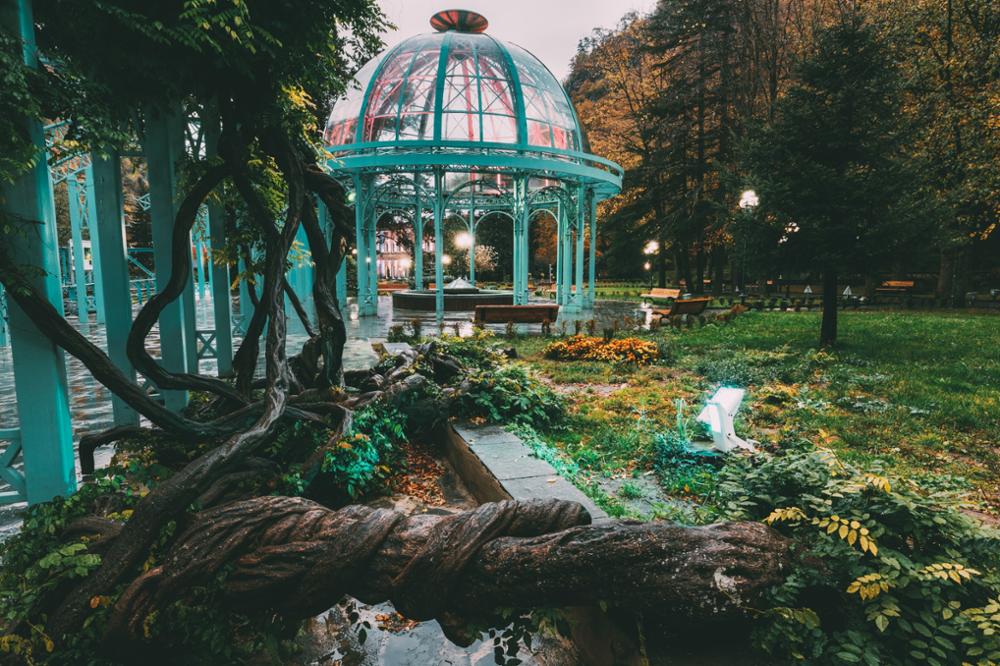
In 1850, the Mineral Waters Park was inaugurated in Borjomi. In 1894, Grand Duke Mikhail Romanov opened the first bottling plant, notably producing the famous sodium bicarbonate mineral water of Borjomi. During the Soviet era, Borjomi became a celebrated thermal resort throughout the entire USSR.
The mineral springs of Borjomi originate 8 to 10 kilometers deep underground. Brimming with volcanic elements, they possess remarkable healing benefits. They enhance blood circulation and treat intestinal conditions. These mineral springs also facilitate digestion while bolstering the immune system against infection.
The Celebrated Therapeutic Waters of Tskaltubo
Tskaltubo, a thermal resort located in the centre-west region of Georgia, ranks among the country's most renowned. Its hot mineral water springs have the distinctive characteristic of producing water naturally enriched in Radon carbonate. At temperatures reaching 33-35°C maximum, this clear and odorless water is immediately suitable for balneotherapy treatments (underwater hydromassage, physiotherapy, and more). Furthermore, thanks to its healing properties, it is reputed for treating circulatory, muscular, nervous, gynecological, and skeletal conditions.
Tskaltubo enjoyed considerable fame during the Soviet era. Numerous celebrities benefited from the therapeutic properties of Tskaltubo's thermal waters, including Egyptian president Gamal Abdel Nasser and Joseph Stalin.
Samtredia, Source of Hyperthermic Waters
Samtredia is a thermal resort situated in the Imereti region in western Georgia. Nestled in a valley bordering the Black Sea, within the Rioni River valley, its reputation stems from hyperthermic water.
Geologists accidentally discovered, during drilling conducted at 1,450 meters depth, a hot sulfuric spring. After ordering thorough analysis of this thermal water, the Georgian state decided to construct the Samtredia thermal resort at the exact location of the discovery. It opened its doors in 1970.
The Torgva Thermal Springs, a Unique Destination to Explore
Near the Abano Pass, on the road to Tusheti, lie the Torgva thermal springs. This resort is unique for its 13 hot thermal springs. The station's name originates from the legendary hero Torgva. According to tradition, after suffering combat wounds, he happened upon a sulfuric hot spring. After drinking from its waters and bathing within them, he was completely healed. Today, the thermal springs of Torgva are recognized for treating various afflictions.
Frequently asked questions
Borjomi and Tskaltubo are Georgia's most reputed thermal stations. Borjomi is celebrated for its mineral springs with digestive and immune-boosting properties, while Tskaltubo is known for its radon-enriched waters effective against circulatory and nervous disorders. For a more authentic and cultural experience, the sulfur baths of Abanotubani in Tbilissi are unmissable.
Yes, the sulfur baths in the Abanotubani quarter welcome tourists. You can choose between more affordable communal areas or rent a private cabin with bath and changing facilities. The water temperature ranges between 35 and 37°C. It is advisable to book in advance for private cabins, especially during peak season.
Borjomi water, rich in sodium bicarbonate and minerals of volcanic origin, is recognized for its benefits to digestion, blood circulation, and immune function. Its springs originate 8 to 10 kilometers deep. Known for over 2,000 years, it has been bottled since 1894 and remains one of the Caucasus's most celebrated mineral waters.
Tskaltubo's waters are naturally enriched in Radon carbonate, at temperatures of 33 to 35°C. They are reputed for treating circulatory, muscular, nervous, gynecological, and skeletal conditions. This thermal station, highly popular during the Soviet era, attracted numerous celebrities including Stalin and Egyptian president Gamal Abdel Nasser.
Borjomi is accessible from Tbilissi in approximately 2.5 to 3 hours by road or train. Marshrutkas (shared minibuses) depart regularly from Didube Bus Station in Tbilissi. It is also possible to arrange a day excursion from the capital to explore the Mineral Waters Park and taste the thermal waters firsthand.
Sulfuric baths are inadvisable for those suffering from severe cardiovascular disease, uncontrolled high blood pressure, pregnancy, or active skin infections. Medical consultation is recommended before enjoying thermal treatments, particularly for Tskaltubo's radon waters or Torgva's very hot springs.