Discovering Svaneti: Between Authenticity and Adventure
A region in northwest Georgia, Svaneti is among the few lands on Earth that have remained untouched by time and modernity.
A region in northwest Georgia, Svaneti is among the few lands on Earth that have remained untouched by time and modernity. It is undoubtedly the most beautiful region of the Caucasus and belongs to those rare places in the world worth visiting at least once in a lifetime. Unique, extraordinary, and authentic, Svaneti has no equal anywhere else and truly deserves a detour during a trip to Georgia.
Listed as a UNESCO World Heritage Site
A region nestled in the high Caucasus, at the foot of the Mount Chkhara, Georgia's highest peak (5193m above sea level), Svaneti is composed of a few small traditional villages decorated with tower-shaped dwellings. The inhabitants of Svaneti have preserved everything from their ancient culture: the language, customs, cuisine, and even these unusual dwellings unique to the world.
Svaneti owes this authenticity to its geographical isolation, which allowed it to resist external invasions. While Georgian territory saw the succession of Arab, Persian, and Ottoman empires, Svaneti remained independent, difficult to access, and sparsely populated. Even today, it is home to only around 3,000 inhabitants!
Indeed, Georgians were well aware of Svaneti's reputation, a land beyond time and beyond reach. They would bring their treasures there during times of war or occupation to prevent them from falling into enemy hands. Svaneti has retained some of them, such as a leather-bound Bible from 897.
The authenticity of the villages, their dwellings, and their culture allowed Svaneti to be inscribed on the UNESCO World Heritage List as early as 1996. Since then, the region has gradually developed tourism, as evidenced by the construction of a road connecting the Black Sea to Svaneti's capital, Mestia. A trip to Svaneti promises adventure, historical discoveries, and cultural immersion... all set against one of the world's most stunning landscapes.
The Towers of Svaneti
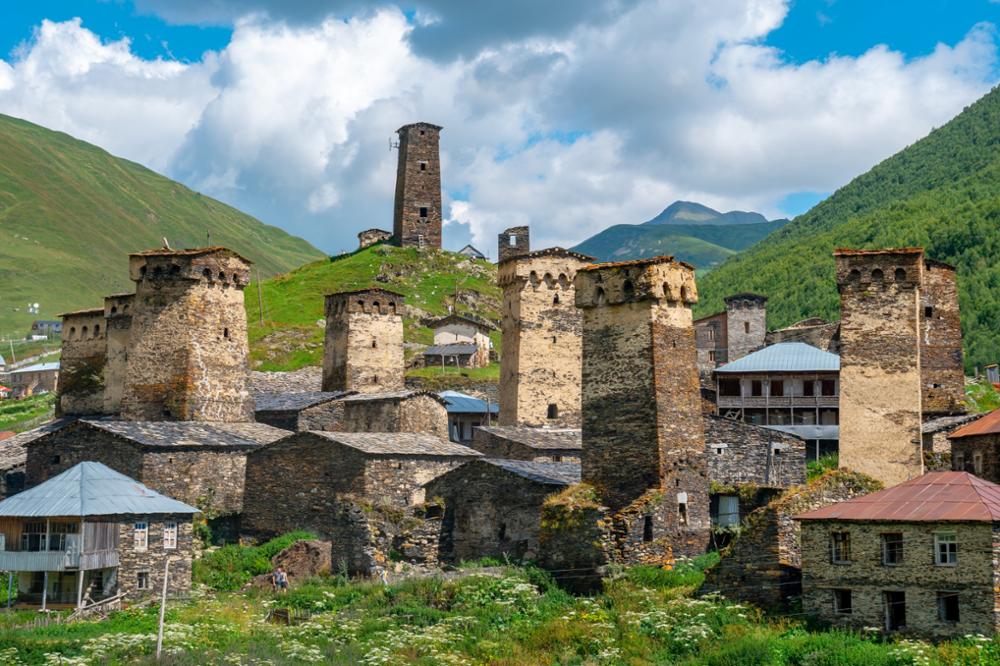
A characteristic element of Svaneti, the tower long served as a dwelling for locals. Its origins trace back to prehistory, though most of them date from the 11th century. Most notably, the village of Chazhashi, within the community of Ushguli, is known worldwide and is protected by UNESCO. This village has more than 200 towers that are still remarkably well preserved today and, for the most part, still inhabited.
The stone towers stand three to five stories high. The walls, thick at the base (1.5m), taper as they rise, giving these constructions a pointed silhouette. They initially served as defense structures before being used primarily for storing agricultural produce. The Svan towers are connected to small two-story houses. The first floor housed both livestock and the family, while the second floor served for storing tools and hay, and for sleeping during the summer.
A Paradise for Trekkers and Skiers
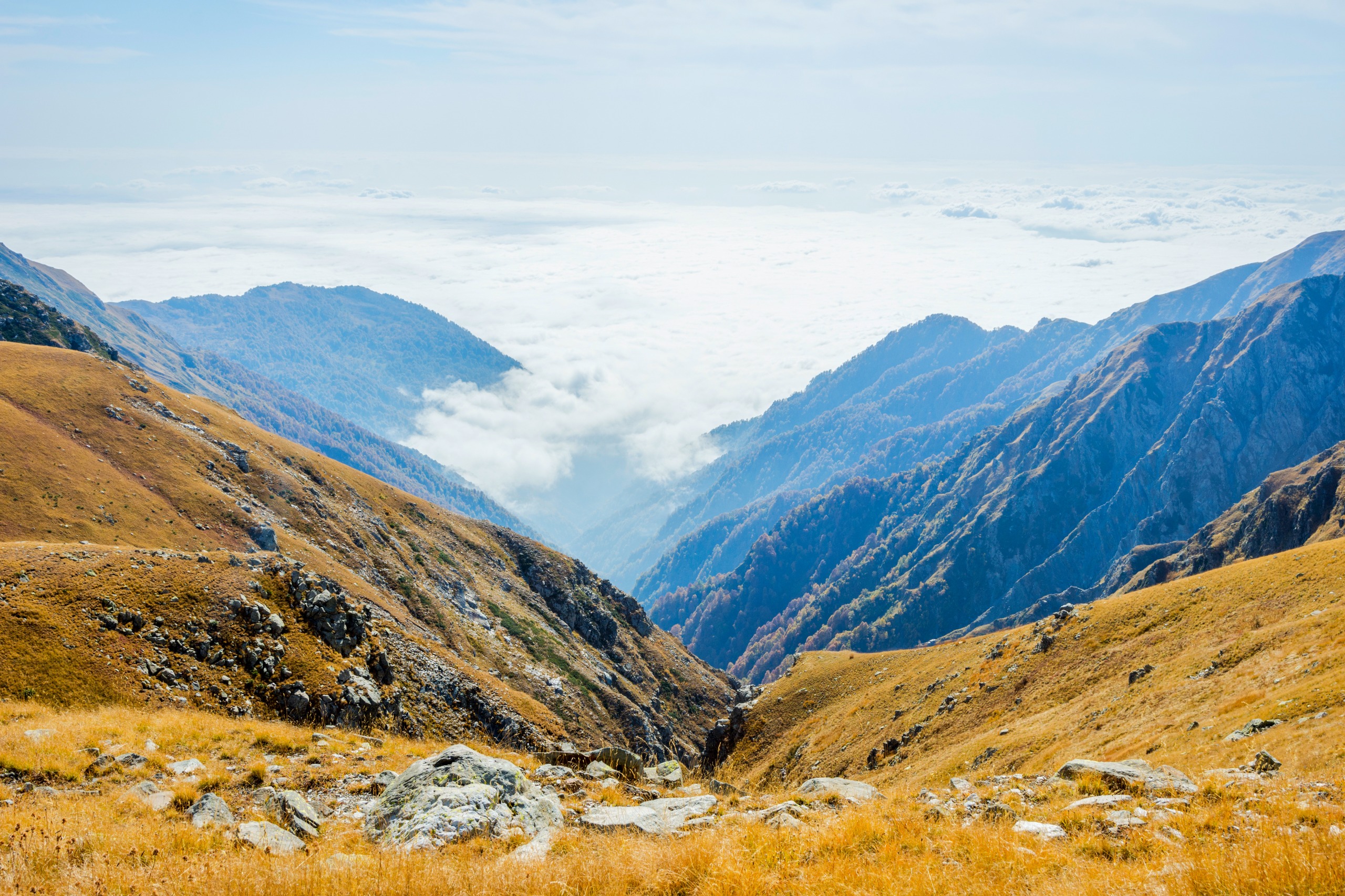
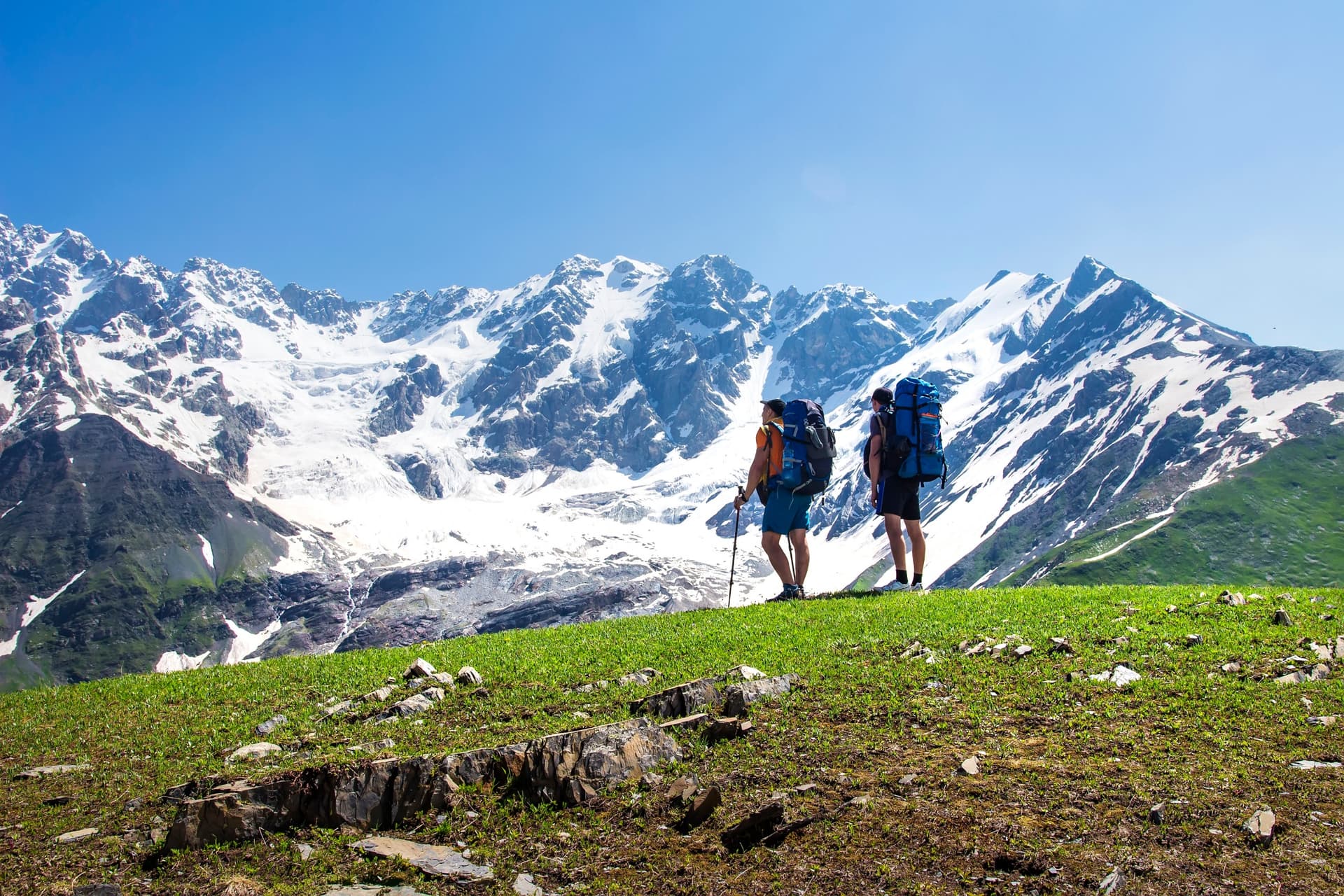
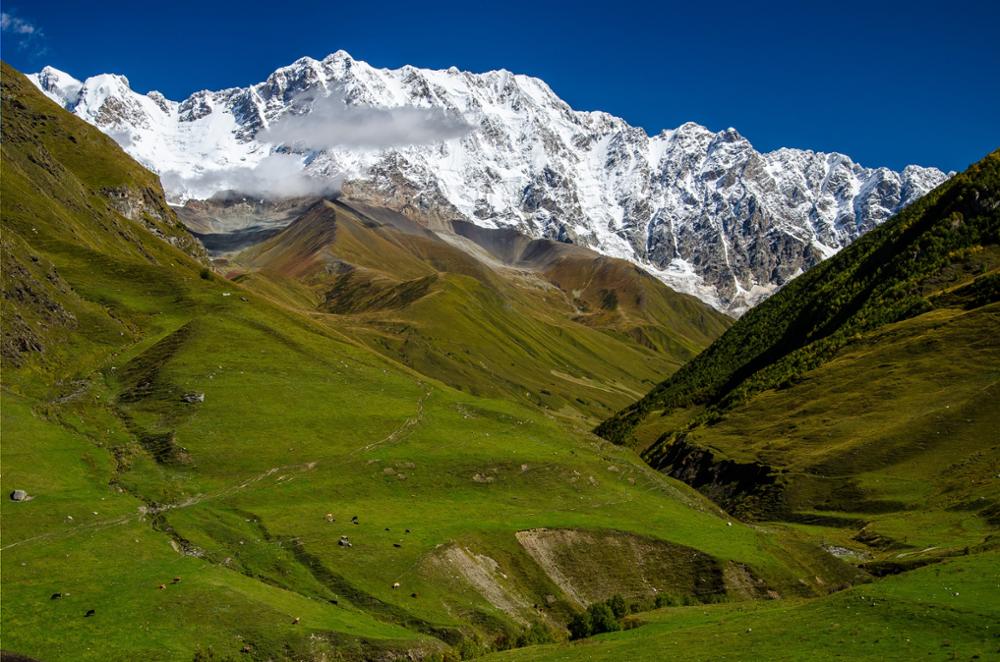
Svaneti is nestled in the high Caucasus, surrounded by steep snow-capped peaks, glaciers, and magnificent valleys. It remains beautifully preserved thanks to its centuries of isolation and is visited by relatively few travelers. All of this makes it an ideal playground for nature lovers, hikers, and skiers.
In summer, Svaneti is perfect for trekking, with the most famous route running from Mestia to Ushguli over approximately four days. It's the ideal opportunity to enjoy this exceptional natural setting, but also to meet this extraordinary people and their lifestyle in perfect harmony with nature.
Winter in Svaneti is long, typically from November to May. The region receives heavy snowfall; in fact, it's the highest inhabited region in Europe! For skiing enthusiasts, there's nothing quite like visiting Svaneti in winter on backcountry skis, discovering a picturesque, snow-white landscape worthy of a fairy tale… Moreover, the region is gradually developing its infrastructure, hoping one day to host the Olympic Games.
A true gem of Georgia, Svaneti holds yet one more secret: gold. Its rivers are rich in gold, and you too can follow in the footsteps of the Argonauts in Svaneti…
Frequently asked questions
To reach Svaneti from Tbilisi, you can take a marshrutka (minibus) or long-distance bus to Mestia, the region's capital. The journey takes approximately 8 to 10 hours depending on the route chosen. Domestic flights from Tbilisi or Kutaisi to Mestia are also available, offering a faster alternative (around 1 hour of flight time), though they are less frequent.
The best time to visit Svaneti depends on your planned activities. For trekking and hiking, choose the months of June through September, when trails are clear and weather is pleasant. For skiing and winter sports, the season runs from December through March. Be aware that winter can last from November to May, making some roads difficult to access.
The Mestia-Ushguli trek is the most famous hiking route in Svaneti. It connects the two emblematic villages of the region over approximately 4 days, through breathtaking mountain landscapes. This is an intermediate to difficult-level trek, with significant elevation gains. Appropriate gear (quality hiking boots, warm clothing, tent, or guesthouse reservations) is essential.
The Svan towers are characteristic stone structures of the region, with origins tracing back to prehistory, though the majority date from the 11th century. Standing 3 to 5 stories high, they served both as fortifications and agricultural storage facilities. The village of Chazhashi, in the Ushguli community, houses more than 200 towers that are still preserved and inhabited, listed as a UNESCO World Heritage Site since 1996.
Svaneti can appeal to adventurous families, but you should anticipate access difficulties and a lack of conventional tourist infrastructure. Mountain roads can be winding and accommodations remain simple (family guesthouses). However, discovering the villages and medieval towers, meeting the locals, and experiencing the grand landscapes make it a unique and memorable experience for both children and adults.
Yes, Svaneti is often described as the highest inhabited region in Europe. It is nestled in the high Caucasus, at the foot of Mount Chkhara, which reaches 5193 meters in elevation. The region's villages, particularly Ushguli, sit at approximately 2200 meters above sea level, making them indeed one of Europe's highest inhabited communities.