Stepantsminda (Kazbegi)
Stepantsminda (Kazbegi)
Stepantsminda, nestled at the foot of Mount Kazbek (5,047 m), is the gateway to the Georgian Caucasus. Medieval perched church, alpine hikes and wild valleys 150 km from Tbilisi.
Stepantsminda, formerly known as Kazbegi, is a small mountain town in northern Georgia, tucked within the Caucasus gorges at over 1,700 meters altitude. It sits at the foot of Mount Kazbek, a snow-capped volcano towering at 5,047 meters. The village is the essential departure point for reaching Tsminda Sameba church and exploring the high Caucasian valleys.
Practical Information at a Glance
Access from Tbilisi: Georgian Military Road (approximately 150 km), journey by marshrutka or private car.
Recommended duration: 2 to 3 days to combine hikes, villages, and panoramas.
What to wear: warm clothing essential even in summer; hiking gear recommended for high-altitude trails.
Ideal season: May to October for hiking; winter for snowy landscapes (roads sometimes closed).
Accessibility: the town center is accessible, but trails to Tsminda Sameba are steep and unimproved.
What to See
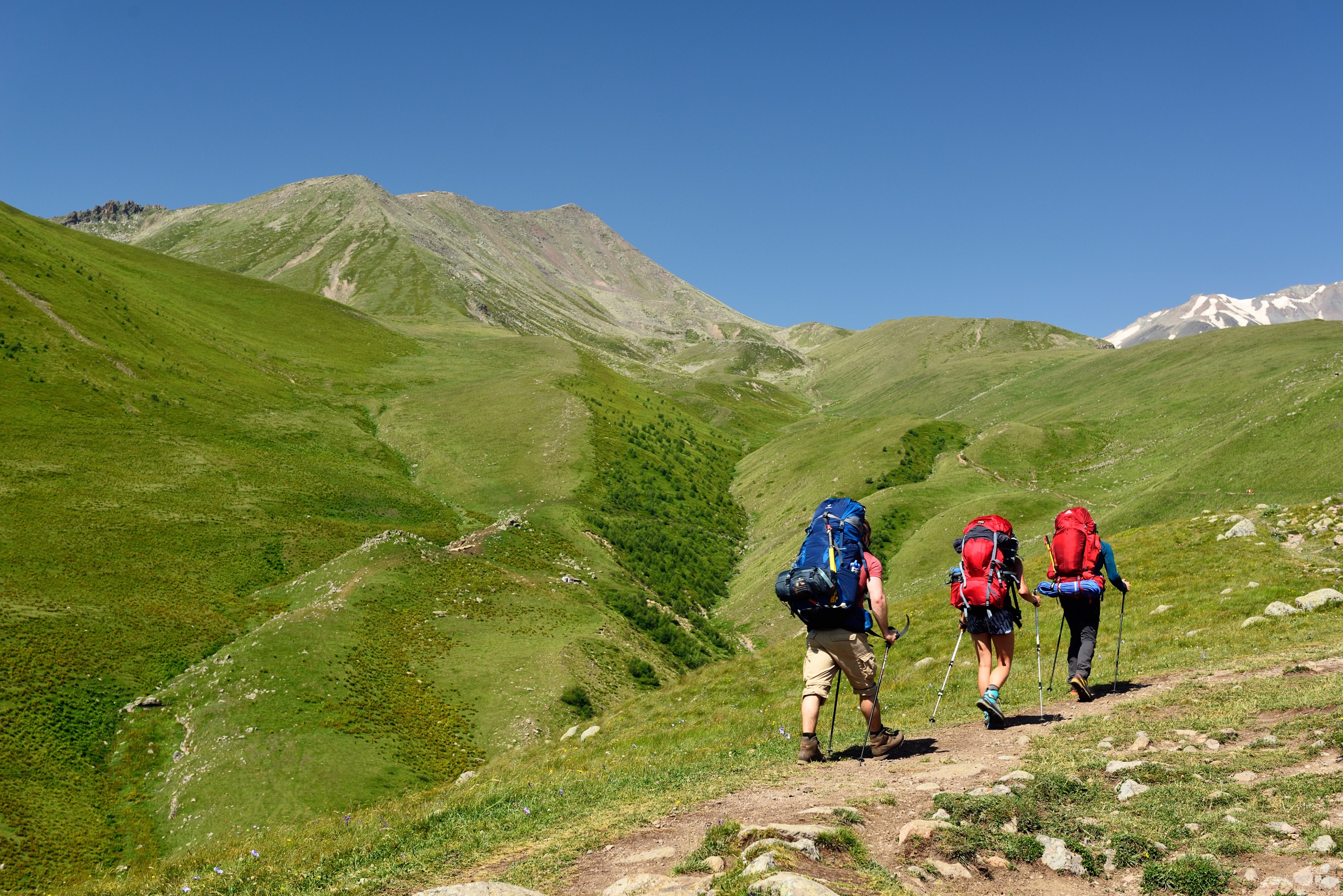
The panorama of Mount Kazbek dominates every view. Tsminda Sameba church (Holy Trinity), perched on a rocky outcrop at 2,170 meters, is the visual symbol of the region. Below, Stepantsminda lines stone houses, family guesthouses, and a few restaurants serving Georgian mountain cuisine. The surrounding valleys — Truso, Sno, Juta — offer hikes into preserved alpine landscapes.
History and Context
The Kazbegi region has been inhabited since antiquity by the Mokhevians, a Georgian ethnic subgroup with strong pastoral traditions. The Georgian Military Road, built by the Russian Empire in the 19th century, connected Tbilisi to Vladikavkaz across these mountains, opening the region to trade and travelers. The Soviet name "Kazbegi" was replaced by Stepantsminda in 2006, in reference to a 19th-century local monk, Stepan.
Highlights of Your Visit
Tsminda Sameba Church
Built in the 14th-15th centuries, this limestone Orthodox church is accessible on foot from Stepantsminda (approximately 1.5 hours uphill) or by 4×4. The interior preserves ancient frescoes. The view of Kazbek from the parvis is one of Georgia's most photographed vistas.
Hiking to Gergeti Glacier
Beyond Tsminda Sameba, a trail climbs toward Gergeti glacier, above 3,000 meters. The hike is demanding and reserved for experienced, well-equipped hikers. It offers immersion in the high Caucasian mountains.
Juta Valley
Some twenty kilometers from Stepantsminda, Juta Valley is an alpine cirque surrounded by peaks exceeding 4,000 meters. The tiny village of Juta serves as a base for hikes toward Chaukhi Pass and its spectacular rock formations.
Truso Valley
This valley bordering North Ossetia is home to mineral springs, medieval tower ruins, and high-altitude steppe landscapes. It is best explored by 4×4 or on foot from Kobi village.
Alexandre Kazbegi Museum
In town, this small museum is dedicated to Georgian writer Alexandre Kazbegi (1848-1893), a native of the region whose novels immortalized Caucasian mountain life. Collections feature ethnographic objects and manuscripts.
Photography Tips
Morning light (before 9 a.m.) and evening light (after 5 p.m.) offer the best conditions for photographing Tsminda Sameba with Kazbek in the background. On clear days, the summit often clears early in the morning before clouds rise. From the village, the northern quarter gives an unobstructed angle of the church and mountain. In winter, snow transforms the scene but conditions are unpredictable.
Location and Access
Stepantsminda is located in the Mtskheta-Mtianeti region, approximately 150 km north of Tbilisi via the Georgian Military Road (S3). Marshrutkas depart daily from Didube bus station in Tbilisi. The journey takes approximately 3 hours depending on conditions. Taxis and private cars offer more flexibility for exploring the valleys. The town is also near the Russian border (Larsi Pass), sometimes closed in winter.
Nearby
Tsminda Sameba Church — the medieval perched church, symbol of the region, accessible on foot or by 4×4.
Juta Valley — alpine cirque ideal for multi-day hikes toward Chaukhi Pass.
Truso Valley — mineral springs and medieval towers in a high-altitude steppe landscape.
Gudauri — Georgian ski resort on the Military Road, approximately 40 km south.
Ananuri Castle — medieval fortress on the shores of Jinvali Lake, on the route to Tbilisi.
Frequently asked questions
May to October for hiking and clear panoramas. July-August are the busiest months. In winter, snow-covered landscapes are striking but the Military Road may be closed by snowfall.
On foot from Stepantsminda (trail of approximately 1.5 to 2 hours depending on pace) or by 4×4 on a drivable track. The uphill walk is accessible to any hiker in good physical condition.
Yes. Women must cover their heads and shoulders; legs must be covered for everyone. Scarves are sometimes available at the entrance, but it is best to bring your own.
A day excursion is possible but brief: the round-trip journey takes approximately 6 hours. To enjoy hiking and valleys, a 2 to 3-night stay on site is far more rewarding.
Trails to Juta are well-marked and practicable without a guide for experienced hikers. The climb to Gergeti glacier, more technical and at high altitude, is advised with a local guide, especially at the beginning or end of season.
Lodging ranges from family guesthouses to mid-range hotels. Local guesthouses often offer homemade meals (khinkali, mountain khachapuri) and an authentic atmosphere. Advance booking is recommended during peak season.
Want to discover this destination?
Our local advisors design your tailor-made trip.