Mestia
Mestia
Medieval watchtowers, treks to Ushguli, Byzantine frescoes and Svan hospitality: Mestia encapsulates everything that defines the soul of Upper Svaneti.
Nestled in the heart of Upper Svaneti's lofty peaks, Mestia is a city inscribed on the UNESCO World Heritage list. This settlement is indeed an important cultural hub for the Svan community, an ancient ethnic people living in the mountains of northern Géorgie.
For all these reasons, Mestia represents a charming stop during a stay in Géorgie.
Mestia, the jewel of Svaneti
Svaneti, which is divided into two parts—Upper and Lower Svaneti—receives significant snowfall, making it inaccessible for 7 months of the year.
Conversely, Mestia is accessible year-round and serves as the administrative center of Upper Svaneti.
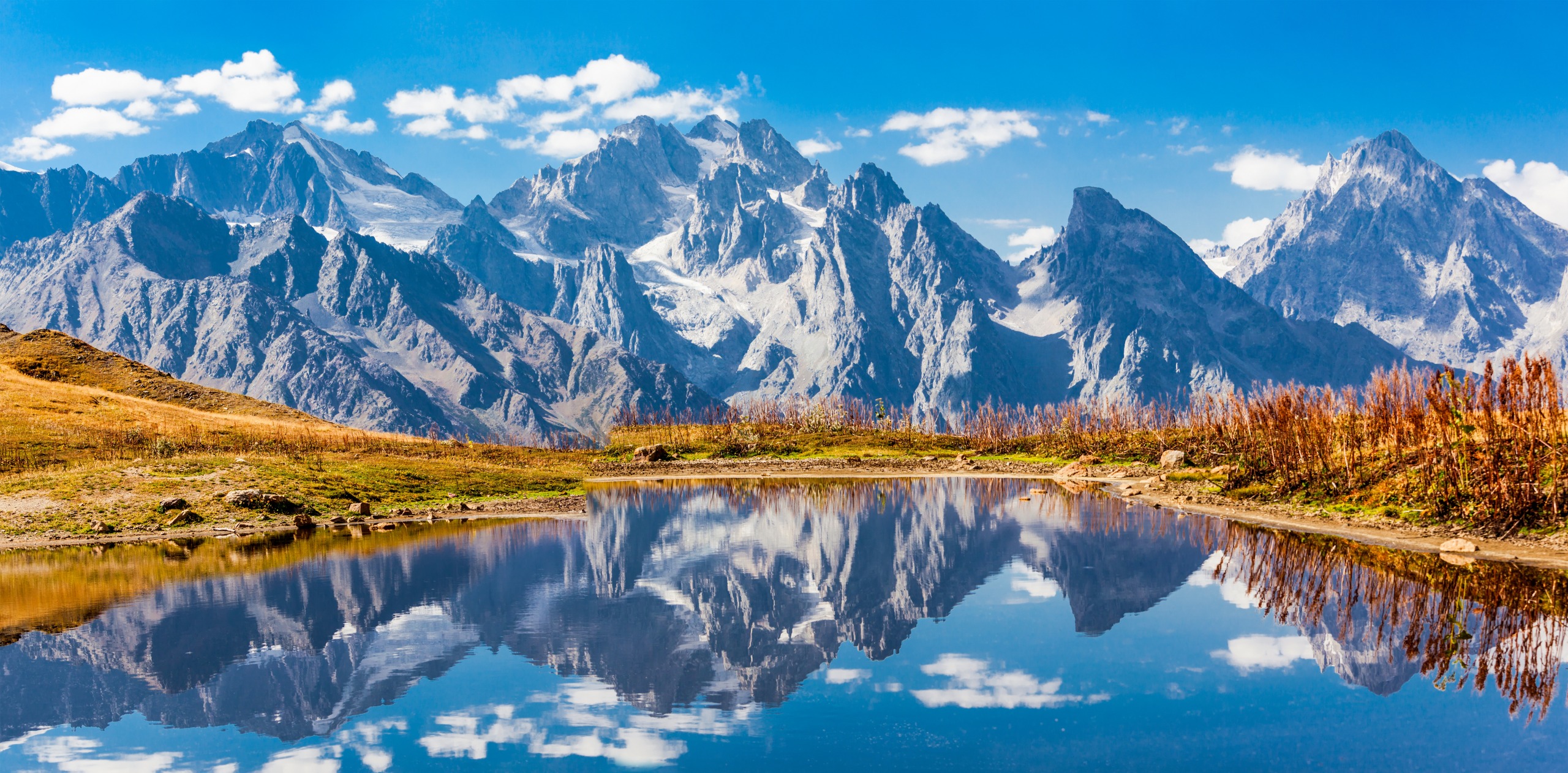
Located at the foot of the majestic snow-capped mountains of the Great Caucasus, this city possesses several distinctive features.
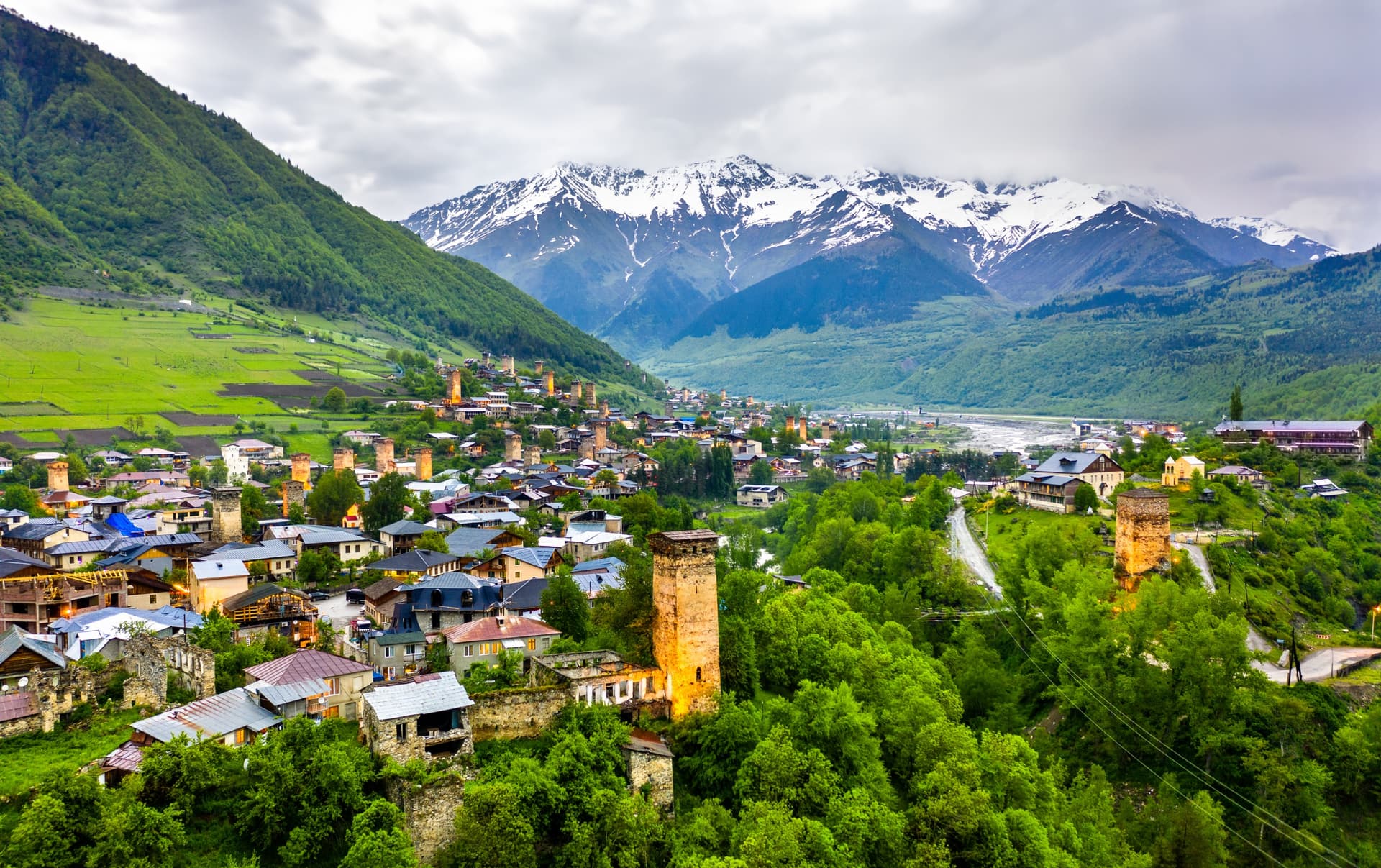
Indeed, every dwelling is equipped with a watchtower. Dating from the 9th to the 13th century, these towers served to protect homes from enemy attacks.
Religious buildings also hold a prominent place in Mestia's history, and indeed Svaneti's. It was here, during the various occupations of Géorgie by barbarians or Mongols, that precious religious artworks were hidden.
Their construction generally dates between the 9th and 17th centuries.
Richly decorated inside with murals, crosses and sculpted doors, what makes these basilicas truly unique are the paintings adorning their façades. These depict scenes from the lives of Saints, as well as biblical scenes.
Mestia Today
Mestia is an urban city located in the northwestern part of Géorgie, with a population of roughly 3,000 inhabitants.
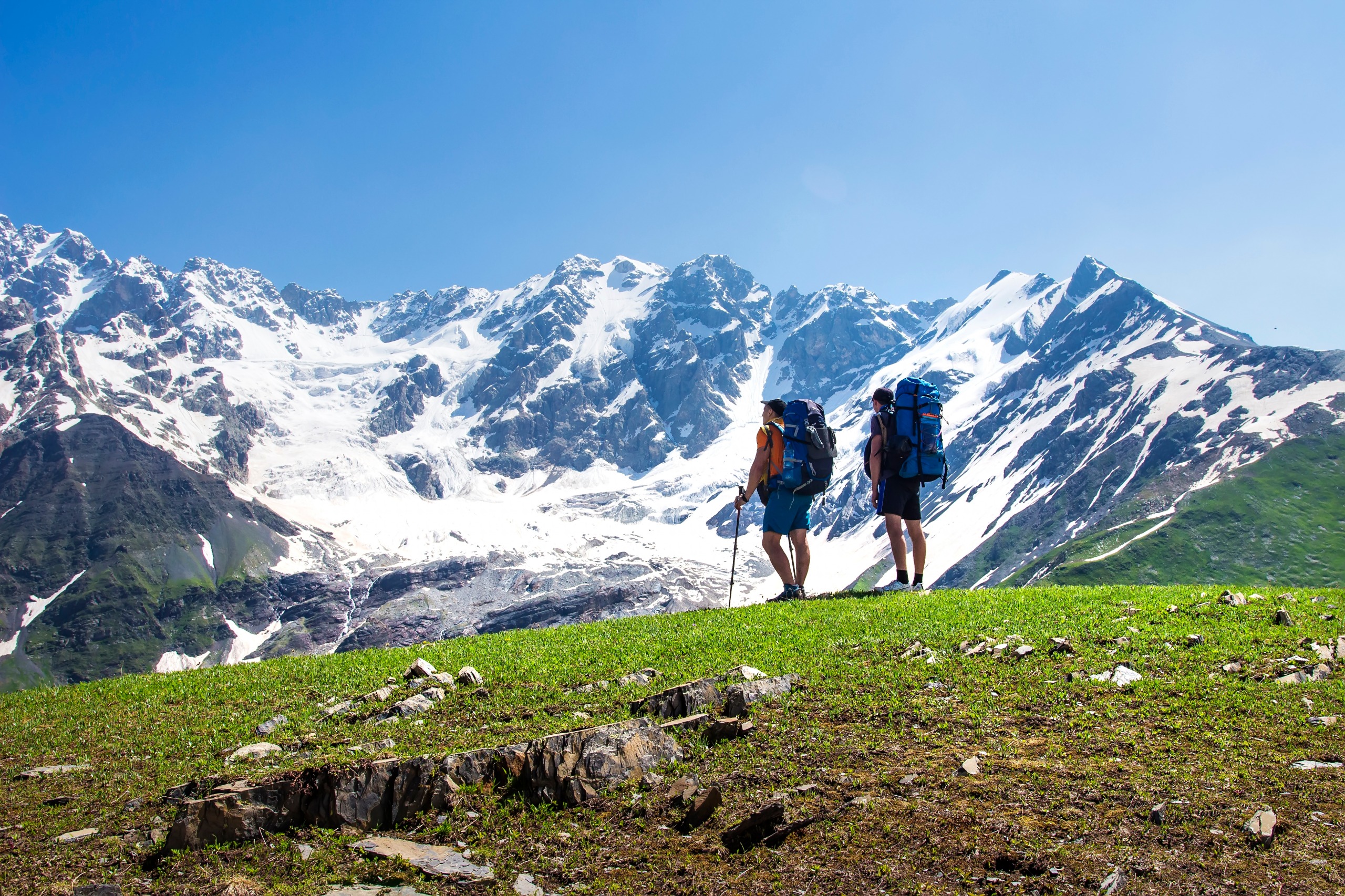
Its surroundings offer wonderful hiking prospects, with breathtaking views of magnificent landscapes to boot.
Perched at 1,500 meters in elevation, Mestia is a charming city equipped with numerous tourist facilities and rich in historical monuments.
Watchtowers scattered throughout the city are Mestia's first notable historical feature. Once defensive structures, they now form an integral part of the urban landscape, alongside chalets and hotels.
The "capital" of Upper Svaneti is a settlement equally appealing for the 10 villages surrounding it. The municipality's oldest hamlets lie north of the city and house the majority of watchtowers.
Lekhtagi, situated to the northwest, Lanchvali and Lagami to the northeast, are among the most well-known.
Mestia is all the more a prime destination during winter holidays thanks to the pristine alpine slopes of Hatsvali, a village located roughly 8 km away.
From Hatsvali, take a cable car over a distance of 1.5 km, which will carry you to Mount Zuruldi. This mountain is renowned not only for its panoramic views of the white slopes of Tetnuldi and the Great Caucasus, but also for its long skiable run stretching 2,400 meters in length.
Since the improvement of tourist infrastructure, Mestia has experienced considerable growth.
For example, the city's central square, called "Setis moedani," has been rebuilt. The city is also equipped with a new airport and a new road. To top it all off, the number of guesthouses and hotels in the settlement has surged dramatically.
Mestia's Major Historical Sites
Perched atop the vertiginous peaks of the Caucasus, Mestia, long isolated from the rest of the world, is today the cultural, historical and religious heart of Upper Svaneti.
This city, dominated by Mount Ushba, captivates particularly through its beautiful medieval tower-houses dating from the 11th century. Rising to heights of 10 to 25 meters, these towers once served as residences and watchtowers.
Beyond its medieval towers, lending the city particular charm, the Svaneti Historical and Ethnographic Museum will also hold your attention. This museum, founded in 1936, preserves among its 6 exhibition halls some artifacts from the Svaneti region, such as engravings, medieval processional objects and unique icons.
The museum also houses a fine collection of manuscripts, ornaments (in iron, copper and silver), medieval weapons, pottery, jewelry and a collection of ethnographic artifacts.
Incidentally, this museum contains one of the oldest manuscripts of the New Testament in Georgian.
Another museum worth visiting during your stop in Mestia is the Michael Khergiani Museum.
On the ground floor are the personal effects of this famous Georgian alpinist (1932–1969).
Among the superb collection to discover, you'll see climbing gear, photographs, various awards, clothing and gifts, including several musical records by Vladimir Vysotsky.
In Laghami, a village in Mestia's oldest quarter, stands the Cathedral of the Transfiguration. The structure rises over two levels.
The church's first floor is named after the great martyr Barbara (Barblash) and dates from the 9th century.
The second floor, built in the 13th and 14th centuries, is beautifully adorned with magnificent frescoes.
The first, depicting the "expulsion of Adam and Eve from the Garden of Eden," is found on the north wall. The second, on the eastern wall, depicts "The Hunt of Saint Eustathius."
You can also admire a magnificent icon of Christ (Pantokrator) engraved with gold and silver dating from the 13th century.
Hikes to Undertake from Mestia
Mestia lies 456 km from Tbilissi, Géorgie's capital.
The city is the starting point for several hiking trails.
It is notably the ideal departure point for an excursion to the village of Ushguli (Ushguli). Standing at 2,000 meters in the Caucasus massif, this village is said to be Europe's highest.
From Mestia's center, set out on a hike toward the glaciers at the foot of Mount Ushba.
On the southern slope of the Caucasus mountains, at the source of the Mestia-Chala river, lies another glacier to explore: the Chalaadi glacier, standing at 1,850 meters. Stretching into the forest zone, this glacier is fed by streams flowing from the mountains of Chatini, Bzhedukhi and Dalaqori.
The Mestia municipality is home to another major attraction: the village of Kala.
It is surrounded by 8 small hamlets: Ipari, Agra, Davberi, Lalkhori, Vichnashi, Khé, Laskrali and Khelde. Kala's main tourist attractions are the Church of St. Kvirike from the 11th century (Lagurka), the Basilica of St. George in Ipari and the village of Kheshi.
Thus, if you pass through Kala, don't miss the Basilica of St. George, built in the 11th century, at Ipari-Nakipari. Pay particular attention to its façade, which is ornamented with animal motifs. The building's interior was painted in 1130 by Theodore, an artist-painter to King David IV the Builder. A fresco of St. George is also preserved in this church; it was created by an 11th-century goldsmith.
If you prefer to see Georgian medieval monuments, you can find them in the surroundings of Adishi, another village in Mestia municipality.
You will discover notably: 4 churches decorated with beautiful frescoes, watchtowers, traditional homes and samples of engraved artwork.
In the village of Latali, also located within Mestia municipality, stands the Church of Christ, built in the 10th century.
Inside this church is a 12th-century Byzantine cross adorned with cloisonné enamel.
To refresh yourself, you'll appreciate several mineral waters with healing properties, near Mestia.
Getting There
By Air:
A new airport, named Queen Tamar, opened in Mestia in 2010. It features a single runway 1,158 meters long. The local airline serves Mestia 4 days a week from Géorgie's capital Tbilissi for 75 GEL per ticket.
Flights to and from Mestia may occasionally be canceled due to poor weather. If you choose to fly, it is advised to book your ticket a week in advance.
By Train:
No train travels directly to Mestia. However, Zugdidi is the closest location to Mestia accessible by this means of transport. From Zugdidi, a shared van (marchroutka) is the most practical transport option to reach Mestia.
You can, however, take an overnight train from Tbilissi to Zugdidi. The ticket price is 21 GEL. From there, you board a shared van at Zugdidi station to Mestia, which typically departs at 7 a.m., arriving at 11 a.m. The ticket costs 20 GEL.
By Bus:
If you opt for a minibus, shared vans (marchroutkas) connect Tbilissi to Mestia. They run daily from the Vagzali bus station. Each minibus seats 16 passengers. The ticket price is 30 GEL. Departure is at 5 a.m., for a duration of 10 to 11 hours. Travel time varies depending on weather conditions.
By Car:
A new road connecting Zugdidi to Mestia has been built, ensuring a safe and more comfortable journey. The drive takes approximately 8 hours. The road, spanning 460 km, passes through Kutaisi, Zestaponi, Samtredia, Senaki, Khobi, Zugdidi, Jvari and the Patara Enguri river, ending in Mestia.
What's the Climate Like in Mestia?
In Mestia, the climate is humid continental. Throughout the year, the average temperature is 11.3°C. August is the warmest month of the year, with average temperatures reaching 15.6°C.
January is the coldest month of the year, when average temperatures can drop to –4°C.
Regarding rainfall, significant precipitation is recorded year-round in the settlement, including during the driest months. On average, precipitation reaches 458.1 mm/h.
Want to discover this destination?
Our local advisors design your tailor-made trip.