Svaneti
Located in the northwest of Géorgie, the Svaneti region is one of the most spectacular natural wonders the country has to offer.
The Svaneti region, situated in the northwest of Géorgie, is one of the most spectacular natural wonders the country has to offer.
This region has the distinction of being the highest inhabited area in Europe.
Countless mountaineers and hikers journey here to traverse and explore its peaks and glaciers.
Local culinary specialties, distinctive architecture, and the warmth of the inhabitants are compelling reasons to discover this region of exceptional beauty.
Exploring Svaneti's Rich History
Svaneti is a historic Georgian region located on the southern slope of the Greater Caucasus Mountains.
Throughout its history, this region was divided into three parts: the High Gorges of Kodori, also known as Svaneti of Abkhazia, then the northern part of Samegrelo, and finally Lechkhumi including Upper Ratcha.
In antiquity, Svaneti was part of the Kingdom of Colchis, then until 552, it formed part of the Kingdom of Lazica. During the Lazic War, the region separated from the kingdom to come under Persian rule. However, to secure the entire region against Persian attacks, the Byzantines were forced to conquer Svaneti. When the war ended in 562, Svaneti returned once again under the control of the Kingdom of Lazica.
The first inhabitants of Svaneti, who were essentially gold miners, have occupied the region since antiquity. This Orthodox Christian people form a community proud of their traditions, their language, and their historical ties to Géorgie.
The first mentions of the Svans come from the Greek historian and geographer Strabo.
The Svans, linked to the Sumerians, were among the oldest peoples of Svaneti. According to Georgian mythology, Jason discovered the Golden Fleece in Svaneti's valleys.
Moreover, the Svan people were long isolated from the outside world. This explains why their culture has remained virtually intact to this day. Indeed, during multiple Mongol, Arab, and Persian occupations, medieval Svan churches served to hide icons and other valuable religious Georgian objects.
After the fall of the Soviet Union in 1991, religious practice was revived in Svaneti, and indeed throughout Géorgie. Local religious festivals are integral parts of traditions stemming from ancient pagan beliefs.
Svaneti Today
Today, the Svaneti region has limited tourist infrastructure. Rather, it is the medieval villages nestled in lush valleys and snow-capped peaks reaching 4,000 meters that have made this Georgian region renowned.
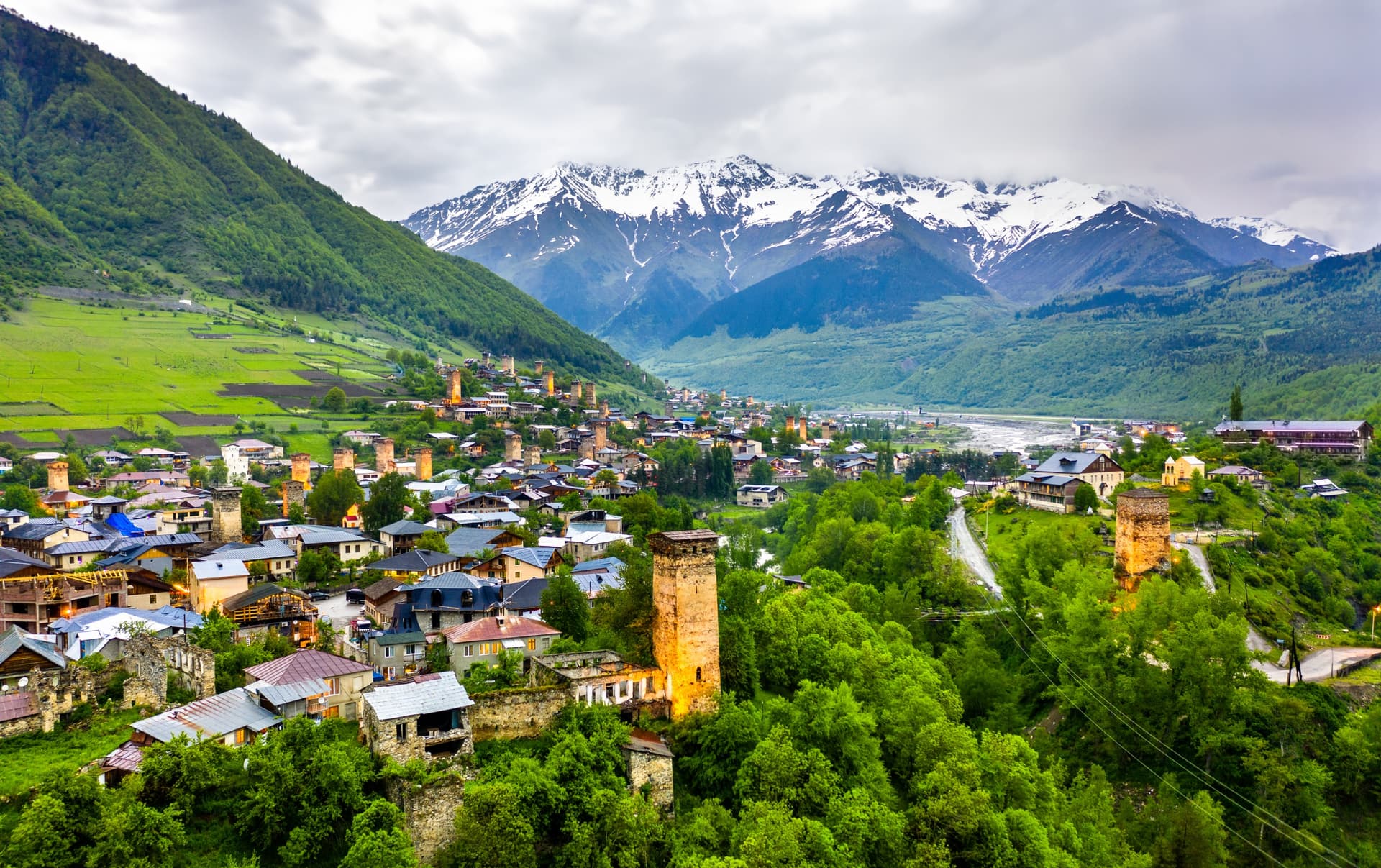
While wandering through its picturesque villages, you'll discover stone watchtowers that are remarkably resilient. These towers earned the region its designation as a UNESCO World Heritage Site in 1996.
Being the highest inhabited region in Europe, some villages sit at over 2,000 meters altitude, such as the village of Ushguli. Beyond these high-altitude villages, the charm of the Svan region lies in the substantial snowfall that blankets these mountain settlements, isolated from the rest of the world, for several months each year.
Throughout the cultivated fields, you'll notice Svan families continuing to plow their lands by hand, while the cobblestone streets of small Svan settlements are dotted with livestock roaming freely.
Despite this picturesque quality, the tourism growth beginning in the 2000s has brought numerous improvements.
New ski resorts have emerged, and accommodation options have increased significantly. Additionally, it's possible to visit Mestia in summer.
The Svans: A Distinct Community
Svaneti is inhabited by the Svans, who consider themselves an entirely separate community. Indeed, they are a proud indigenous ethnic subgroup. They possess their own unwritten dialect, which is Svan.
Traditions and culture have been further preserved thanks to the geographic isolation that characterizes the region.
Tribal traditions continue to constitute, even today, a way of life.
The Svans live primarily from livestock farming and tourism. They lead a simple existence, particularly as farmers who manufacture their own products, including Lavachi, a traditional bread prepared in a rounded clay vessel.
The Svans are also known for their numerous gastronomic specialties, such as Tashmijabi, a potato purée mixed with cheese.
Kubdari is another typical Svaneti dish. It's a meat pie made with pork and beef or beef alone, accompanied by Svaneti salt and onions.
Polyphonic singing makes the Svans unique.
Indeed, Georgian polyphonic singing has been proclaimed by UNESCO since May 18, 2001, as a
Masterpiece of the Oral and Intangible Heritage of Humanity.
Svaneti: The Jewel of Géorgie
Svaneti is a historic Georgian region located in the northwest of the country.
Inhabited by the Svans, it has approximately 35,000 residents.
Svaneti is one of the places in Géorgie where ancestral traditions are preserved. In a nutshell, it is characterized by snow-capped peaks, picturesque villages dotted with towers, and verdant nature.
In this regard, the architectural distinctiveness of the region lies in its towers adjoining houses. Rising 3 to 5 stories and reaching 30 meters high, they tower above dwellings and dominate Svan villages.
Formerly, these medieval watchtowers, also called koshki, the majority of which were built between the 9th and 13th centuries, served to protect villagers from attacks.
Today, 175 have survived throughout the region and are used as storage spaces for straw or grain.
The region also has several notable churches dating from the 9th century. The specificity of these churches lies in their small size and ornamental restraint. They measure at most 20 m² and are soberly decorated on the exterior. However, inside, they are richly decorated.
Both wild and mysterious, Svaneti is an ancient isolated land, nestled in the Caucasus.
Picturesque villages and snow-capped peaks rising above 4,000 meters elevation dominate its alpine meadows.
In spring, these meadows are covered with flowers and offer beautiful hiking opportunities.
Svaneti is also one of the principal sites where the myth of Jason is said to have unfolded. It was indeed on this southern slope of the Greater Caucasus that Euripides mentions the Argonauts' discovery of the Golden Fleece. Moreover, the quest for this Golden Fleece is said to have inspired a Svan practice of collecting gold flakes from rivers using sheepskins.
Svaneti: The Ideal Region for a Nature Escape
Svaneti is divided into two zones: Upper Svaneti (Zemo) and Lower Svaneti (Kvemo).
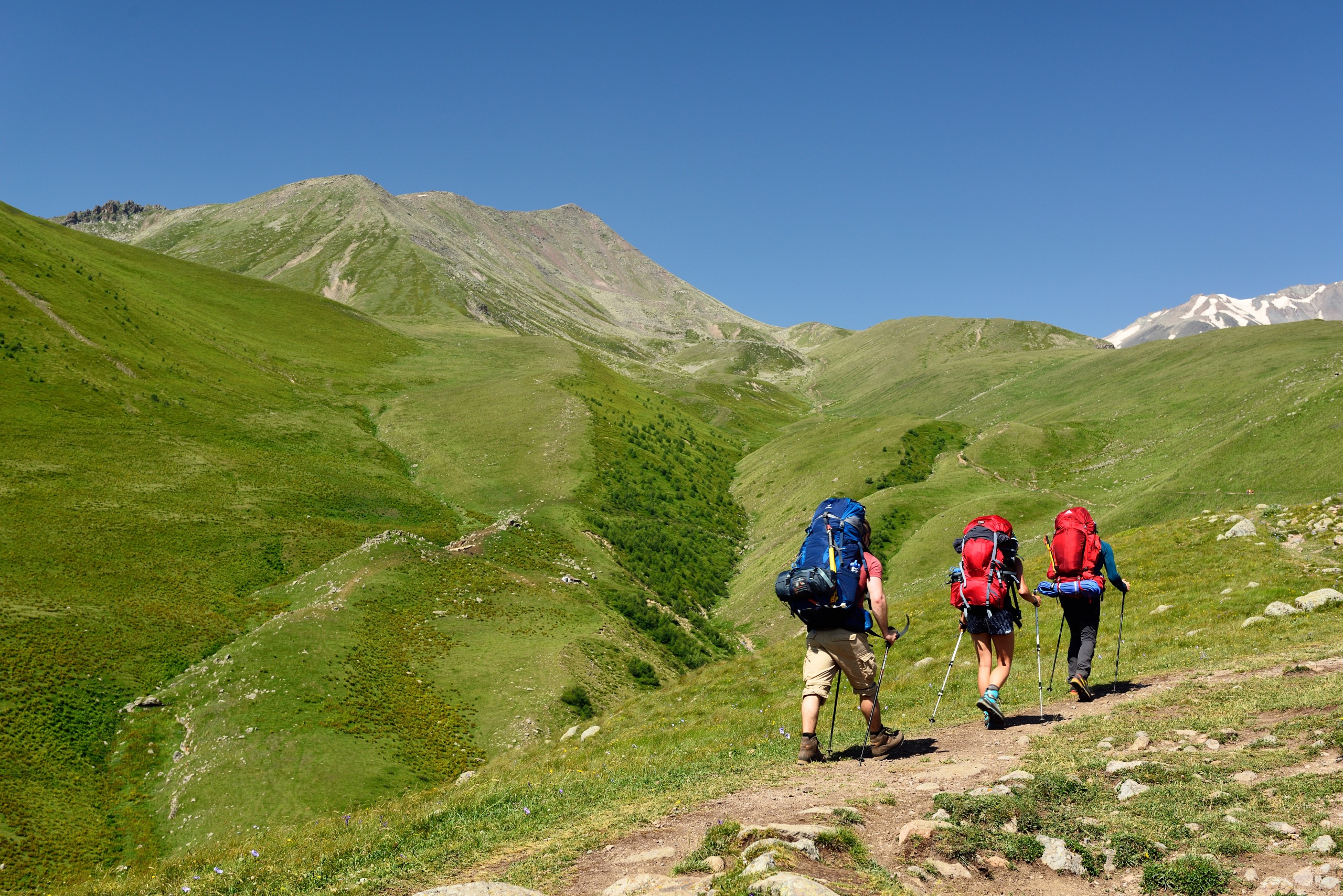
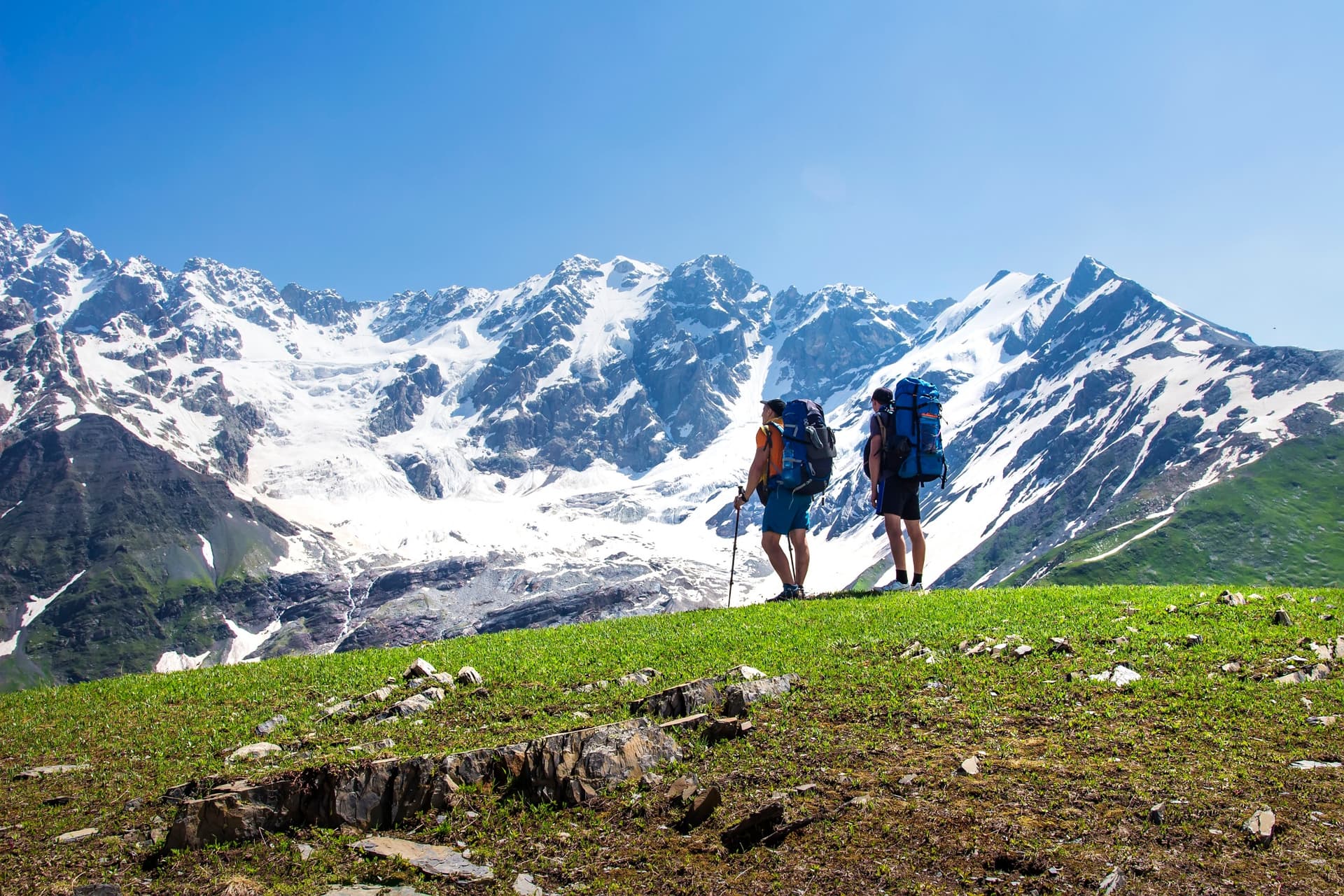
Green and exceptionally beautiful, Upper Svaneti boasts the best hiking and climbing locations. Hiking season typically runs from early June through mid-October. The trails include all difficulty levels.
In Svaneti, the Caucasus range reveals multiple snow-capped peaks, mountain passes, glaciers, rivers, panoramic vistas, forested hills, lush valleys, deep gorges. Roads lead to hidden medieval villages. The Becho community, located in the Dolora River valley, in the western part of Mestia, is one such medieval hamlet worth visiting.
Mazeri, the highest village in the region, also makes an excellent starting point for exploring Svaneti.
You can hike to the Dolora River, toward the communities of Laleti and Etseri or to glaciers situated on the western side of Ushba.
Along the way, you pass through the Shikhra valley and the fortress of the Dadeshkeliani princes.
For half-day or full-day hikes, head toward Shdugra, which will lead you to a majestic waterfall. This hiking trail will also take you to a higher vantage point of Mount Mezir, toward a mountain lake and an old church.
Also attempt the ascent of Mount Chkhara.
Rising above 5,200 meters, it is the highest point in Svaneti.
Mestia: A Journey to the Heart of Svaneti
The administrative center of Svaneti, nestled in the heart of the mountains, Mestia is part of UNESCO's World Heritage. It's the ideal destination to learn more about this region's unique culture.
Perched on the dizzying heights of the Caucasus, this long-isolated city is today the cultural, historical, and religious heart of Upper Svaneti.
Located in the northwestern part of Géorgie and situated at over 1,500 meters elevation, this city is home to 3,000 inhabitants. The first notable feature of Mestia is its famous medieval tower-houses dating from the 11th century standing 10 to 25 meters high. They once served as watchtowers and residences.
When visiting Mestia, also explore the Museum of History and Ethnography.
It's worth noting that this museum houses 6 permanent exhibition halls.
Traditional clothing, weapons, manuscripts, icons, and examples of typical Svan houses are displayed.
Also take a tour among the numerous medieval churches in the city, the most notable being Lagamshi, built in the 9th century.
Complete your circuit at the house-museum of the famous Georgian mountaineer Mikheil Khergiani.
Other Must-See Villages of Svaneti
Rising to 2,200 meters, the village of Ushguli is considered Europe's highest village. This site, listed as a UNESCO World Heritage Site, is surrounded by four hamlets scattered with defensive towers, including Jibiani and Tchvibiani.
Outside this authentic Svan village, you'll find the Church of Lamaria of the Virgin, from the 12th century. With its defensive tower, it stands magnificently on a hill at the foot of Mount Chkhara.
After Ushguli, discover the village of Adichi, located at the foot of Tetnuld, 9 km from Mestia.
This hiking excursion offers the chance to immerse yourself in Svaneti's culture and history.
After Adichi, head toward the Khatsvali ski resort, located near Mestia. It's worth a visit, especially for winter sports enthusiasts. It features blue and red ski runs with a maximum length of 2,600 meters. Freeriders can attempt tricks on its slopes.
Svaneti's Climate
The climate in the Svaneti region is quite humid due to air masses coming from the Black Sea.
Precipitation and temperature vary according to altitude.
Annual precipitation typically ranges between 1,000 and 3,200 mm/hour and falls largely on the peaks of the Greater Caucasus.
Heavy snowfall and avalanches are also fairly common in the region.
Snow cover reaches 5 meters in some parts of the territory.
In the lower parts of the region, reaching between 800 and 1,200 meters, summers are long and very hot. They alternate with cold, snowy winters.
At medium altitude, between 1,200 and 1,800 meters, summers are torrid and winters are cold.
Beyond 2,000 meters elevation, summers are cooler and shorter, while winters are longer.
In most of Svaneti rising above 3,000 m, the summer season is virtually non-existent and winter temperatures at high altitude are moderate thanks to proximity to the Black Sea.
However, from October through April, the province is isolated from the rest of the country by snow and temperatures averaging -10 °C.
Shared minibuses, locally called by the Russian word marshrutkas, circulate in Svaneti.
They provide regular connections between towns. Their routes typically end in city markets and bus stations.
There are also a few train lines connecting Tbilisi, then Zugdidi, finally arriving at Mestia.
Thus, to reach Mestia, you can take an overnight train from Tbilisi to Zugdidi.
The ticket cost is 21 lari for a second-class ticket, which includes a compartment with 4 berths. If you opt for first-class travel, you benefit from 2 berths per compartment.
From Zugdidi station, marshrutkas will take you to Mestia. The ticket cost is 20 lari for a 4-hour journey.
Marshrutkas also provide daily connections between Tbilisi and Mestia.
Mestia also has an airport, allowing you to fly between Tbilisi and Mestia.
To travel from Ushguli to Mestia, renting a Jeep is an excellent alternative, at a cost of 150 lari.
Marshrutkas also provide this route for 30 lari. Departure is at approximately 7 a.m. every morning.