Religion in Georgia
Georgia: between mythology and pagan beliefs
Georgia: between mythology and pagan beliefs
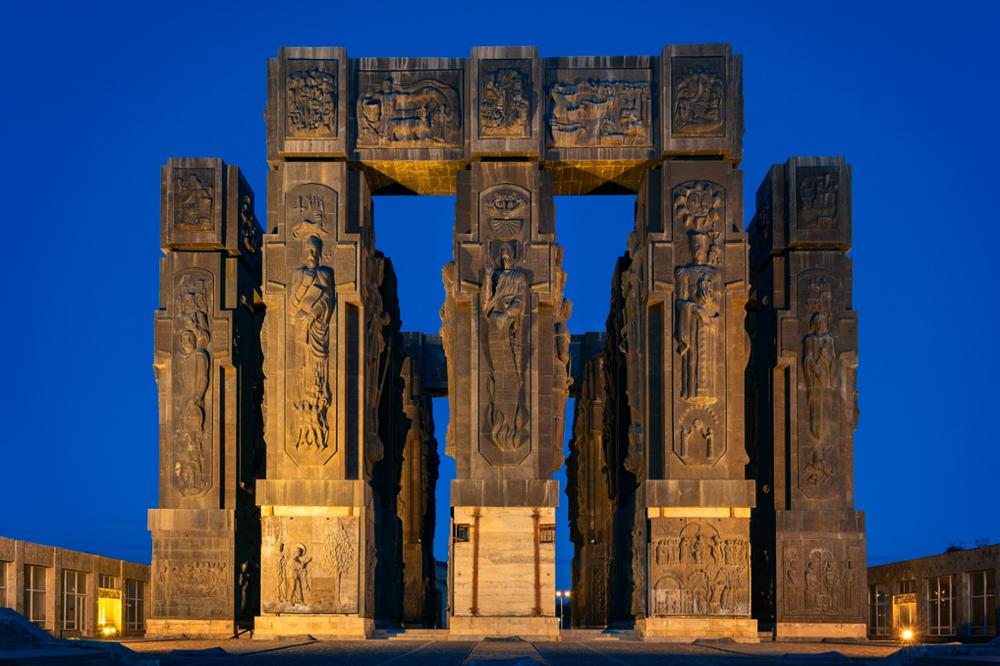
The spiritual life of Georgians during Antiquity was occupied by pagan beliefs. These are said to date back to the period of civil wars that occurred in eastern Georgia over the succession to Mtsketos. In fact, Georgians are believed to have abandoned their worship of a single God and begun to "pray to the stars and the sun."
The first religious entity in Georgia dates back to the IIIrd century B.C. King Pharnabazus I of Iberia imposed a single Pantheon on his people: the trinity, led by the god of Gods and also the god of the Moon "Armazi."
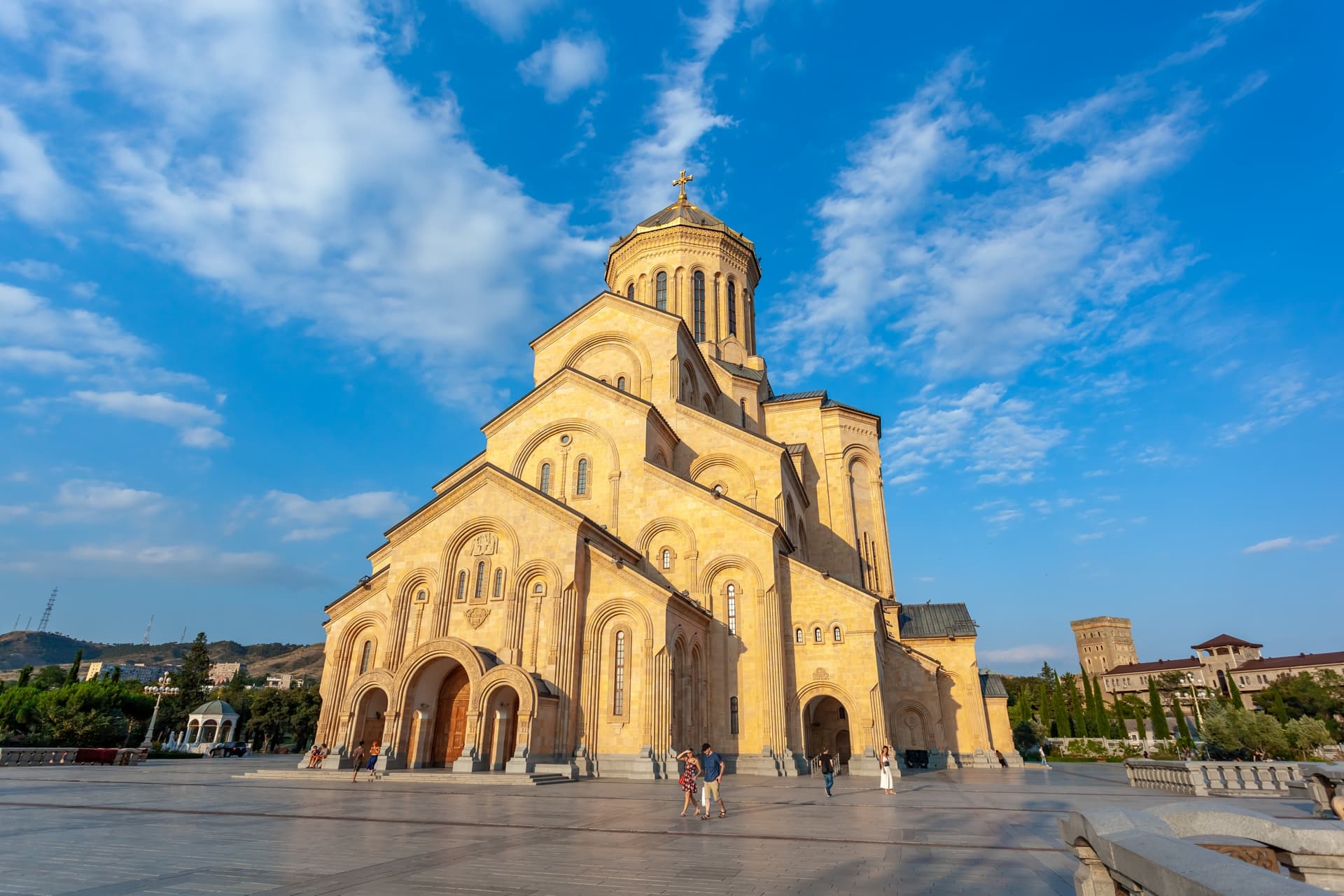
Major changes occurred in the 4th century. Indeed, King Mirvan III of Iberia abandoned pagan divinities to convert to Christianity. However, the people found it harder to convert to Christianity. Traditional polytheistic elements were thus introduced into the Christian religion to push Georgians toward conversion.
Saint-George of Lydda, Saint George for Christians, took the place of Armazi upon his death. He is considered the patron saint of Christian chivalry and of Georgia. This Christian martyr of the 4th century is honored each November 23 in Georgia. For the occasion, certain mountainous regions of the country practice animal sacrifices.
Major religions in Georgia
Christianity is the predominant religion of Georgia. This nation is the third to make Christianity a state religion, the first two being Ethiopia and Armenia. Christians were often persecuted by the various dominant authorities of the Caucasus.
During the first centuries after A.D., the Sassanids imposed the rules of Zoroastrianism in Iberia. Those who refused to submit were persecuted. Likewise, during the High Middle Ages, the Arabs created many martyrs among Georgian nobles and the population. From the 16th to the 18th century, the Persians and Turks did the same. In the 1920s, the Soviets had ordered the closure of 1500 churches.
Orthodoxy, Eastern Christianity, is the historic religion of Georgia. This religion was imposed as that of Georgian royalty and that of the State within the framework of an independent Georgian monarchy. Following national movements of the 1970s-1980s, the Orthodox religion was considered the national religion. In fact, contemporary nationalism requires that to be a true Georgian, one must be Orthodox.
Since the Rose Revolution, the Orthodox Church has flourished. Patriarch Ilia II is one of the most important figures in the country and the State must reckon with him. Orthodoxy, officially enjoying a "privileged" status, is the only Church to have a concordat with the State. Despite the supremacy of Orthodoxy in Georgia, other religions have managed to take root.
Today, in the breakaway regions of Georgia, populations are predominantly Christian. However, a few religious entities, labeled as "dissident," have occupied the spiritual seats of the self-proclaimed republics. Thus, Constantinople does not recognize the legitimacy of an Eparchy of Abkhazia. The same applies to the Orthodox Church of Greece-Holy Synod in resistance in South Ossetia, which does not recognize the Eparchy of Alania.
Religious minorities in Georgia
Islam
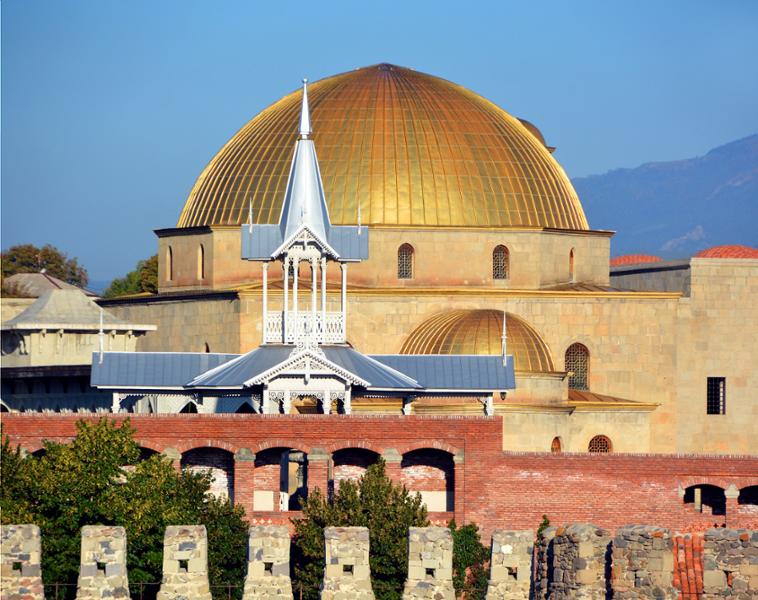
Today, Muslims represent 9% of Georgia's population, making Islam the second religion after Eastern Orthodox Christianity in Georgia. Islam is unevenly distributed throughout the country.
Most of the faithful occupy the Independent Republic of Adjara. In this region, "Georgian Muslims" are essentially Sunni due to the activity of Turkish missionaries. There are also minorities of Sunni Muslims in the Meskhetian community (about 1,000 people today), in the Pankisi Gorges and in separatist Abkhazia. Other Muslims in Georgia, notably Shia, are found in eastern Georgia and in Lower Kartli. Azerbaijanis became Islamicized in Lower Kartli since Safavid occupations in the XVIIth century.
Islam was brought to Georgia by various invaders, such as the Arabs, Iranians, Turks, and peoples of Central Asia. Georgia's Azerbaijani minority practices Shia Islam, sometimes Sunni. Sunni Islam is taught by some of Georgia's Kurds and by a few minorities from the North Caucasus, including the Kists, Lezghians, and Avars. Some Abkhazians and Ossetians are also Muslim.
Judaism
With 10,000 members, of which 3,000 are practicing, Judaism is today the weakest of the three monotheistic religions present in Georgia. Despite the tolerance of monarchies, clergy, and public opinion enjoyed by the Jewish community, it has nevertheless suffered the vicissitudes of various invasions, like other Georgian populations. "Ethnically" Georgian, they are neither Sephardic nor Ashkenazi. This religion arrived in Georgian territory via two waves of emigration of the Israeli people: in the 6th century B.C., then in the 1st century A.D. It was able to count more than 100,000 members. Antisemitism has no place in Georgia and the Jewish community is perfectly integrated into society, which is predominantly Orthodox. However, approximately 70% of Georgia's 30,000 Jews have chosen to emigrate to Israel since the 1980s for economic reasons. After more than 2,600 years of Jewish presence, the synagogues of Tbilisi, Oni and Kutaisi today welcome the last faithful. Moreover, some renowned Georgians are of Jewish origin, such as the famous politician Badri Patarkatsishvili.
Protestantism
Lutheran Protestantism was practiced by German Pietists, also called the Swabians. They had settled in the 19th century in Tbilisi, in Bolnissi in the region of Kvemo-Kartli, and in Dmanissi. In the 1990s, a German pastor revived the small community of Lutheran faithful in tribute to the German-Georgian past. Lutheranism is a Protestant theology originating from the writings and thought of the Augustinian monk and German theologian Martin Luther from 1517 onward.
Yazidism
Georgia's 6,000 Yazidi Kurds also have their own religion, called Yazidism. Yazidism is a syncretic religion integrating, among other things, elements of Zoroastrianism, Islam, Judaism, and more. It is a religion passed from father to son and orally. Thus, a person does not become Yazidi. They are born Yazidi. According to Yazidi belief, God came into the world in the Pearl. The 7 angels, who emanated from his essence, will help him create and govern the world. Regularly, these angels took human form to initiate men into the true religion. Melek Tawus, meaning the Peacock Angel, was the leader of the angels because of the spiritual qualities he acquired, symbolizing diversity, power, and beauty. For the faithful, the Peacock Angel refused to worship Adam. Instead of punishing him, God asked him to be his representative in the physical world. Like Christians and Muslims, good and evil hold a predominant place among the Yazidis. Despite a few community temples in Tbilisi, the spiritual heart of Yazidism is in Iraqi Kurdistan.
Relations between different religions
In Georgia, the level of religious tolerance is very high. None of the Georgian monarchs persecuted a people for reasons of religion. While today relations between the religions are generally peaceful, Orthodoxy, which predominates in nationalist ideology, has adversely affected the faithful of other religions.
While Jews, Muslims, or Yazidis encounter few difficulties, other Christian churches struggle to assert themselves. They are seen as rivals by the Orthodox, particularly concerning religious heritage. In fact, some Orthodox Christian priests have become notorious for their physical attacks on Jehovah's Witnesses or Baptists.
Prospects for religious freedom in Georgia depend on relations between the Georgian Orthodox Church and other religious minorities. While some leaders of the Georgian Orthodox Church work toward ecumenism and cooperation with other religious denominations, the more radical Georgian Orthodox advocate for religious uniformity.