Georgia, Land of Wine
Georgian cuisine will delight you throughout your journey, notably with its khachapuri (cheese breads) and khinkali (meat dumplings). A gastronomic experience that, in itself, makes this country worth visiting.
Georgian cuisine will delight you throughout your journey, notably with its khachapuri (cheese breads) and khinkali (meat dumplings). A gastronomic experience that, in itself, makes this country worth visiting, especially since Georgia is also highly renowned for its wine, which pairs beautifully with these culinary delights.
Georgia is indeed considered the world's first wine-producing country, dating back over 8,000 years. Meeting the wine, as our agency invites you to do, is another original and delicious way to discover this beautiful country.
The World's First Wine
Recently, archaeologists discovered wine residues in pottery jars dating back over 8,000 years. This was the Neolithic era—a time when humans began cultivating crops and raising livestock, crafting pottery vessels, and, as it appears, enjoying wine. This discovery entirely reshaped wine history, as its invention had previously been attributed to Iran.
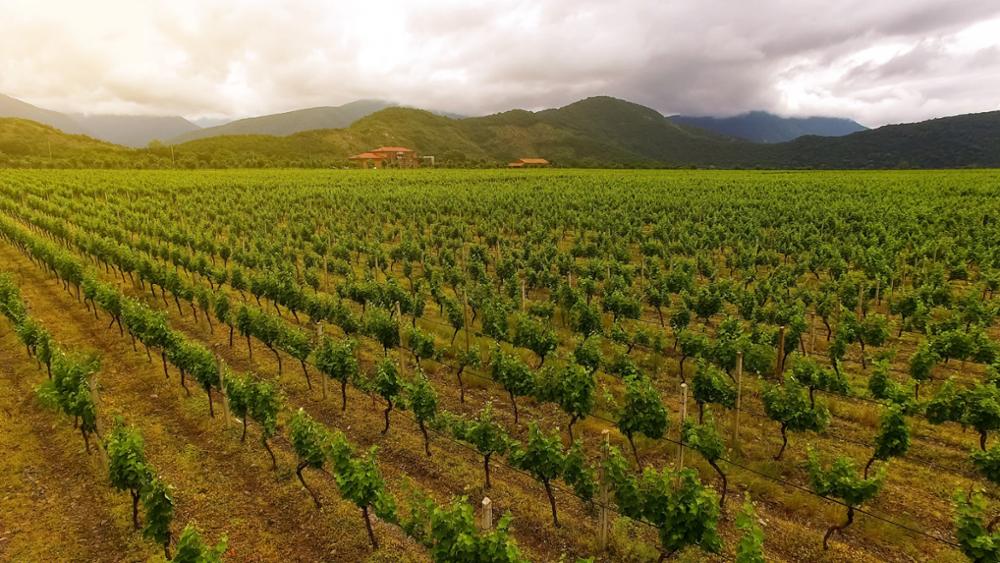
Georgia is also the country richest in grape varieties, with over 500 different types of vines. It is a true paradise for winemakers, who benefit from an ideal climate and significant fruit diversity, allowing them to create wines with varied and delicate flavors.
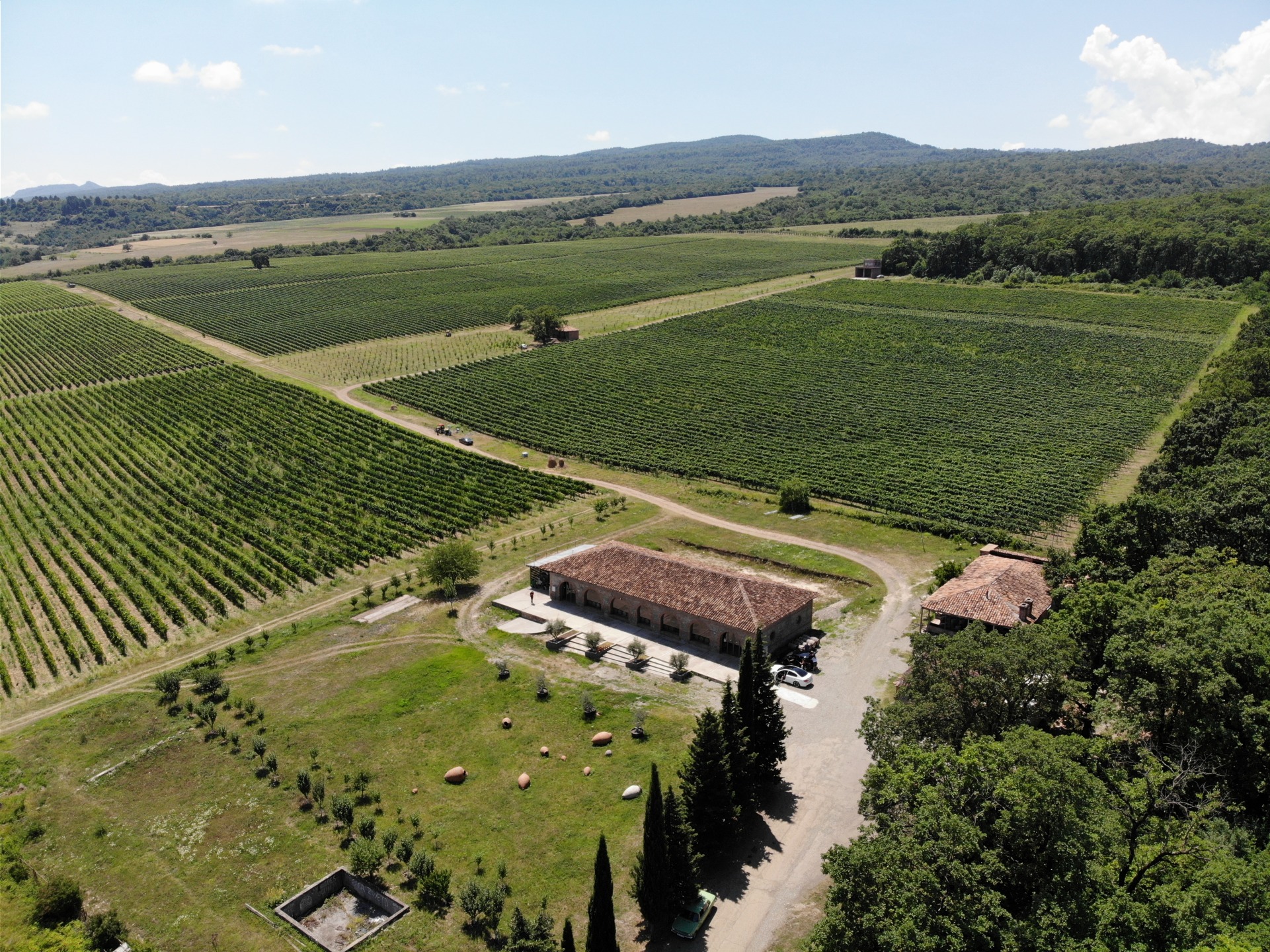
Today, Georgia is the second-largest wine producer by volume in the former Soviet space, after Moldova. Yet, while its wine has not yet reached its global peak, the country offers perfect conditions for delicious wine: a mild and moderate climate, plenty of sunshine, and air humidified by proximity to the Black Sea.
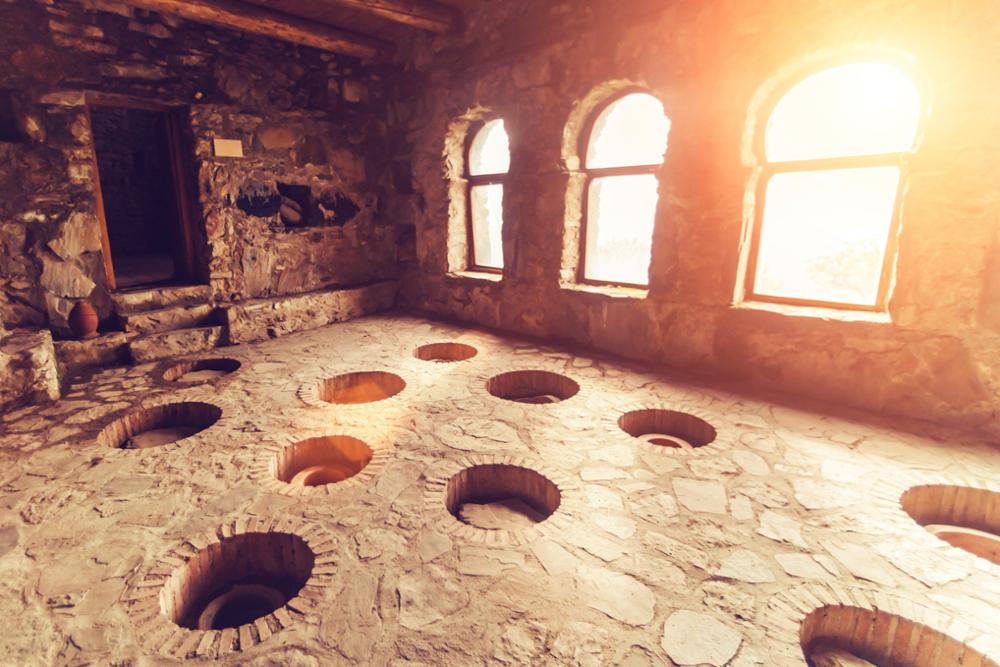
Artisanal Craftsmanship
Winemaking in Georgia is widespread throughout every family: each has its own vineyard, cellar, and specialty. Yet they all share the same artisanal winemaking method, which is inscribed on UNESCO's List of Intangible Cultural Heritage of Humanity.
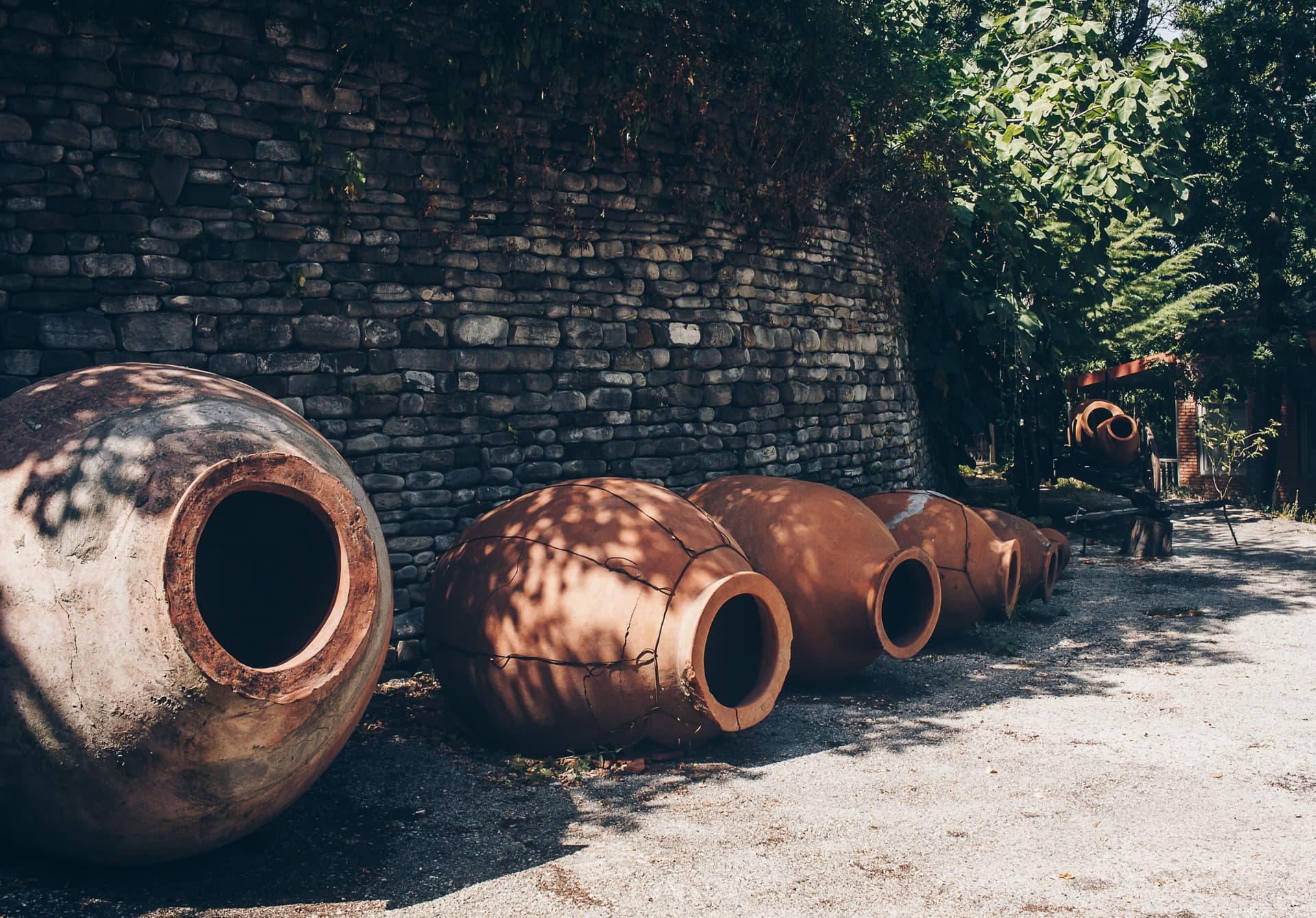
Georgians produce their wine in clay vessels called "qvevri" or kvervi, egg-shaped in form. It is in the qvevri that they allow grape juice to ferment and age with its skins and residues after harvest. This art, passed down through generations, is still practiced today in many villages across the country, where entire communities participate in the grape harvest. It is precisely this absence of filtering and this contact with clay that gives Georgian wine its inimitable taste and worldwide renown.
While all Georgian regions produce wine, Kakheti is the most renowned. The historic cradle of winemaking, this region in eastern Georgia is home to over 100 grape varieties on its own. In the Saint-George Monastery of Alaverdi, Orthodox monks cultivated wine for years in qvevri buried in the soil.
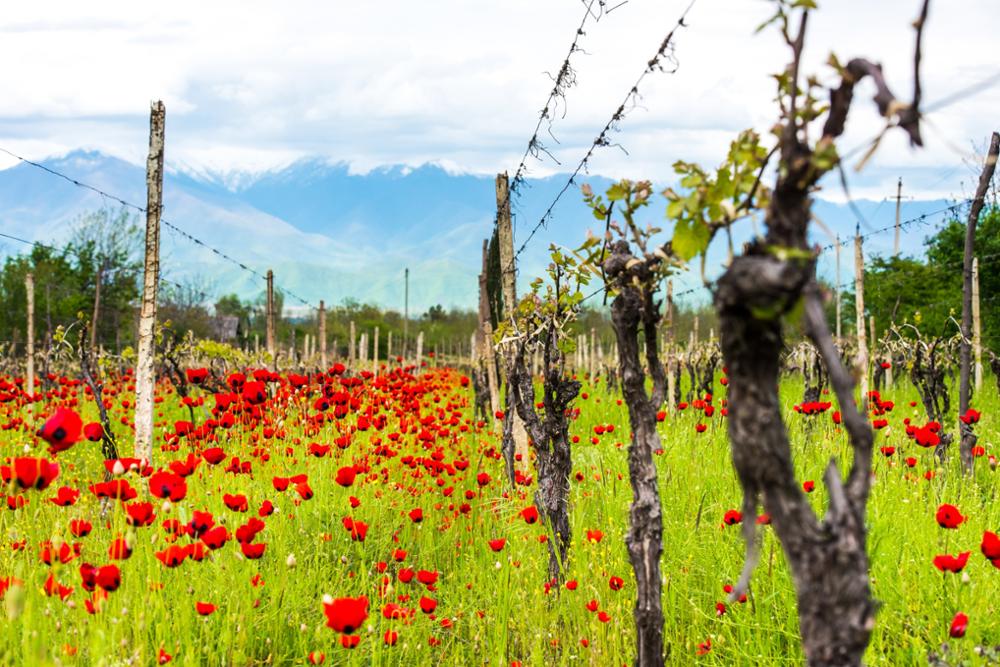
A Wine Culture
If love for wine isn't what brings you to discover this craft, then come to immerse yourself in Georgian culture, transmitted across centuries. Wine is the pride of the Georgian people, who fully master its production. It accompanies meals, legends, celebrations, dances, and unites families and neighbors during the harvest. Wine is also the subject of numerous poems and songs dedicated to it.
According to Georgian legend, soldiers would sew vines into their chainmail so that wine would flow with their blood in case of injury. Further proof that wine is deeply rooted in Georgia's history and traditions.
Frequently asked questions
Archaeologists have discovered wine residues in pottery jars dating back over 8,000 years in Georgia, making it the oldest known evidence of winemaking in the world. This discovery redefined wine history, which had previously been attributed to Iran.
The qvevri (also spelled kvervi) is an egg-shaped clay vessel traditionally used in Georgia to ferment and age grape juice with its skins. This artisanal method, passed down through generations, is inscribed on UNESCO's List of Intangible Cultural Heritage. It is this contact with clay, without filtering, that gives Georgian wine its unique taste.
The Kakheti region in eastern Georgia is the historic cradle of Georgian winemaking. It is home to over 100 grape varieties and iconic sites such as the Saint-George Monastery of Alaverdi, where Orthodox monks have cultivated wine for centuries.
Georgia is the world's richest country in grape variety diversity, with over 500 different types of vines. Among the most renowned are Rkatsiteli (white) and Saperavi (red), but many local varieties remain yet to be discovered.
The grape harvest in Georgia, called Rtveli, typically takes place in autumn, between September and November depending on the region and grape varieties. It is a festive and communal event in which the entire family participates, offering travelers an authentic cultural experience.